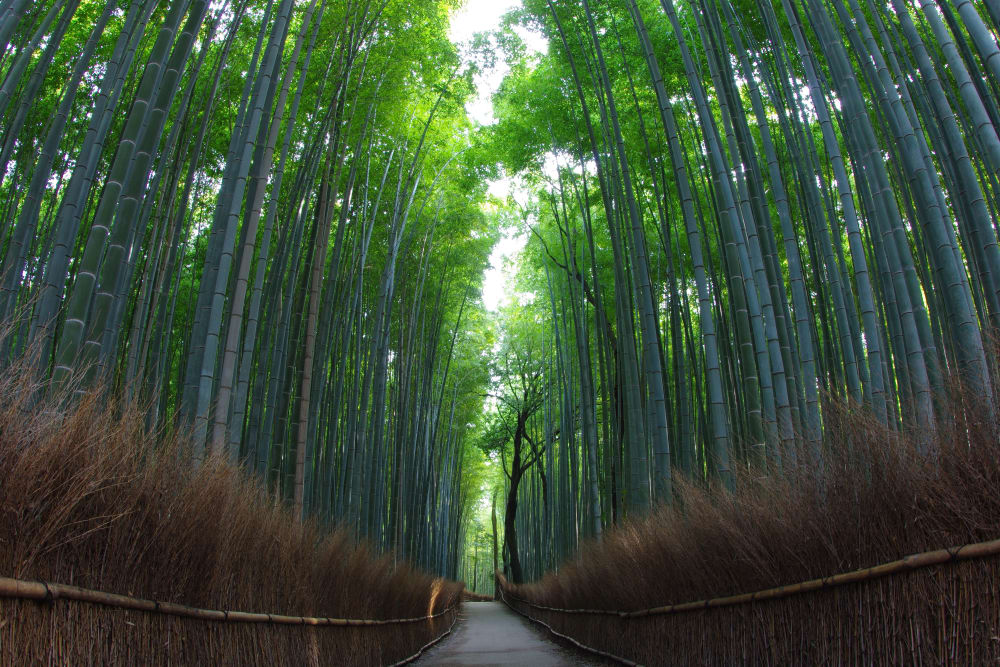
Arashiyama Bamboo Grove is one of Kyoto’s best-known natural sights: a public walking path bordered by soaring green bamboo in the Saga-Arashiyama area on the western side of the city. The sound of leaves moving overhead, the shifting light and the tightly grouped stems give the route its distinctive atmosphere. It is an easy addition to a day exploring Arashiyama, nearby temples and the Katsura River.
Although the grove is frequently photographed without people, it is a popular visitor destination and can be crowded. This practical guide explains the route, station choices, the best time to visit, how to combine the walk with other attractions and what to know about protecting the bamboo.
Key Takeaways
Arashiyama Bamboo Grove: Quick Visitor Information
| Location | Sagano, Ukyo Ward, Kyoto, Japan |
|---|---|
| Admission | The public bamboo walking path is free; neighbouring temples and gardens may charge separately |
| Nearest useful stations | Saga-Arashiyama (JR Sagano Line); Arashiyama (Keifuku Randen tram) |
| Walking time to the grove | About 10 minutes from JR Saga-Arashiyama, according to Japan National Tourism Organization |
| Best general time | Early morning for a potentially calmer visit; crowd levels vary |
| Main nearby sights | Tenryu-ji, Nonomiya Shrine, Okochi-Sanso Garden, Togetsukyo Bridge |
The grove is an outdoor public path rather than an attraction with a single ticket counter. Specific access restrictions may occur during local works or special activities. Paid attractions in the surrounding area keep their own entry hours and prices.
What Makes the Arashiyama Bamboo Forest Special?
The familiar view is a narrow route surrounded by exceptionally tall bamboo. A little light reaches the ground through the green canopy, while dense vertical stems create a natural corridor. Visitors come to walk, photograph the changing light and experience a different side of Kyoto from its busy streets and city-centre shrines.
The grove is part of a much larger landscape in Sagano, which includes preserved religious sites, gardens and river scenery. The Japan National Tourism Organization identifies Nonomiya Shrine and the nearby villa gardens among the highlights. It is best to think of the forest walk as the centrepiece of a wider Arashiyama visit, rather than a full-day attraction by itself.
The path is especially atmospheric when the breeze moves the leaves, but there is no guaranteed time when the trees will sway or the route will be empty. The appearance changes with weather, cloud cover and the number of people walking through.
How to Get to Arashiyama Bamboo Grove from Kyoto
From Kyoto Station on the JR Sagano Line
A straightforward route from Kyoto Station is the JR Sagano Line to Saga-Arashiyama Station. Kyoto’s official tourism office recommends this rail route over relying on buses in heavily congested sightseeing periods. From Saga-Arashiyama Station, follow local signs toward the bamboo forest; the Japan National Tourism Organization describes it as about a 10-minute walk.
The ride time varies by service. Kyoto City’s transport guide gives approximately 11 minutes for a rapid service to Saga-Arashiyama, not a guaranteed door-to-door journey. Allow additional time to locate the Sagano Line platform, walk to the grove and navigate busy streets.
Using the Randen Tram
Another option is the Keifuku Randen tram to Arashiyama Station. This can be convenient if you are connecting from the central-western Kyoto districts served by the tram. The station also provides access to the main sightseeing street, temples and Togetsukyo Bridge. Walk toward Tenryu-ji and the entrance to the bamboo path.
The Hankyu Arashiyama Station is useful for some city connections but lies on the opposite side of the river from parts of the bamboo-grove route; allow extra walking time when choosing it. For current public transport planning, consult Kyoto’s official Saga-Arashiyama access guide.
Why walking or rail is often better than a bus
Arashiyama roads can become congested during spring blossom viewing, weekends and the autumn foliage season. Kyoto tourism authorities encourage train-based access for a more predictable journey. Once in the district, walking allows you to link the grove, historic sites and bridge in a natural sequence. Wear comfortable footwear and check for uneven stretches along paths and approaches.
Best Time to Visit the Bamboo Grove
Early morning versus midday
Early morning is generally the most practical choice if you hope for a slower, less crowded walk and photos with fewer passers-by. The grove is very well known, however, and arriving early is not a guarantee of solitude. By late morning or midday, tour groups and day visitors often make the central path busier.
Morning can also create appealing side lighting between the bamboo stalks, although conditions depend on cloud cover and season. If arriving later in the day, it may be more enjoyable to focus on the surrounding area rather than trying to recreate photographs of an empty path.
Spring, summer, autumn and winter
The bamboo remains green through the seasons, so the grove is not exclusively a cherry-blossom or autumn-leaf destination. Spring can combine pleasant walking weather with crowds elsewhere in Kyoto. Summer brings lush foliage but also heat and humidity. Autumn is popular for nearby hillside colour, while winter can offer a quieter atmosphere on some days.
Because weather changes quickly, check the local forecast and carry rain protection when needed. Avoid assuming the bamboo canopy provides complete shelter during heavy rain.
How Long Does a Visit Take?
The principal bamboo-path experience itself can be relatively short. Allow about 30–60 minutes as a flexible planning estimate for finding the entrance, walking through, enjoying the scenery and taking photographs without rushing. This is an editorial allowance rather than an official advertised visit duration.
If you also want to explore Tenryu-ji, gardens, the river and local cafés, a half-day in Arashiyama is a more useful plan. Travellers building a full western Kyoto itinerary could add Daikaku-ji Temple, Jojakko-ji Temple or nearby Sagano routes, allowing extra walking and transportation time between destinations.
What to See Near the Bamboo Forest
Tenryu-ji Temple
Tenryu-ji Temple is a major Zen temple close to the bamboo route and a UNESCO World Heritage site. Its landscaped gardens contrast with the wild vertical forms of the bamboo path. The temple’s official visitor information lists standard garden hours of 8:30 a.m.–5 p.m., with last entry at 4:50 p.m.; in 2026, the listed garden admission is ¥500 for high-school-age visitors and adults. These details can change for special openings, so check the official Tenryu-ji admissions page before visiting.
Some visitors approach the grove via the Tenryu-ji area, but temple admission and the public bamboo path are separate experiences. Do not assume all temple gates remain open outside the temple’s own visiting hours.
Nonomiya Shrine and Okochi-Sanso Garden
Nonomiya Shrine stands along the Saga area route and is associated with historic imperial purification traditions. The Japan National Tourism Organization also notes its popular connection with wishes for good relationships and safe childbirth. Observe shrine etiquette, keep voices low and follow any posted restrictions.
Near the upper end of the bamboo walkway, Okochi-Sanso Garden provides an additional landscaped setting linked with traditional architecture and views. It has its own admission arrangements, so verify current opening times and admission details before relying on older descriptions of refreshments included with a ticket.
Togetsukyo Bridge and the Katsura River
One of the best ways to extend a bamboo-forest visit is to walk toward Togetsukyo Bridge and the riverside. Kyoto’s Arashiyama area is known for seasonal mountain scenery framed by the bridge and Katsura River. Strolling there is a useful change of pace after the confined bamboo path.
Sagano Scenic Railway and the Hozu River
Sagano Scenic Railway offers another view of the surrounding landscape, while Hozu River Boat Cruises are a separate seasonal and weather-dependent experience. Confirm operation, departure points and tickets with the respective operators. These are not automatically included in a trip to the bamboo grove.
Additional temples and a slower western Kyoto day
Visitors with more time can research Adashino Nenbutsu-ji Temple, Kinkaku-ji Temple or Suzumushi-dera Temple. Some are farther away than a quick walk from the grove, so check actual transit times. Rakusei, the western Kyoto district, also offers other cultural stops away from the best-known bamboo corridor.
Photography Tips and Respectful Visiting
- Use the path’s leading lines: the tall stems naturally draw the eye toward bends and openings.
- Try wider and vertical frames: a portrait composition can emphasise height; a wider view captures the atmosphere of the walkway.
- Be patient: the path is shared, so stop briefly in safe places rather than obstructing people for a long photo session.
- Stay on the public route: do not step through fencing or enter planted areas in search of a unique viewpoint.
- Never carve the bamboo: Kyoto’s official tourism office specifically warns that vandalised stalks cannot be repaired and must be removed.
- Respect other visitors and residents: keep conversations and music at appropriate levels and dispose of waste responsibly.
The official Arashiyama area guide is useful for combining sightseeing stops, but for the most current crowd information, Kyoto’s tourism website also provides a dedicated Saga-Arashiyama area page with congestion-related resources.
Is Arashiyama Bamboo Grove Accessible?
The core bamboo route is an outdoor walking path with paved and variable-surface sections, but approaches, slopes, crowding and nearby temple paths differ. Accessibility needs depend on the specific route and mobility equipment. Rather than promise a fully step-free trip, review current accessible transport details and ask the local tourism office about suitable entrances if using a wheelchair or stroller.
Families can enjoy the grove, but keep children within the path boundary and away from fragile bamboo. The main path is not a playground or a location where visitors should climb or touch the plants.
Suggested Half-Day Arashiyama Walking Plan
Start: Arrive by train at Saga-Arashiyama or Randen Arashiyama Station. Walk toward Tenryu-ji and the nearby bamboo entrance. If a temple garden visit matters, check its opening time before setting out.
Middle: Walk the bamboo path at your own pace. Consider a respectful stop at Nonomiya Shrine and, if time allows, Okochi-Sanso Garden or the Jojakko-ji Temple area.
Finish: Return toward the village streets and Togetsukyo Bridge for lunch or riverside scenery. This sequencing minimises backtracking but still requires checking your preferred station and individual venue hours.
For another type of Kyoto excursion on a different day, consider the Fushimi Inari shrine paths or urban cultural attractions such as the Kyoto Railway Museum, rather than trying to squeeze every Kyoto attraction into one afternoon.
Frequently Asked Questions
Is Arashiyama Bamboo Grove free?
The public bamboo walking path is free to enter. Nearby temples, private gardens and transport attractions can charge admission.
Which train station is closest?
JR Saga-Arashiyama and Randen Arashiyama are useful options. The Japan National Tourism Organization lists a walk of around ten minutes from JR Saga-Arashiyama to the grove.
Can I visit early in the morning?
The grove is an outdoor public path. Arriving early is a common way to try to avoid the busiest periods, but verify any temporary access notices and remember that nearby temples have separate opening hours.
Can I walk through the bamboo forest with luggage?
You can encounter crowds and uneven approaches, so sightseeing with large suitcases is inconvenient. Consider station luggage lockers, where available, and travel light.
Sources and Further Information
- Japan National Tourism Organization: Arashiyama Bamboo Grove
- Kyoto Travel: train routes and access to Saga-Arashiyama
- Kyoto Travel: Saga and Arashiyama attractions and visitor guidance
- Tenryu-ji Temple: official admissions and opening hours
Address And Maps Location:
Arashiyama Bamboo Grove, Sagano, Ukyo-ku, Kyoto-shi, Kyoto-fu, Japan.
Find Location And Direction On Google Maps
Subscribe and follow travelbloggerindonesia.com.
Originally posted 2024-04-08 07:21:27.