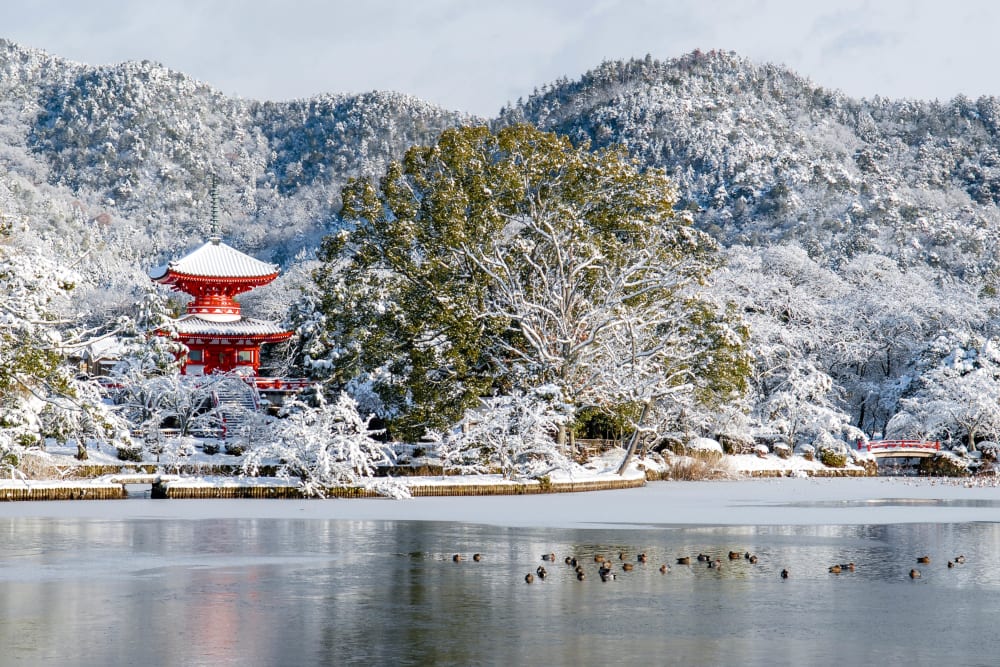
Daikakuji: A Former Imperial Villa Turned Temple in Kyoto
Introduction
Daikakuji, located in the Ukyo district of Kyoto, is a temple that was originally an Imperial villa but was later converted into a temple of the Shingon sect of Buddhism in 876. This historical site holds great significance as it showcases the architectural and cultural heritage of Kyoto. The temple is renowned for its beautiful garden, important cultural properties, and its role as a center for practicing Buddhist sutra copying. In this article, we will explore the history, attractions, and significance of Daikakuji Temple.
History of Daikakuji
Daikakuji was originally built as an imperial villa for Emperor Saga. It served as a residence for successive members of the Imperial family, and as a result, it was also known as the Saga Imperial Palace. The temple hosted peace talks during the civil wars of the Namboku-cho period, further highlighting its historical importance.
In the Edo period, a fire broke out in the Imperial Palace, and several 16th-century buildings were relocated to Daikakuji. These buildings provide a glimpse into the architectural style of that era and add to the cultural richness of the temple.
The Temple’s Significance
1. Moon-Viewing Event: One of the highlights of Daikakuji is the moon-viewing event held annually for three days during the harvest moon. This event is a celebration of nature’s beauty and offers visitors a chance to appreciate the serene ambiance of the temple grounds.
2. Dongting Lake-Inspired Garden: The temple boasts a lovely garden inspired by Dongting Lake in China. The meticulous design and arrangement of the garden elements create a harmonious and tranquil atmosphere. Visitors can stroll through the garden and immerse themselves in its beauty.
3. Cherry Blossom and Autumn Leaves Season: Daikakuji is particularly enchanting during the cherry blossom and autumn leaves season. The temple grounds are adorned with vibrant colors, making it a perfect spot for photography and leisurely walks.
The Garden of Osawa-no-Ike Pond
One of the standout features of Daikakuji is the Osawa-no-Ike Pond garden. Designed in the Chinese architectural style known as chisen-shuyu, this garden is meant to be viewed from a boat. The pond itself is the oldest existing artificial pond in japan, adding to its historical significance.
Shakyo as a Means of Enlightenment
Daikakuji is widely known as a center for practicing the art of sutra copying, known as shakyo. This practice involves meticulously copying the Han’nya-Shingyo, also known as The Heart Sutra. The temple treasures include a copy of the sutra said to have been written by Emperor Saga himself. Many worshippers visit Daikakuji to engage in this meditative practice and seek enlightenment.
Japanese Flower Arrangement
Daikakuji is home to the Saga Goryu school of traditional Japanese flower arrangement, or ikebana. This school upholds historical traditions while incorporating modern sensibilities, making it popular among enthusiasts. Every year, the temple hosts a flower festival, showcasing the artistry and beauty of Japanese flower arrangement.
How to Get There
Daikakuji is conveniently located and easily accessible. It is a 15-minute walk from JR Saga-Arashiyama Station or a 20-minute walk from Arashiyama Station on the Keifuku Line. Visitors can enjoy a pleasant stroll through the scenic streets of Kyoto to reach the temple.
In conclusion, Daikakuji Temple in Kyoto is a captivating historical site that offers visitors a glimpse into the rich cultural heritage of Japan. From its origins as an Imperial villa to its transformation into a temple, Daikakuji holds significant historical and architectural importance. The temple’s beautiful garden, important cultural properties, and its role as a center for Buddhist practices make it a must-visit destination in Kyoto. Whether during the moon-viewing event, cherry blossom season, or simply to engage in sutra copying, Daikakuji provides a serene and enlightening experience for all who visit.
Address And Maps Location:
4 Sagaosawa-cho, Ukyo-ku, Kyoto-shi, Kyoto-fu
Find Location And Direction On Google Maps
Subscribe, follow travelbloggerindonesia.com