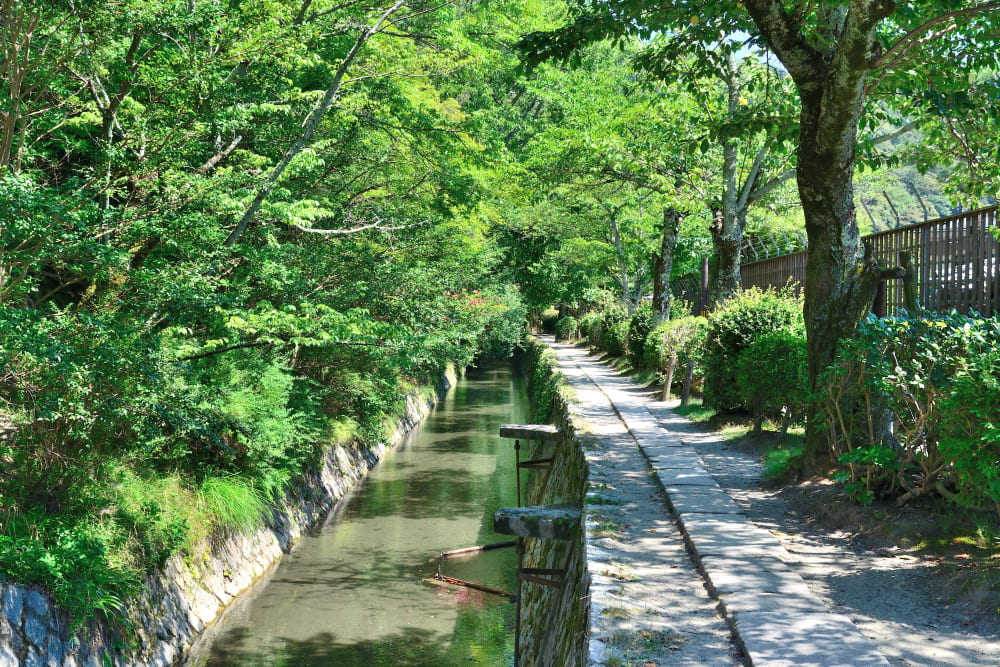
The Philosopher’s Path (Tetsugaku no Michi) is one of Kyoto’s most rewarding walks: a canal-side pedestrian route beneath the eastern hills, linking the neighborhood near Eikando and Nyakuoji Bridge with the approach to Ginkaku-ji. It is an easy way to appreciate a quieter side of Japan between temple visits, especially when spring cherry blossoms arch over the water.
Unlike a ticketed attraction, the path itself is an open public walkway. Plan around 30–40 minutes for a continuous walk, or allow two to three hours if you want to stop for tea, photographs and nearby temples. This guide covers the route, transport, seasonal highlights and a practical Kyoto itinerary without assuming that every attraction along the way is open at the same hours.
Key Takeaways
What Is the Philosopher’s Path?
The route follows a narrow canal in Kyoto’s Sakyo Ward. Its Japanese name, Tetsugaku no Michi, commemorates the philosopher Nishida Kitaro, associated with Kyoto University, who is said to have used the route for contemplative walks. The path has become a destination in its own right, but it is also a useful pedestrian connection between major historic sites in eastern Kyoto.
The canal belongs to Kyoto’s wider Lake Biwa Canal system, whose waters played an important role in the city’s modernization and early hydroelectric power. Today the water, stone edging, small bridges and neighborhood streets give the walk its distinctive character. The Japan National Tourism Organization (JNTO) guide describes the path’s historic association with Nishida and its connection to the wider canal.
Where Does the Walk Start and End?
Most visitors walk north from the Eikando/Nyakuoji area toward Ginkaku-ji, or south in the reverse direction. The scenic canal section is approximately two kilometers long, depending on where you start counting and which side paths you use. Kyoto City’s official tourism website identifies the corridor between Nyakuoji Bridge and Ginkaku-ji, near the eastern mountains.
Walking north works well after exploring Nanzen-ji Temple and Eikando (Zenrin-ji Temple; walking south is convenient after visiting the Silver Pavilion (Ginkaku-ji). Neither direction is inherently better: choose based on your transport stop, daylight and the temples you most want to see.
How to Get to the Philosopher’s Path
From Kyoto Station: Subway and Bus
Kyoto City’s recommended approach to the northern end begins at Kyoto Station: take the Karasuma subway line to Imadegawa Station, then use city bus 203 from Karasuma Imadegawa toward Ginkakuji-michi. Walk east toward the canal and Ginkaku-ji approach. This avoids sitting on a crowded cross-city bus for the entire trip. Weekend and holiday sightseeing services may offer additional options, but routes and frequencies can change.
JNTO also describes a route using the Karasuma subway line to Marutamachi, followed by bus 204 or 93 to Kinrinshakomae for the southern part of the path. Check current directions before departure rather than relying on a single historical bus number. See Kyoto City’s official transport advice for the most useful train-and-bus combinations.
From Keage Station: A Scenic South-to-North Approach
For visitors who enjoy walking, Keage Station on the Tozai subway line is a useful starting point. You can explore Nanzen-ji and the surrounding Higashiyama neighborhood before reaching the canal. The nearby Konchi-in Temple and Murin-an Garden are possible detours, subject to their individual admission rules and opening times.
By Taxi or on Foot
A taxi can shorten the approach to either end, but the narrow neighborhood streets are not suitable for treating the canal path as a drive-through attraction. Tell your driver the intended temple or bridge rather than expecting vehicle access onto the path. If you are already exploring eastern Kyoto, walking between sights may be more efficient than changing buses several times.
What to See Along the Philosopher’s Path
1. The Canal, Stone Bridges and Cherry Trees
The appeal is the walk itself: flowing water, low stone bridges, overhanging branches and quiet residential lanes. In spring, flowering cherry trees form a canopy over sections of the canal. The route can become crowded when sakura are at their peak, so start early if you want to move at a relaxed pace. Blossoms are seasonal and weather-dependent; a specific peak date should never be treated as guaranteed.
2. Ginkaku-ji at the Northern End
The Silver Pavilion is one of the best-known temples in the area. Its gardens and hillside paths are a strong reason to extend a Philosopher’s Path walk into a half-day itinerary. The temple has its own entry fee and operating schedule; the canal walk does not share those admission conditions. Allow extra time for the temple rather than assuming the entire visit will fit into the path’s 30-minute walking estimate.
3. Honen-in and Smaller Temple Detours
Honen-in sits a short detour from the path and offers a different atmosphere from the busier headline sights. Respect any access restrictions and remember that religious sites are places of worship, not simply photography sets. Nearby lanes may have local residents, so keep voices down, avoid blocking entrances and do not enter private property.
4. Eikando and the Southern Approach
At the southern end, Eikando is particularly associated with autumn color, while Nanzen-ji makes a natural continuation toward Keage. Temple grounds and sub-temples can have separate charges or special seasonal opening arrangements. Autumn foliage timing varies from year to year, so check the local forecast before planning a trip solely around color.
5. Cafes, Local Streets and Slow Travel
Small cafes and shops appear along and near the route, but their hours vary. Carry water, be prepared to use cash at smaller businesses and avoid relying on any one cafe for an essential meal. A short tea stop is a good way to make the path feel like a neighborhood walk rather than a checklist.
When Is the Best Time to Visit?
Spring: Cherry Blossoms and Larger Crowds
Spring is the signature season, especially when the cherry trees beside the canal flower. Expect more visitors around the most photogenic bridges. An early morning walk can be more comfortable, though quiet conditions are not guaranteed. Wear shoes suitable for uneven paving and be considerate when taking photos around narrow sections.
Summer: Greenery, Heat and Humidity
Summer brings green foliage and a different atmosphere. Kyoto can be hot and humid; carry drinking water, seek shade and avoid the hottest hours if you are sensitive to heat. Rain can leave some surfaces slippery, and summer showers can be sudden.
Autumn: Temple Gardens and Changing Leaves
Autumn is a good season for combining the walk with Eikando and Nanzen-ji. Check each temple’s own visitor information for evening openings or special events; these do not necessarily mean the public path has staffed facilities after dark.
Winter: A Quieter Canal Walk
Winter is often less crowded, though daylight is shorter and cold weather can make long pauses uncomfortable. The route remains a pleasant way to link nearby sights when conditions are safe, but check weather and daylight before setting out.
A Practical Half-Day Walking Itinerary
Option A: Northern Start at Ginkaku-ji
- Reach the Ginkakuji-michi area by public transport and walk toward the Silver Pavilion.
- Visit Ginkaku-ji if you wish, allowing time for its gardens and entrance formalities.
- Walk south along the canal, pausing at bridges and side streets.
- Consider a quiet detour toward Honen-in, then continue toward Eikando.
- Finish with Eikando or Nanzen-ji before heading to Keage Station.
Option B: Southern Start at Keage
Begin at Keage, explore Nanzen-ji, then follow the Philosopher’s Path north to Ginkaku-ji. This option works well for travelers who prefer to end with the Silver Pavilion rather than start there. For a fuller Kyoto day, consider the Heian-jingu Shrine or the National Museum of Modern Art, Kyoto before entering the canal-side neighborhood.
How to Combine It With Other Kyoto Attractions
If you have another day in Kyoto, keep the Philosopher’s Path focused on eastern Kyoto rather than squeezing distant attractions into the same morning. Other worthwhile city itineraries can include Kiyomizu-dera Temple, Maruyama Park and Chion-in Temple in southern Higashiyama. These are separate stops, not features directly on the canal walk.
For a different part of Kyoto, Fushimi Inari Taisha is a dedicated shrine-and-hiking outing; Nishiki Market and Pontocho suit a food-focused afternoon or evening. Travelers with more time might compare eastern Kyoto’s temple walks with the Arashiyama Bamboo Grove or the Golden Pavilion (Kinkaku-ji). Avoid treating these widely separated sites as short detours from the path.
Practical Tips Before You Go
- Admission: The public canal walkway is free to enter; individual temples, gardens and museums may charge separately.
- Time needed: Around 30–40 minutes for the canal walk itself, longer with stops and temple visits.
- Accessibility: Expect uneven paving, occasional steps on detours and narrow areas. Travelers needing step-free routes should check the precise entry and exit points beforehand.
- Facilities: Toilets and refreshments are more reliably found near major temples and commercial streets than at every point along the canal.
- Etiquette: Keep the path clear, take rubbish with you, and avoid disturbing nearby homes or entering closed temple areas.
- Weather: Check forecasts, especially during summer heat, rain and the crowded cherry-blossom season.
Frequently Asked Questions
How long is the Philosopher’s Path?
The commonly described scenic section is roughly two kilometers. Allow around 30–40 minutes to walk without extended stops, or longer to visit temples and cafes.
Is the Philosopher’s Path free?
Yes, the public walkway itself is free. Separate admission rules apply to attractions such as Ginkaku-ji and some temple gardens.
Can I visit outside cherry-blossom season?
Yes. Green summer scenery, autumn foliage around nearby temples and quieter winter days make the area worthwhile throughout the year.
Which direction should I walk?
Both directions work. Choose northbound from Nanzen-ji/Eikando or southbound from Ginkaku-ji according to your transport and the rest of your day.
Official Sources and Further Reading
- JNTO — Philosopher’s Path: history, route and nearby sights
- Kyoto Travel — official destination overview
- Kyoto Travel — official transport and access guidance
Address And Maps Location:
Kyoto-shi, Kyoto-fu
Find Location And Direction On Google Maps
Subscribe, follow travelbloggerindonesia.com