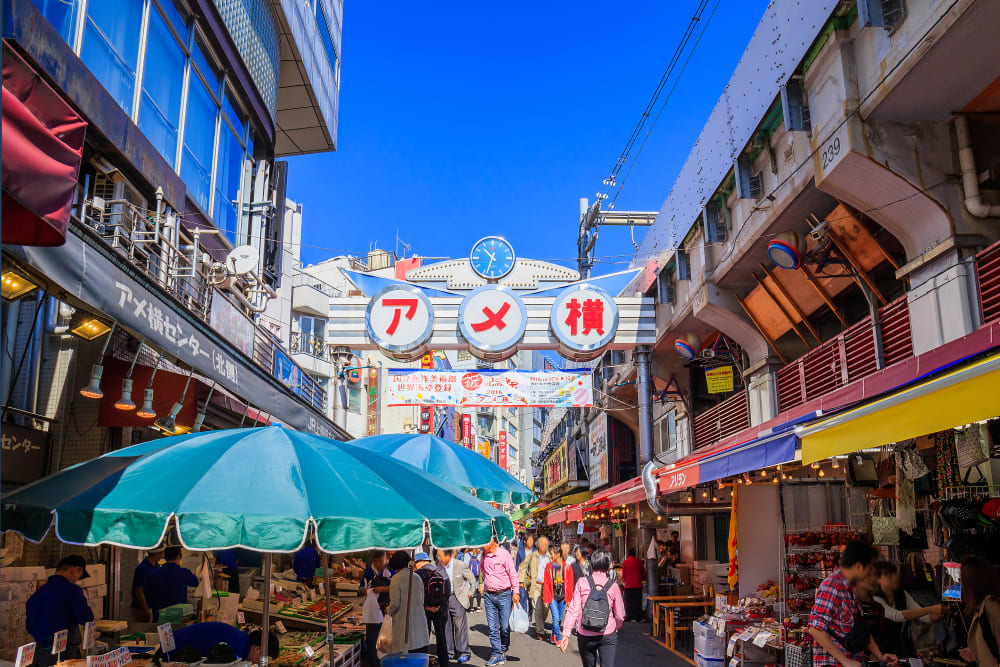
Ameyoko Shopping Street is one of Tokyo’s most atmospheric places to browse everyday goods, compare prices and sample casual food. The roughly 500-metre market district stretches beneath and beside the railway tracks between Ueno and Okachimachi stations. Unlike a single department store, it is a lively network of independent retailers and side lanes, so the selection, prices and opening hours vary from one storefront to the next.
The market offers an accessible introduction to Japan‘s everyday shopping culture. This guide explains what to shop for, how the postwar market developed, where to find its best-known experiences and how to fit Ameyoko into a practical Tokyo itinerary. The official Tokyo tourism guide, updated in March 2026, describes the area as a mix of fresh seafood, sweets, clothing, cosmetics and international food vendors.
Key Takeaways
What Is Ameyoko Shopping Street?
Ameyoko, short for Ameya-Yokocho, runs between JR Ueno Station and JR Okachimachi Station in Taito City. It is often described as a shopping street, but several connected lanes and the Ameyoko Center Building make it feel like a compact market district. Its location makes it an easy stop before or after exploring Ueno, Ueno Park or the museums nearby.
From Postwar Black Market to Modern Shopping District
Ameyoko’s identity was shaped by the years following World War II, when traders sold hard-to-find goods near the railway. Explanations for the name refer both to candy shops and American merchandise associated with the Occupation era; the precise origin remains debated. Today the district combines older specialist shops with fashion, snacks, seafood, imported ingredients and restaurants. The Japan National Tourism Organization’s Ameyoko guide explains this history and describes the area’s distinctive selling traditions.
What to Buy at Ameyoko
Japanese Snacks, Sweets and Edible Souvenirs
Snack shops and confectioners are among the easiest places to browse. Look for packaged rice crackers, chocolates, seasonal sweets and small gifts that travel well. Compare prices and expiration dates before buying multipacks. The market’s famous tatakiuri chocolate-selling performance is part of its heritage, but the vendor, demonstration and quoted bag price should never be treated as a guaranteed daily offer.
Seafood, Produce and Specialty Ingredients
Fresh seafood counters, dried goods and produce stalls are central to the market’s character. You may see fish, shellfish, spices, preserved foods and seasonal fruit. For perishable purchases, think about refrigeration and your journey time rather than assuming they are suitable for souvenirs. The basement of Ameyoko Center Building is particularly interesting for imported Asian groceries and ingredients.
Clothes, Footwear, Cosmetics and Outdoor Gear
Ameyoko is also known for casual clothing, shoes, bags, cosmetics and specialist sporting or military-style goods. A discount sign is not proof that every item is cheaper than elsewhere in Tokyo: compare sizes, condition, warranty terms and prices. Some independent merchants may negotiate, but bargaining is not universal and fixed-price stores should be respected.
Experiences Worth Looking For
Watch the Market’s Lively Selling Style
Ameyoko is worth visiting even without a shopping list. Calls from vendors, compact stalls and busy walkways create an atmosphere very different from the city’s polished shopping centres. The Japan Tourism Agency’s description of Ameyoko highlights the market’s long-established specialist retailers and food shops. Watch respectfully, and ask before photographing individual vendors or customers.
Explore Side Lanes and the Center Building
Do not assume the main railway-side walkway is the entire market. Branch into adjacent lanes when pedestrian traffic permits, then look for the Ameyoko Center Building. Its basement grocery area contrasts with the more familiar street-level clothing and food vendors. If the crowds are heavy, move to a quieter lane instead of stopping in the middle of a narrow passage.
Combine Shopping with Ueno Culture
After the market, consider Tokyo National Museum for Japanese and Asian art, the National Museum of Western Art for European collections, or Ueno Zoo for a family-focused visit. In spring, Ueno’s cherry blossom season can bring additional crowds; check actual bloom conditions and event announcements rather than relying on fixed dates.
How to Get to Ameyoko
From Ueno Station
JR Ueno Station’s Shinobazu Exit is close to the northern end of Ameyoko. It is an especially convenient starting point when visiting Ueno Park first. Tokyo Metro services also connect to the Ueno area. The official GO TOKYO Ameyoko listing confirms the JR Ueno Shinobazu Exit and JR Okachimachi North Exit as key access points.
From Okachimachi Station
Use JR Okachimachi Station’s North Exit to enter from the opposite end, then walk toward Ueno. The Yamanote and Keihin-Tohoku lines serve both station areas. You can start at either end; choose based on the rest of your route and where you want to finish.
How Much Time Should You Allow?
The main stretch can be walked quickly without stops, but one to two hours is a sensible planning allowance for casual browsing and food. Add time for museums or meals. The district itself has no single admission gate or entry fee; purchases, meals and nearby attractions have their own costs.
Opening Hours, Payment and Practical Tips
Ameyoko is a collection of independent businesses, not one attraction with uniform operating hours. Many shops trade during daytime and early evening, but some close on particular weekdays or holidays. Verify the opening times of any specific store you intend to visit. The official Ueno district guide is a useful starting point for planning nearby stops.
Before You Shop
- Carry some Japanese yen for smaller purchases, even if you normally use cards.
- Check food labels, allergens, customs rules and storage requirements for edible souvenirs.
- Ask whether tax-free shopping is available at that particular retailer; do not assume all stalls participate.
- Keep bags close in crowds and avoid blocking narrow market lanes.
- Compare prices and quality instead of assuming every market item is a bargain.
- Expect heavier foot traffic around weekends and the year-end shopping season.
Nearby Tokyo Places to Visit
For another side of Tokyo retail culture, Akihabara is a useful follow-on for electronics and pop-culture shopping. For food markets, compare Ameyoko with Tsukiji Outer Market. Traditional shopping streets are another experience: Nakamise-dori Street leads toward Sensoji Temple in Asakusa, while Kappabashi Kitchen Town specialises in kitchenware.
For a broader sightseeing day, combine Ueno with Tokyo Skytree or a Tokyo water-bus trip if the route and service schedule fit. Visitors arriving from elsewhere in the city may also want to check connections through Tokyo Station. Keep the itinerary realistic rather than trying to squeeze every district into a single afternoon.
Frequently Asked Questions
Is Ameyoko worth visiting if I do not want to shop?
Yes. It is a compact way to experience a bustling Tokyo market, observe traditional selling styles and sample casual food. Browsing does not require a purchase.
What is the nearest train station?
Both JR Ueno Station and JR Okachimachi Station are convenient. Choose Ueno’s Shinobazu Exit or Okachimachi’s North Exit depending on which end of the market you want to start from.
Can visitors bargain at Ameyoko?
Some independent sellers may negotiate, but many shops use fixed prices. Ask politely, respect a refusal and compare quality as well as cost.
What are the market’s opening hours?
There is no universal schedule. Opening and closing times vary by store, and individual businesses may take regular days off. Check with the shop before making a special trip.
References and Further Planning
For current visitor information, consult the official tourism sources linked above. The original article’s source is the JNTO Ameyoko attraction page; prices, opening times and individual stall offerings may change.
Address And Maps Location:
4/6 Ueno, Taito-ku, Tokyo-to
Find Location And Direction On Google Maps
Subscribe, follow travelbloggerindonesia.com