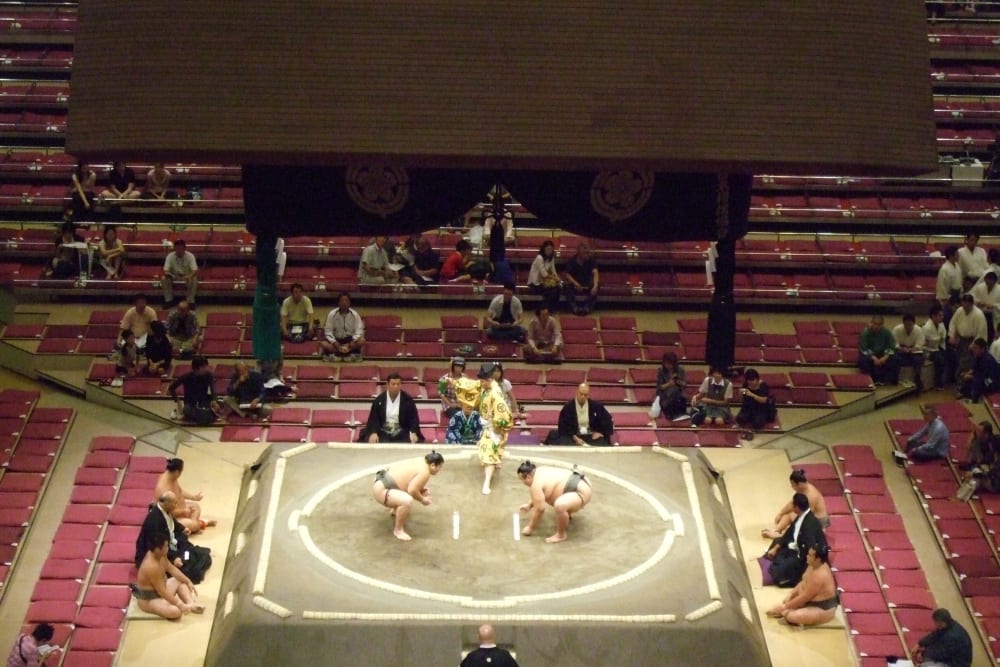
Tokyo sumo tournaments give visitors the chance to experience Japan’s national sport inside Ryogoku Kokugikan, the country’s best-known sumo arena. Three of Japan’s six annual professional grand tournaments take place in Tokyo, traditionally in January, May and September. Each tournament runs for 15 days and brings together wrestlers from multiple divisions, traditional ceremonies and a lively crowd.
A ticket buys more than a few bouts: watching a tournament reveals the sport’s ritual, ranking system, competition and the culture of Tokyo’s Ryogoku district. This guide covers the official 2027 Tokyo dates, ticket purchasing, different seating styles, how to reach the stadium, what happens during the day and how to make the most of a visit.
Key Takeaways
Tokyo Sumo Tournaments: Key Visitor Facts
| Venue | Ryogoku Kokugikan (Kokugikan National Sumo Arena) |
|---|---|
| Address | 1-3-28 Yokoami, Sumida-ku, Tokyo, Japan |
| Tokyo tournament months | January, May and September |
| Length | 15 days per grand tournament |
| Nearest railway station | JR Ryogoku Station, West Exit |
| Admission | Paid; advance booking strongly recommended |
| Official tournament calendar | Japan Sumo Association annual schedule |
| Official ticket platform | Ticket Oosumo English ticket store |
The event is held at Ryogoku Kokugikan, close to the JR Sobu Line. Tournament ticket prices, sales availability, opening and ceremony times and stadium rules can vary; always check the current official tournament pages for the specific day you want to attend.
2027 Tokyo Sumo Tournament Dates and Ticket Sales
The Japan Sumo Association’s official schedule lists three Tokyo tournaments at the Kokugikan in 2027:
| Tokyo tournament | Competition dates | Advance tickets on general sale |
|---|---|---|
| January tournament (Hatsu Basho) | 10–24 January 2027 | 5 December 2026 |
| May tournament (Natsu Basho) | 9–23 May 2027 | 10 April 2027 |
| September tournament (Aki Basho) | 12–26 September 2027 | 7 August 2027 |
These are the official calendar dates published when this guide was updated in October 2026, not guaranteed availability for individual seats. The September 2026 Tokyo tournament has already finished, and the next Tokyo grand tournament is scheduled for 10–24 January 2027. Confirm changes on the official calendar before booking international travel around a sporting event.
Tokyo is not the only host city. Other grand tournaments take place in March in Osaka, July in Nagoya and November in Fukuoka. If your travel dates do not overlap Tokyo’s tournaments, you can also research the site’s guides to the Osaka sumo tournament, Nagoya sumo tournament and Fukuoka sumo tournament.
How to Buy Tokyo Sumo Tournament Tickets
Use the official ticket channels
The Japan Sumo Association publishes the sale timetable and links to authorised ticket sellers. Its English-language Ticket Oosumo store is a practical starting point for international visitors. Before buying, check the date, seating category, whether the seat is sold individually or as a box, and how the ticket will be issued or collected.
Tickets for popular days can sell out, especially near weekends and the final stages. Do not assume same-day tickets will be available: the official seller has previously explicitly stated that no tickets were being sold at the venue during sold-out tournaments. Avoid paying a seller who cannot demonstrate that a ticket is valid and transferable under current event rules.
When should you book?
For the January 2027 Tokyo tournament, general advance sales are scheduled to begin on 5 December 2026. For May and September, use the dates shown in the table above. These are sale opening dates rather than deadlines; stock may disappear quickly. If you have only one day available, choose an acceptable seating area in advance and make sure your travel schedule allows time to arrive.
Ticket prices and inclusions
Exact prices depend on the tournament, date, type of seat and any booking fee. This guide intentionally avoids quoting a single guaranteed price that may become outdated. Read the current category and price list on the official sales platform before payment.
Some packages or seat categories may bundle additional services, but admission, food, souvenirs, accessibility support and package inclusions differ. Treat optional paid tours as separate products; a guide or tour is not required to attend when you have a valid tournament ticket.
Understanding the Seating: Ringside, Box and Arena Seats
Ringside seats
Ringside seats are closest to the dohyo, or raised wrestling ring. They offer an exceptional view, but they also have unique restrictions and potential risk because competitors can leave the ring during a bout. The official association may restrict eligible ages, photography, movement or use of particular equipment in the closest seating area. Check the seating rules before choosing these tickets.
Masu-seki box seats
Traditional masu seats are compact floor-level seating sections that often accommodate a group, typically using cushions. These are a distinctive way to experience sumo, but they may be less comfortable for travellers who struggle to sit low or bend their knees for an extended period. Check how many people a particular box is sold for, the total price and whether you are purchasing an entire box.
Second-floor arena seats
Chair-style arena seats on the upper tier are often a more familiar and potentially more affordable choice for first-time visitors. They provide a view of the ring from above and can be practical for visitors who prefer ordinary seating. The exact layout and availability vary by event; consult the official seating diagram rather than assuming every seat type is available on every date.
Visitors with mobility needs should check the association’s current wheelchair-seat options and companion-ticket requirements before ordering. These arrangements are different from standard arena or floor seating.
What Happens During a Day of Sumo?
Morning and early-afternoon bouts
A typical grand tournament day starts with lower-ranking divisions, often from the morning. The precise opening and bout schedule can change by tournament and day. Watching early matches is a good way to see a broader range of techniques and understand how competitors build their careers.
Professional sumo has six divisions; wrestlers are promoted or demoted through the ranking system based on competition results. The ranking hierarchy helps explain why later bouts draw especially strong attention.
Top-division entrances and the final bouts
As the afternoon continues, higher-ranking wrestlers enter and the atmosphere becomes more intense. The ceremonial dohyo-iri ring entrance is a highlight, followed by bouts featuring top-division wrestlers. The final top-ranked matchup of the day is known as the musubi-no-ichiban.
Many first-time visitors focus on the latter part of the programme, but arriving earlier makes the experience less rushed. The programme is event-specific, so use the association’s current schedule rather than counting on one exact bout time.
Salt, rituals and sponsor banners
Sumo includes ceremonial movements, preparation rituals and salt-throwing to purify the ring. The brightly coloured banners sometimes paraded before a bout represent sponsorship prizes associated with the match. These elements are part of the spectacle as well as the competitive action.
The basic victory conditions are straightforward: a wrestler loses if they step outside the ring or touch the ground inside it with a body part other than the soles of their feet. However, judging, techniques and tie-breaking situations are more nuanced than that short description suggests.
How to Get to Ryogoku Kokugikan in Tokyo
From JR Ryogoku Station
The easiest approach for many visitors is the JR Sobu Line to Ryogoku Station. Japan’s National Tourism Organization describes the stadium as approximately a two-minute walk from the station’s West Exit. Exit the station and follow event signs to the Kokugikan entrance.
From the Toei Oedo Line
Ryogoku is also served by the Toei Oedo Line. The stadium is roughly a five-minute walk from that station’s relevant exits. Note that the JR and Toei stations are not the same station building, so a route planner may give slightly different walking distances depending on which line you use.
From Tokyo Station and other districts
From Tokyo Station, a common rail journey involves a JR transfer to the Sobu Line, often at Akihabara. Visitors sightseeing in Akihabara may find that connection convenient. Leave extra time around tournament start and end periods, when the station and nearby footpaths can be busy.
If you are combining sumo with other attractions across Tokyo, it is often more efficient to use the JR and subway network than a car. Check current platform directions and service alerts on your travel date.
What to Eat Around Ryogoku
Chanko nabe
Chanko nabe is a substantial hotpot associated with sumo wrestlers’ training and communal meals. Ryogoku has restaurants specialising in variations of the dish, making it an appealing meal before or after a tournament. Ingredients and serving styles vary; it is not a single standardised recipe.
Food and drink inside the stadium
Snacks and drinks are part of the established sumo spectator tradition. The Japan National Tourism Organization mentions yakitori and drinks sold in connection with Tokyo tournaments, but food counters, permitted outside items and sale times can change. Check current Kokugikan rules and menus rather than assuming a particular meal or drink will always be available.
Sumo Etiquette and Visitor Tips
- Arrive with enough time: security, ticket collection, finding your seat and transport delays all take time.
- Follow seat-specific rules: ringside seats can have stricter photography and personal-item restrictions than other sections.
- Keep the aisles clear: do not stop on stairs or block views to photograph wrestlers.
- Be respectful during rituals: cheer when appropriate but avoid disrupting ceremonies or other spectators.
- Check camera rules: do not assume flash, tripods, video or professional equipment is allowed in every seating area.
- Consider comfort: if floor sitting is difficult, compare standard chair seats and official accessible seating before booking.
- Read the cancellation conditions: review official ticket and resale rules before purchasing a non-refundable seat.
Tourists may see wrestlers arrive in traditional clothing near the stadium, but their availability and routes are not guaranteed. Allow them privacy and do not block entrances or footpaths while trying to take a picture.
Other Things to See in Ryogoku and Nearby Tokyo
Sumo Museum and the Kokugikan
The small Sumo Museum is housed within the Kokugikan complex and contains rotating displays about the sport’s history. According to JNTO, it is normally free on non-tournament days, while a tournament ticket is needed during Tokyo grand tournaments. Verify current access and the exhibition calendar before making a special journey.
Edo history, traditional crafts and art
Ryogoku is also associated with the Edo-Tokyo Museum, the Sumida Hokusai Museum and the Japanese Sword Museum. Each requires separate planning and opening-hour checks. This cluster makes Ryogoku more than just a venue you visit for one event.
Asakusa and views of the Sumida River
A longer sightseeing day can include Asakusa and Senso-ji Temple. For riverside walks and seasonal scenery, browse Sumida Park; for a higher viewpoint, Tokyo Skytree is a separate paid attraction. Travellers planning a different waterfront perspective can also investigate Tokyo Water Buses routes.
If timing allows, the Sumida Hokusai Museum is an especially relevant cultural contrast with the sporting arena. For other traditional Tokyo interests, the Tokyo National Museum offers a deeper look into the country’s art and material history, although it is not in Ryogoku itself.
What If Your Trip Is Outside Tournament Season?
Ryogoku is still worth considering if you are interested in sumo history. The Sumo Museum may be open outside tournaments, and the area has chanko restaurants and cultural museums. A morning stable practice visit is not the same as a tournament ticket: many stables do not accept unannounced tourists, and observation opportunities need prior authorisation or a reputable tour arrangement.
There may also be non-tournament events or exhibition tours around Japan, but these are not substitutes for an official 15-day grand tournament. Check the Japan Sumo Association’s announcements for legitimate opportunities on your travel dates.
Tokyo Sumo Tournament Frequently Asked Questions
When is the next Tokyo sumo tournament?
As of October 2026, the next Tokyo grand tournament is scheduled for 10–24 January 2027. The official schedule lists advance tickets going on sale on 5 December 2026.
How many sumo tournaments are held in Tokyo?
Three of the six annual grand tournaments take place in Tokyo, in January, May and September. The other tournaments travel to Osaka, Nagoya and Fukuoka.
Should I buy sumo tickets in advance?
Yes. Popular dates can sell out, and same-day sales are not guaranteed. Use the official Japan Sumo Association schedule and authorised ticket channels.
Which station is closest to the stadium?
JR Ryogoku Station is the closest common option, with a short walk from its West Exit. The Toei Oedo Line also has a Ryogoku stop.
Can I visit the Sumo Museum without a tournament ticket?
JNTO describes normal free museum access on non-tournament days, with tournament-ticket access requirements during Tokyo tournaments. Hours and special closures must be checked before visiting.
Sources and Further Information
- Japan Sumo Association: official grand tournament dates and advance ticket schedule
- Ticket Oosumo: official ticket sales
- Japan National Tourism Organization: Tokyo Sumo Tournaments
- Japan National Tourism Organization: Ryogoku Kokugikan and access
- Japan National Tourism Organization: Sumo Museum
- GO TOKYO: Ryogoku and Edo history walking route
Address And Maps Location:
Ryogoku Kokugikan, 1-3-28 Yokoami, Sumida-ku, Tokyo-to, Japan.
Find Location And Direction On Google Maps
Subscribe and follow travelbloggerindonesia.com.
Originally posted 2024-04-08 07:22:14.