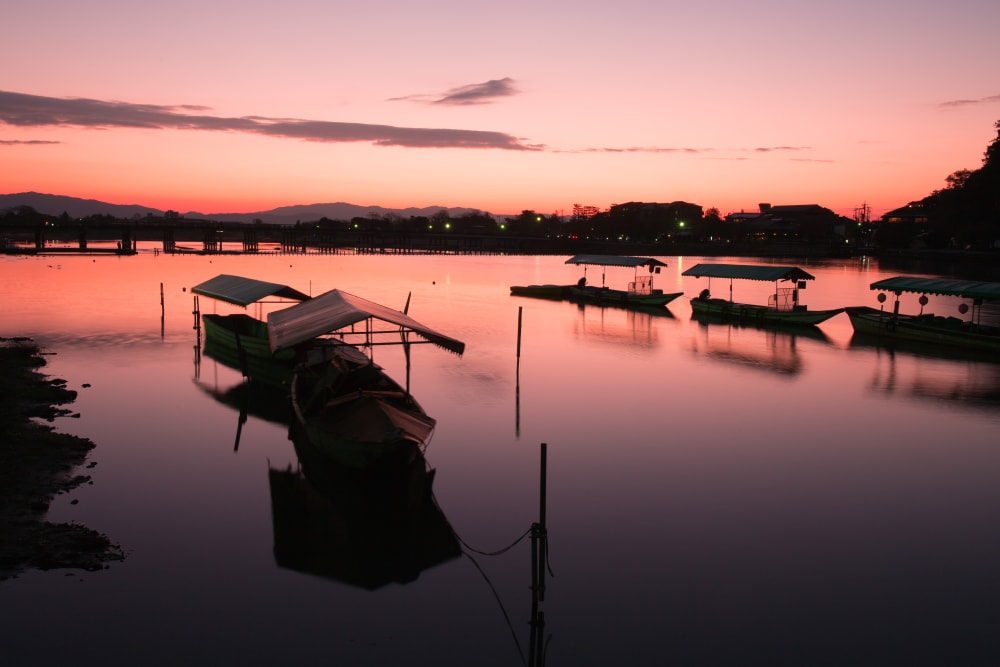
Togetsukyo Bridge is the best-known river crossing in Arashiyama, the scenic district on Kyoto’s western edge. The 155-metre bridge spans the Katsura River against a backdrop of wooded hills, making it an easy starting point for a walk through the neighbourhood. Its appeal is not a ticketed attraction or a complicated itinerary: it is the combination of riverside views, local history, nearby temples, and seasonal scenery.
This guide covers the bridge’s history, how to reach it by train, what to see nearby, and how to plan a visit without relying on outdated walking-time estimates or promises about cherry blossom and autumn-leaf dates. Information was checked against the Japan National Tourism Organization’s bridge guide and Kyoto City’s official tourism page in October 2026.
Key Takeaways
Togetsukyo Bridge: Quick Facts
- Where: Arashiyama, Ukyo Ward, western Kyoto, Japan.
- Length: approximately 155 metres.
- River: Katsura River, also called the Oi or Hozu River in nearby sections.
- Current bridge: completed in 1934; the site has a much longer history.
- Admission: the public bridge itself is free to cross; nearby temples, transport and activities may charge.
- Access: JR Saga-Arashiyama, Randen Arashiyama, or Hankyu Arashiyama stations, depending on your starting point.
- Best for: riverside views, photography, easy walks and combining several Arashiyama sights.
For broader regional context, read our Arashiyama area guide and the Japan destination collection. Togetsukyo is a landmark within a much larger district, so leave time to explore beyond the bridge itself.
Why Is Togetsukyo Bridge Famous?
The bridge connects the lively streets near Arashiyama’s shops and temples with the riverbanks and parks on the other side. Its elegant outline appears in countless Kyoto travel photographs because the mountains create a different backdrop in each season. The crossing is particularly attractive in spring and autumn, but the river, hills and townscape are worth seeing throughout the year.
The name Togetsukyo is commonly translated as “Moon Crossing Bridge.” According to a story associated with Emperor Kameyama in the Kamakura period, the emperor watched the moon during a boating excursion and thought it appeared to cross the bridge. It is a historical legend, not an observation travellers should expect to reproduce on a particular evening.
How Old Is the Bridge?
The first bridge at or near this site is traditionally dated to 836. The structure visitors use today was completed in 1934. Although it has a traditional wooden appearance, the main columns and beams are reinforced concrete; cypress is used for the parapets. This design combines a familiar historic profile with modern structural materials.
Kyoto’s official tourism information describes Togetsukyo as a longstanding Arashiyama landmark and notes its association with historic films and local traditions. Visitors should appreciate it as a working pedestrian and road crossing, not an open-air museum: remain aware of other people and traffic while taking photos.
How to Get to Togetsukyo Bridge From Kyoto
Option 1: JR Sagano Line From Kyoto Station
From Kyoto Station, take the JR Sagano Line to Saga-Arashiyama Station. The official Kyoto access guide estimates about 11 minutes by rapid train and roughly eight minutes on foot from Saga-Arashiyama Station to the bridge area. Allow more time for a crowded platform, navigation, or travelling with children.
JR is often the most straightforward choice for visitors staying near Kyoto Station. The Sagano Line platforms can be farther from the main station entrances than expected. During busy seasons, use train signs and station staff directions rather than rushing to the first carriage.
Option 2: Randen Tram to Arashiyama Station
The Keifuku Randen tram reaches Arashiyama Station close to the central shopping street. Kyoto City’s access guidance estimates about four minutes on foot from the station to Togetsukyo Bridge. This can be a convenient choice if you are already near the Randen network or want a scenic local tram journey.
Option 3: Hankyu Railway to Arashiyama Station
Visitors coming from the Shijo-Kawaramachi area can take the Hankyu Kyoto Line toward Katsura and transfer to the Hankyu Arashiyama Line. From Hankyu Arashiyama Station, walk through the riverside park area toward the bridge. This route approaches the river from the opposite bank and offers pleasant views as you get closer.
Should You Take the Bus?
Kyoto’s official travel advice warns that buses into Saga-Arashiyama can be slow and crowded, particularly during popular travel periods. Rail is usually easier to plan around, though the best route depends on where you start. Check live service notices, especially in periods of bad weather or large local events.
What Is the Best Time to Visit Togetsukyo Bridge?
Spring: Cherry Blossoms and Riverside Walks
In spring, cherry trees along the river and on the nearby slopes add soft colour to the landscape. Exact bloom dates vary from year to year, so avoid planning a trip around an unverified “peak” date. Early mornings often make it easier to find a clear viewpoint before tour groups arrive. If the riverbank is crowded, keep moving rather than blocking a narrow path for photographs.
Summer: Green Hills and River Activities
Summer brings dense green foliage and warm weather. Walking is still rewarding, but humidity and strong sun make water, shade and breaks important. Some river activities operate seasonally; confirm the operator’s dates, weather restrictions and availability before building a fixed schedule around them. For a longer day, the Hozu River boat cruise is a separate experience that requires its own planning.
Autumn: Colourful Mountains and Larger Crowds
Autumn foliage is a major draw, with red and gold leaves visible across the hills. It is also one of the busiest times of year. Allow extra time at stations and crossings, and consider visiting early in the day. If your main goal is photography, the riverbanks offer different compositions from the bridge itself.
Winter: Quieter Views and Crisp Air
Winter can offer a calmer atmosphere and clear views of the mountain slopes. Snow is possible but should never be promised for a specific date. Wear layers and check conditions before a longer walk. Even without blossoms or colourful leaves, the bridge’s shape and river setting remain distinctive.
Best Things to Do Around Togetsukyo Bridge
1. Walk Along the Katsura River
Start by viewing the bridge from both banks. The broad riverside setting provides room to appreciate the mountain backdrop without stopping in the middle of the crossing. The parks and paths can be a pleasant short outing on their own, especially for families who do not want a full day of temple visits.
2. Visit Arashiyama Bamboo Grove
The Arashiyama Bamboo Grove is one of the area’s best-known sights. It is not on the bridge itself, so allow walking time and expect crowds during popular periods. The grove’s paths are narrow in places; stay on designated routes and respect nearby residents and private property.
3. Explore Tenryu-ji Temple
Tenryu-ji Temple is a natural next stop for visitors interested in Zen gardens and Kyoto heritage. The grounds and buildings have separate visitor arrangements, so check the current admission rules before entering. Combining the temple with the bridge and bamboo grove creates a coherent Arashiyama half-day route.
4. Consider the Sagano Scenic Railway
The Sagano Scenic Railway is a popular option for seeing the surrounding river valley. It is not an ordinary subway or the fastest route back to central Kyoto; it is a sightseeing experience with its own timetable, seasonal operation and ticket rules. Reserve ahead when necessary and avoid assuming there will be same-day seats.
5. Discover Smaller Temples and Historic Paths
Travellers with extra time can consider Jojakko-ji Temple, Adashino Nenbutsu-ji Temple, and Daikaku-ji Temple. These sites are not all immediately beside the bridge; check distances and closing times rather than trying to squeeze everything into a short visit.
For another seasonal or cultural perspective, look into the Mifune Festival when its official programme is announced. It is an event with specific dates, not a daily activity that visitors can assume will be taking place.
Suggested Togetsukyo and Arashiyama Itineraries
A Relaxed Two-Hour Visit
Arrive by rail, walk to the river, cross the bridge and take photographs from a safe riverside viewpoint. Explore the main street for a snack or souvenir, then return to your station. This is a good option for visitors with limited mobility, young children, or an afternoon commitment elsewhere in Kyoto.
A Half-Day Arashiyama Walk
Start at the bridge before the busiest period, continue to Tenryu-ji and the bamboo grove, then choose one nearby temple or a quiet riverside break. Allow flexible time for meals and crowds. If you want a deeper nature-focused outing, substitute the scenic railway or a river activity for an additional temple.
A Full Day Exploring Western Kyoto
For a longer itinerary, combine Arashiyama with Suzumushi-dera Temple or another western Kyoto site, provided transport and opening hours make sense. Avoid treating distant Kyoto attractions as if they were next door: Kinkaku-ji Temple and Nijo Castle require separate travel time.
Practical Tips for Visiting Togetsukyo
- Wear comfortable shoes. The bridge is short, but most visitors walk considerably farther around Arashiyama.
- Use trains when possible. Road congestion can make bus travel less predictable during busy seasons.
- Protect the local environment. Take rubbish away, follow signs and stay out of restricted riverbank areas.
- Do not stop in traffic. Photograph the bridge from safe viewing points rather than blocking the road or pedestrian flow.
- Check weather and river conditions. Rain, storms or high water can affect nearby paths and river-based activities.
- Allow extra time in spring and autumn. Popular photo spots and nearby temples can be crowded.
Other Kyoto Places to Add to Your Trip
Travellers who enjoy historic neighbourhoods can plan another day around Gion, Pontocho, and Nishiki Market. For major temples in other parts of the city, compare Kiyomizu-dera Temple and Fushimi Inari Taisha. These links are for broader Kyoto itinerary planning, not stops within a few minutes of Togetsukyo.
If you are interested in Kyoto’s rail heritage as well as the journey to Arashiyama, Kyoto Railway Museum is another separate outing worth considering. Build your day around a small number of meaningful stops instead of chasing a long checklist.
Frequently Asked Questions
Is Togetsukyo Bridge free to visit?
The public bridge itself does not require an admission ticket. Nearby temples, scenic transport, boat rides and paid experiences may have their own fees and opening hours.
How long should I spend at Togetsukyo?
Allow around 20–40 minutes for the crossing and riverside views if you are only stopping at the bridge. Most travellers benefit from a half-day to explore the surrounding Arashiyama district at a relaxed pace.
Which station is closest?
Randen Arashiyama Station is convenient for the central area, while JR Saga-Arashiyama and Hankyu Arashiyama are useful from different parts of Kyoto. The best option depends on your starting point, not just the station name.
Can I visit Togetsukyo Bridge at night?
It is a public crossing rather than a ticketed venue, but nearby businesses and attractions close at different times. For comfort and photographs, daylight is generally the easiest choice. Follow local safety guidance and do not rely on decorative lighting being available every night.
When are the cherry blossoms or autumn leaves at their best?
Timing varies by year and weather. Check the latest local forecasts closer to your trip, and treat historical peak dates as general guidance rather than guarantees.
Official References
For historical details and visitor context, see the JNTO Togetsukyo Bridge guide, Kyoto City tourism description, Kyoto City’s Saga/Arashiyama transport guidance, and JNTO Arashiyama overview. Confirm live train schedules, weather and individual attraction hours before travelling.
Address And Maps Location:
Togetsukyo, Saga, Ukyo-ku, Kyoto-shi, Kyoto-fu
Find Location And Direction On Google Maps
Subscribe, follow travelbloggerindonesia.com