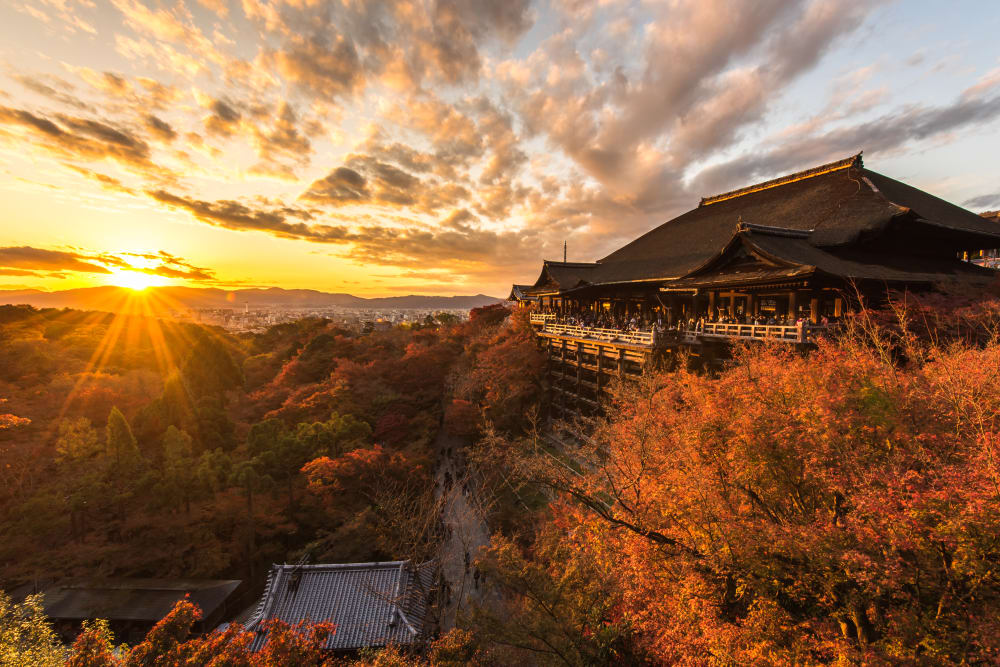
Kiyomizu-dera (also written Kiyomizudera) is one of Japan‘s best-known Buddhist temples in Kyoto, perched above the streets of Higashiyama on the eastern side of the city. Its wooden main-hall stage looks out over the rooftops and wooded slopes, but the experience is not just about a viewpoint. The approach through historic lanes, worship spaces and Otowa Waterfall makes it an excellent introduction to Kyoto’s living religious heritage. This guide explains what to see, how to reach the temple, 2026 visiting hours, the current Jishu Shrine closure and how to build a sensible walking route.
Key Takeaways
Why Kiyomizu-dera is worth visiting
The temple is part of the UNESCO-listed Historic Monuments of Ancient Kyoto. Its hillside setting gives the main hall a striking silhouette: the broad timber veranda projects over the slope, supported by a framework of wooden pillars. Visitors often focus on the stage photograph, yet the sequence of gates, halls, stone paths and views is just as memorable. Unlike a conventional observation deck, this is an active place of worship, so plan to move slowly and be considerate of people praying.
For a wider introduction to Kyoto, start with our guide to Kyoto Station and the city’s traditional Gion district. Both help place the temple within a realistic sightseeing day rather than treating it as an isolated photo stop.
What to see at Kiyomizu-dera
The wooden stage and Main Hall
The celebrated veranda rises roughly 13 metres above the hillside and is associated with traditional Japanese timber joinery. The main hall is dedicated to Kannon, the bodhisattva of compassion. The stage is a place to appreciate the temple’s architecture and Kyoto’s changing landscape, not a platform to rush through. On busy days, wait patiently for a clear view rather than blocking the flow of visitors.
Okuno-in and the view back toward the stage
After the main hall, follow the designated visitor route toward Okuno-in. Looking back from this area reveals the full shape of the main hall against the wooded slope. This is often a better way to understand how the famous stage fits into the complex than looking outward from the stage itself. Seasonal light changes the scene considerably, particularly during autumn foliage.
Otowa Waterfall
Below the main hall, the Otowa Waterfall divides into three streams. Visitors traditionally associate the water with blessings and good fortune. Observe the current queue and hygiene instructions; if the ritual is operating, use the provided equipment as directed and do not drink directly from a shared ladle. You can also simply observe the waterfall without taking part.
Jishu Shrine: important closure update for 2026
Older sightseeing articles describe Jishu Shrine, its matchmaking traditions and the two ‘love stones’ as an accessible stop behind the main hall. That is not a safe assumption in 2026. The shrine’s own official notice says it is closed for renovation, with no confirmed reopening date. Its historical association with relationships remains part of the temple area’s story, but do not promise visitors access to the stones or schedule a visit around them.
Walking to the temple: Ninenzaka, Sannenzaka and Higashiyama
One of the pleasures of Kiyomizu-dera is the approach. Narrow, often crowded pedestrian lanes climb from the Gion and Higashiyama area toward the temple. Ninenzaka and Sannenzaka feature traditional-looking shopfronts, snacks, ceramics and souvenir shops. Some sections have steps or steep paving, so comfortable footwear is more useful than trying to hurry uphill. Stop to look at Kiyomizu-yaki pottery and local food, but leave room for pedestrians and respect shop photography rules.
A pleasant route begins near Yasaka Shrine, passes Maruyama Park and Kodaiji Temple, then winds through the old streets to Kiyomizu-dera. The exact order can be reversed if you prefer to arrive at the temple early. Another nearby historical stop is Chion-in Temple; allow extra time rather than attempting every sight in one hour.
Kiyomizu-dera opening hours and admission in 2026
According to the temple’s official 2026 visitor timetable, the gates open at 6:00 a.m. throughout the year. Closing time is generally 6:00 p.m., with some summer dates extending to 6:30 p.m. and designated evening illumination dates extending to 9:30 p.m. For 2026, the published special night-opening periods are 27 March–5 April, 14–16 August and 21–30 November, with final entry at 9:00 p.m. on the special evening dates. Check the official schedule again close to travel because seasonal arrangements may change.
The temple’s June 2026 Thousand-day Prayer announcement lists admission of ¥500 for adults and ¥200 for elementary and junior-high students for that special viewing. Ordinary admission is commonly quoted at the same levels, but verify the current ticket price at the entrance or official information before relying on it. The temple’s official FAQ confirms there is no general group discount and describes some eligibility-based free-entry arrangements.
How to get to Kiyomizu-dera
From Kyoto Station
City buses and sightseeing services connect the station with the Gojo-zaka or Kiyomizu-michi area. From the bus stop, expect an uphill walk of roughly ten to fifteen minutes depending on your route and walking pace. Kyoto’s official tourism site recommends considering a train-and-walk combination when road traffic is heavy. Its Higashiyama access guide explains alternatives via the Keihan Railway and Higashiyama Station.
2026 sightseeing-bus options
Kyoto’s tourism authority announced a weekday Kiyomizu-dera sightseeing service starting in July 2026, with an operating period scheduled through January 2027 and exclusions for certain holidays. Its 2026 service notice gives an adult one-ride fare of ¥500 and notes that guided-tour tickets are a separate product. Weekend express sightseeing routes may also operate. Do not assume one bus number runs every day: check the date, stop, service pattern and current fare before departure.
Walking from Gion or Kiyomizu-Gojo
Walking from Pontocho or Gion can be rewarding if you have time to explore eastern Kyoto. Kiyomizu-Gojo Station on the Keihan line is another approach, but the final stretch is uphill and longer than a short station exit. The temple warns that map applications sometimes suggest routes that do not lead to its permitted entrances; use the established Kiyomizu-zaka approach or the Chawan-zaka access described on its official site.
Best time of day and season to visit
Early morning for a quieter atmosphere
Opening at 6:00 a.m. gives early risers a chance to see the grounds before the main tour groups arrive. Shops on the approach may not yet be open, so treat an early temple visit and shopping in the lanes as separate activities. A later morning visit is easier for cafés and souvenir browsing but typically busier at the stage and waterfall.
Spring, summer, autumn and winter
Spring brings cherry blossoms, summer deep green foliage, autumn red and gold leaves, and winter clearer views through bare branches. Peak blossom and foliage periods can be crowded; dates vary with weather. Special night illuminations are atmospheric but are limited to announced dates. For other seasonal Kyoto ideas, compare Gion Matsuri, Maruyama Park and the quieter Philosopher’s Path.
Suggested half-day Higashiyama itinerary
Option A: temple first
Arrive soon after the gates open, walk the main temple route at an unhurried pace, then descend through Sannenzaka and Ninenzaka. Continue toward Kodaiji and Yasaka Shrine for a natural sequence of nearby stops. If you want more cultural context, Kyoto National Museum is another option, but confirm its exhibition schedule and allow for transport.
Option B: Gion to Kiyomizu-dera
Start around Yasaka Shrine, explore the traditional lanes, pause for lunch and reach the temple later in the day. This is better for people who want shops and food as part of the walk, but check the day’s closing time and allow enough time for the paid area. For an evening elsewhere in central Kyoto, consider Nishiki Market during shop opening hours and Pontocho for the riverside atmosphere.
Practical visiting tips
Wear shoes suitable for slopes and steps, carry water in warm weather and allow at least 60–90 minutes for the temple itself, more for the surrounding streets. Respect prayer areas, follow signs around the wooden stage and do not assume commercial photography is permitted. The temple’s FAQ says wheelchair-friendly routes exist in the grounds, but the historic approach streets have slopes and steps; consult the official accessibility map in advance.
For visitors planning several Kyoto days, Fushimi Inari Taisha and Nijo Castle offer contrasting experiences, while Kinkakuji Temple and Arashiyama Bamboo Grove require separate travel time. Avoid cramming them all into the same short morning.
Frequently asked questions
Is Kiyomizu-dera free to enter?
Parts of the approach are publicly accessible, but the main temple visitor route requires an admission ticket. Confirm the current amount before visiting; 2026 temple announcements show ¥500 adult and ¥200 elementary/junior-high admission for a special viewing.
Can I visit Jishu Shrine in 2026?
No. The shrine’s official website states that it is closed for renovations and has not announced a reopening date. The matchmaking stones should not be listed as an available activity.
How long should I spend at Kiyomizu-dera?
Allow roughly one to two hours for the temple, depending on crowds and how often you stop. Add another hour or more for the lanes and nearby shrines.
Is Kiyomizu-dera suitable for families and wheelchair users?
Families can visit, but the approaches are hilly and may be crowded. The temple provides step-free routes within public areas; consult its accessibility map before arriving with a wheelchair or stroller.
Official sources and further information
Visitor details checked against Japan National Tourism Organization’s Kiyomizudera guide, the temple’s official hours and access information and Jishu Shrine’s closure notice. Opening arrangements, transport and fees may change after publication.
Address And Maps Location:
294 Kiyomizu 1 Chome, Higashiyama-ku, Kyoto-shi, Kyoto-fu
Find Location And Direction On Google Maps
Subscribe, follow travelbloggerindonesia.com