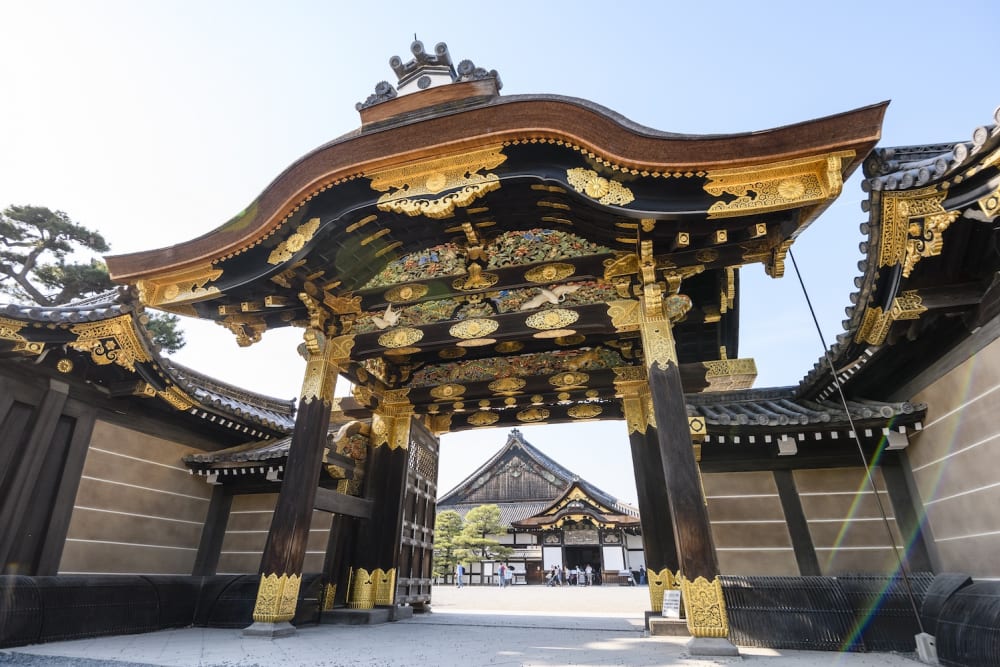
A reminder of the power of the Edo period’s warlords
Nijo Castle is a historical landmark in japan that serves as a stark reminder of the power that the shogun, or warlords, held over the emperor during the Edo period. Built between 1601 and 1626, Nijo Castle is one of the best-known castles in Japan and is designated as a UNESCO World Heritage site. It is located in Kyoto, the former capital of Japan, and is a popular tourist attraction due to its historical significance, architectural beauty, and exquisite gardens.
The castle was the residence of Tokugawa Ieyasu, the first in a line of powerful Tokugawa shogun who ruled Japan for over 200 years. The castle complex consists of several buildings, including the Ninomaru Palace, which is known for its impressive architecture and intricate details. The palace features exquisite wood carvings, decorative panels, and remarkable screen paintings by renowned artists Kano Tanyu and Naonobu.
One of the most striking features of Nijo Castle is its imposing presence. Built overlooking the nearby Imperial Palace, it was designed to showcase the power and authority of the shogun over the emperor. The palace’s lavish decorations and luxurious design stand in stark contrast to the simplicity of the royal palace, serving as a symbol of the shogun’s wealth and influence.
The castle grounds also house the Ninomaru Palace Garden, a traditional Japanese landscape garden designed by acclaimed architect Kobori Enshu. The garden is a masterpiece of design, featuring meticulously manicured trees, serene ponds, and picturesque stone pathways. Visitors can stroll through the garden and admire its beauty in all seasons. In late February and early March, the plum orchard blooms in profusion, adding a burst of color to the surroundings. In late fall, the maple and gingko trees turn vibrant shades of red and gold, creating a breathtaking display.
To fully appreciate the beauty and historical significance of Nijo Castle, it is recommended to visit either just after opening or just before closing to avoid the crowds. This allows visitors to explore the entire complex at their own pace and immerse themselves in the rich history and cultural heritage of Japan.
Getting to Nijo Castle is relatively easy. From Kyoto Station, visitors can take the Karasuma Line to Karasuma-Oike Station and then transfer to the Tozai Line, which will take them directly to Nijojo-mae Station. The castle is located at 541 Nijojocho, Nakagyo-ku, Kyoto-shi, Kyoto-fu.
Visiting Nijo Castle is a journey back in time to the Edo period, where the power and influence of the shogun were at their peak. The castle stands as a testament to the rich history and cultural heritage of Japan, and a reminder of the enduring legacy of the warlords who shaped the country’s destiny.
In conclusion, Nijo Castle is a must-visit destination for anyone interested in Japanese history, architecture, and culture. Its grandeur, intricate details, and beautiful gardens make it a captivating sight to behold. By exploring the castle and its surroundings, visitors can gain a deeper understanding of the power dynamics of the Edo period and appreciate the artistry and craftsmanship of the time. Whether it’s admiring the lavish decorations of the Ninomaru Palace or strolling through the tranquil gardens, a visit to Nijo Castle is sure to leave a lasting impression.
Address And Maps Location:
541 Nijojocho, Nakagyo-ku, Kyoto-shi, Kyoto-fu
Find Location And Direction On Google Maps
Subscribe, follow travelbloggerindonesia.com