Where Tokyo’s Modern Pop Culture and Rich History Meet
Introduction:
Tokyo, the bustling capital city of japan, is a vibrant metropolis that seamlessly blends modern pop culture with its rich historical heritage. One of the prime examples of this unique fusion can be witnessed at the iconic Meiji Jingu Shrine. Located in the heart of Tokyo, surrounded by a lush green forest, this Shinto shrine is dedicated to Emperor Meiji and Empress Shoken, who played a pivotal role in transforming Japan into a modernized nation. A visit to Meiji Jingu is a must for any traveler seeking to explore both the contemporary and traditional aspects of Tokyo.
A Century of History:
Meiji Jingu Shrine was built in 1920 to honor the virtues and accomplishments of Emperor Meiji and Empress Shoken. Emperor Meiji was instrumental in establishing diplomatic relationships with several world powers, and his reign witnessed Japan’s transformation into an industrialized nation. Sadly, during World War II, the shrine’s buildings were destroyed, but they were subsequently rebuilt through a public fundraising effort. Today, Meiji Jingu stands as a testament to the resilience and enduring spirit of the Japanese people.
Walking Out of the City and into Nature:
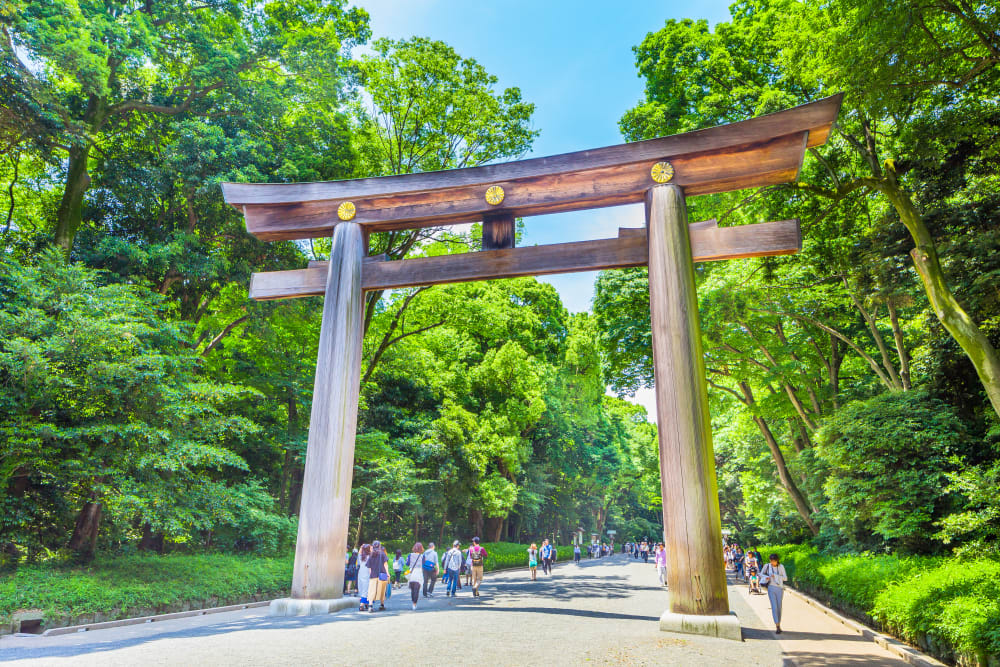
As you approach Meiji Jingu Shrine, you will be greeted by a serene pathway that leads you into the forest. The short walk to the front gates is sheltered by towering trees, creating a tranquil atmosphere that shields you from the hustle and bustle of the city. Passing under the torii gate, which marks the entrance to the shrine grounds, you will be transported into a world that feels far removed from the urban chaos. This manmade forest, consisting of approximately 100,000 trees donated from all over Japan, is a testament to the country’s commitment to preserving its natural beauty.
Taking Part in the Shrine’s Traditions:
Once inside the shrine complex, visitors have the opportunity to partake in various traditional Shinto rituals. English signage is available to guide tourists through these customs, ensuring that everyone can fully engage with the spiritual practices. Making offerings and praying at the main shrine, writing wishes on ema tablets, and purchasing fortunes or amulets are some of the rituals that visitors can participate in. These traditions offer a glimpse into the deep-rooted beliefs and customs of the Japanese people.
The “Power Spot”:
One of the highlights of Meiji Jingu Shrine is the expansive Inner Garden, located at the southern end of the shrine grounds. Often overlooked by visitors, this hidden gem played an important role in the lives of Emperor Meiji and Empress Shoken. The garden features stunning iris flower beds, which were frequently visited by the imperial couple. Additionally, Kiyomasa’s Well, a 400-year-old well named after the lord who dug it, is considered a “power spot” where visitors can receive positive and restorative energy. The Inner Garden is a beautiful oasis within the shrine complex, offering tranquil forest walks and a traditional Japanese tea house.
A Center for Festivals and Events:
Meiji Jingu Shrine is not only a place of worship but also a vibrant hub for festivals and events throughout the year. The shrine hosts numerous rituals and celebrations, starting with the New Year’s Day festivities, which attract millions of visitors seeking good fortune for the year ahead. From traditional music and dance performances during the Spring Grand Festival to Shinto weddings that showcase the elegance of Japanese culture, there is always something happening at Meiji Jingu. Additionally, neighboring Yoyogi Park serves as a venue for modern festivals, food fairs, and live performances, further adding to the vibrant atmosphere surrounding the shrine.
Conclusion:
Meiji Jingu Shrine stands as a symbol of Tokyo’s harmonious blend of modernity and tradition. Its serene forest setting, rich history, and vibrant festivals make it a must-visit destination for anyone exploring the city. Whether you are captivated by the allure of Tokyo’s pop culture or wish to immerse yourself in its profound historical heritage, Meiji Jingu offers a unique experience that encapsulates the essence of this extraordinary city. So, when you find yourself in Tokyo, don’t miss the opportunity to visit Meiji Jingu Shrine and discover the meeting point of Tokyo’s modern pop culture and rich history.
Address And Maps Location:
1-1 Yoyogikamizono-cho, Shibuya-ku, Tokyo-to
Find Location And Direction On Google Maps
Subscribe, follow travelbloggerindonesia.com