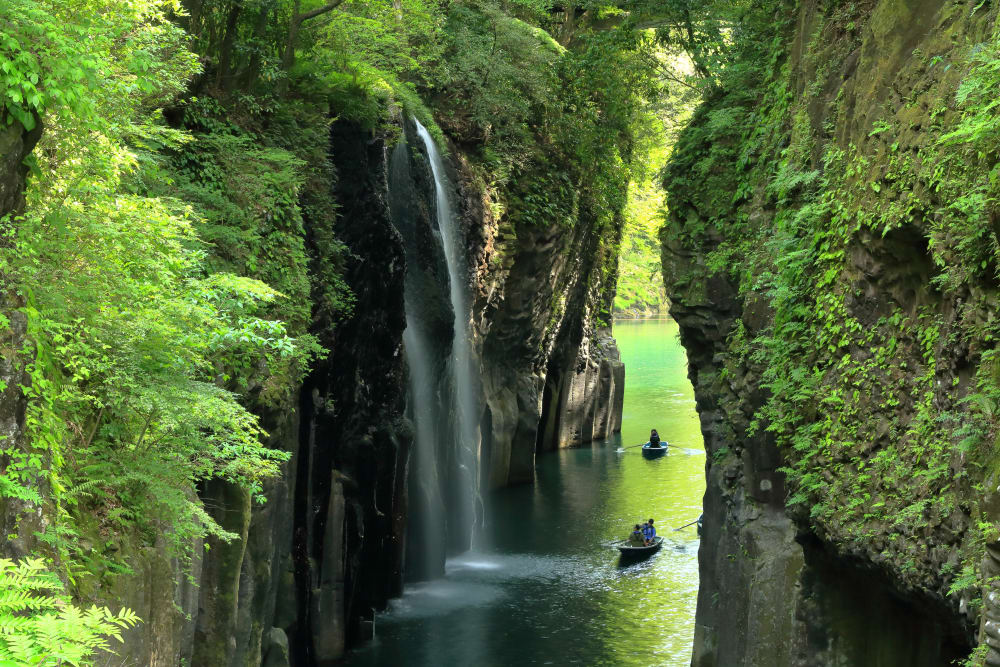
Takachiho Gorge is a dramatic volcanic canyon in Miyazaki Prefecture on Japan’s Kyushu island. Its steep columnar rock walls frame the Gokase River and the 17-metre Manai Falls, one of the region’s best-known landscapes. Visitors can appreciate the scenery from the walking route and designated viewpoints, while a limited number of rowboats offer a different perspective from the water.
Planning matters here: the boat operation uses timed online reservations, weather can cause closures, and some sections of the walking route may be restricted. This guide covers the scenery, boat booking, access, nearby shrines, realistic itineraries and the practical details to check before travelling.
Key Takeaways
Why Takachiho Gorge Is Worth Visiting
The gorge was shaped by volcanic activity and erosion. Ancient lava cooled into distinctive columnar joints; the Gokase River then cut through the rock. The result is a narrow canyon with dramatic walls and a ribbon of falling water. The best-known waterfall is Manai Falls, approximately 17 metres high. The waterfall and boats look particularly striking when seen from the bridge or a designated viewing area above the river.
Takachiho also has a rich mythological and religious heritage. A trip can combine nature with Takachiho Shrine, Amano-Iwato Shrine and traditional performances such as Takachiho Evening Kagura. These are different attractions with their own access arrangements; allow enough time rather than assuming everything is within a short walk.
Essential facts
- Location: Takachiho, Nishiusuki District, Miyazaki Prefecture, Kyushu, Japan.
- Main waterfall: Manai Falls, around 17 metres high.
- Main activities: viewpoint photography, riverside walking where open, optional rowboat ride and cultural side trips.
- Boat ride: generally 30 minutes per rental, with advance reservations strongly recommended.
- Access: travel via Kumamoto or Miyazaki/Nobeoka, then road transport toward Takachiho; no train station directly at the gorge.
- Best strategy: confirm both boat operations and walking-path restrictions on the day of your visit.
Takachiho Gorge Rowboats: Booking, Fees and Rules
How to reserve a boat
The Takachiho Town Tourism Association’s official boat information explains that advance reservations are made online. The published reservation window opens at 9:00 a.m. Japan time, two weeks before the ride and normally closes at 9:00 a.m., two days before. Reservations are prepaid by credit card; telephone and email reservations are not accepted, and there is no waiting list.
Same-day boats may be sold if inventory remains, but some high-demand dates are reservation-only. A sold-out reservation-only date may have no walk-up availability. If the boat ride is your main reason for visiting, secure a confirmed booking before building a tight travel itinerary around it.
How much does the boat cost?
The association publishes a date-specific price calendar rather than one permanent rate. Its October 2026 calendar shows examples of ¥4,100 and ¥5,100 for a 30-minute boat rental, depending on date; other months may differ. Extra time is charged separately, with the official page listing ¥1,000 per additional ten minutes. Check the calendar for your exact visit date instead of treating these examples as a guaranteed future price.
Each boat normally carries up to three people; the association allows a fourth only under specified conditions involving a preschool child. Pets are not permitted. Follow staff instructions on life jackets, rowing and where boats may travel. Do not stand in the boat or attempt to row directly under the waterfall.
Hours and weather-related closures
The official association lists normal operation at approximately 8:30 a.m.–5:00 p.m., with last reception around 4:30 p.m.; this can change because of queues, inspections or weather. Water levels, heavy rain, typhoons and earthquakes may suspend rentals. The association updates operating status around the morning of each operating day, so a reservation does not guarantee that conditions will allow boats to launch.
Even when boats are suspended, the gorge may still be worthwhile for its viewpoints if the walking areas remain open. Check the official daily operating status rather than relying on an older travel blog or a map’s generic opening-hours listing.
What to Do Without a Boat
See Manai Falls from above
Look for designated viewpoints around the gorge to photograph the waterfall, the dark columnar cliffs and the river. A view from above is often enough to appreciate the scenery, and it avoids the booking uncertainty of the boats. Be considerate when others are waiting for a photograph, especially at narrow viewing spots.
Walk the gorge paths where open
The walking route offers changing angles of the canyon, but do not assume the entire historic promenade is accessible. Parts of the path have been subject to closures and detours, and wet sections can be slippery. Follow the latest on-site signs and tourism notices; never step around barriers to reach a former photo spot.
Enjoy the scenery in different seasons
Spring and early summer bring fresh greenery. Autumn foliage can be particularly attractive from roughly mid-November into early December, although timing changes with weather. Summer can be humid and storm-prone, while winter brings colder conditions and shorter daylight. The gorge is photogenic in many seasons, but water levels and safety restrictions matter more than a particular foliage forecast.
Nearby Shrines and Cultural Experiences
Takachiho Shrine and Evening Kagura
Takachiho Shrine is an important Shinto site associated with local traditions. A cultural highlight is Takachiho Evening Kagura, a performance rooted in regional mythology. Performance schedules, tickets and venues can change, so verify them with local tourism information before committing to an overnight stay.
Amano-Iwato Shrine and the sun-goddess legend
Amano-Iwato Shrine is associated with the legend of Amaterasu, the sun goddess who hid in a cave. The shrine is near the sacred cave; the cave itself is not simply an ordinary walk-in visitor attraction. Respect guided viewing arrangements and any photography restrictions. The wider tradition is also reflected in Amano Iwato Kagura.
Other Kyushu heritage and nature
For travellers extending their Kyushu itinerary, Kumamoto City can serve as a transport hub. Other cultural stops include Aso Shrine and Miyazaki Jingu Shrine. These are regional options, not attractions directly beside the gorge.
How to Get to Takachiho Gorge
From Kumamoto
Kumamoto is one of the more useful gateways for visitors arriving by train or plane. Check current intercity bus routes and whether your service stops at Takachiho Bus Center. From the bus center, you still need to plan the final connection or walk to the gorge; allow time for hills, luggage and the distance to the boat reception point. The JNTO Takachiho Gorge guide identifies Kumamoto as a principal approach.
From Miyazaki and Nobeoka
Driving from Miyazaki can take roughly two and a half hours in good conditions, depending on the route and starting point. Public transport may involve a connection through Nobeoka; schedules can be limited, so check the latest services rather than assuming frequent departures. A rental car may simplify visits to multiple rural sites, but mountain roads and seasonal traffic still require care.
Parking and the final approach
The No. 1 Oshioi parking area is close to the boat reception, but the official association warns that there is no boat-only reserved parking. Other parking areas can require a longer walk. Peak-season shuttle services may operate on selected dates, not necessarily daily. Plan to arrive early and leave enough time between parking and your booked boat slot.
Sample Itineraries
Half-day: scenery and a short walk
Arrive early, check the day’s path restrictions, see Manai Falls from the viewpoints, and walk the open sections of the gorge. If you have a confirmed boat reservation, add the ride and allow time for check-in. This option suits travellers who want a focused nature visit.
Full day: gorge and shrines
Combine the gorge with Takachiho Shrine and Amano-Iwato Shrine, allowing for transfers and time at each site. If you hope to see evening kagura, confirm its schedule and arrange accommodation or safe onward transport rather than planning an unverified late-night connection.
Two-day Kyushu extension
With a second day, consider a wider nature route toward Kusa Senrigahama near Aso, the Yamanami Highway or Kuju Highland. On a Miyazaki-focused route, Obi Castle Town, the Devil’s Washboard coastal rock formations and Cape Toi offer very different scenery. These are substantial detours; do not pack them all into the same day as Takachiho Gorge.
Safety, Accessibility and Travel Tips
- Reservations: use the official boat website and keep the confirmation details available offline.
- Weather: monitor rain, river levels and the association’s morning update. Do not pressure staff to operate during a safety suspension.
- Footwear: wear shoes with grip for wet paths and uneven ground.
- Mobility: paths and parking areas may involve slopes, steps and detours. Ask the local association about current accessible routes.
- Photography: stay behind railings and respect boat users and other visitors.
- Time: allow buffers for rural buses, parking, boat check-in and queues.
- Culture: observe shrine etiquette and check performance rules before photographing rituals.
Travellers seeking more Kyushu landscapes could also explore Mt. Kirishima and Kirishima Jingu Shrine on a separate leg. They are not within walking distance of Takachiho.
Frequently Asked Questions About Takachiho Gorge
Can you visit Takachiho Gorge without renting a boat?
Yes. Designated viewpoints and accessible sections of the walking route provide views of the canyon and waterfall. Always check for temporary closures and detours.
Do Takachiho Gorge boats need advance reservations?
Advance online reservations are strongly recommended. Some dates are reservation-only, and same-day availability depends on remaining inventory. Booking windows and procedures are published by the town tourism association.
How long is a boat ride?
The standard rental duration is 30 minutes. Extra time is chargeable, and operating conditions can affect availability.
Is the boat ride guaranteed if it rains?
No. Heavy rain, high water, inspections and other safety conditions can suspend the operation, even for visitors who reserved ahead.
What is the best time of year?
Spring greenery and autumn colours are popular, but the best day is one with safe conditions and a confirmed plan. Check seasonal crowds and the weather forecast.
Is Takachiho Gorge close to Kumamoto?
Kumamoto is a useful regional gateway, but Takachiho is a rural destination requiring onward road travel. Check current bus routes or realistic driving times.
Official Sources and Further Reading
- Japan National Tourism Organization — Takachiho Gorge
- Takachiho Town Tourism Association — Boat booking, prices and rules
- Takachiho Town Tourism Association — Daily boat operating status
Address And Maps Location:
Takachiho, Nishiusuki-gun, Miyazaki-ken
Find Location And Direction On Google Maps
Subscribe, follow travelbloggerindonesia.com