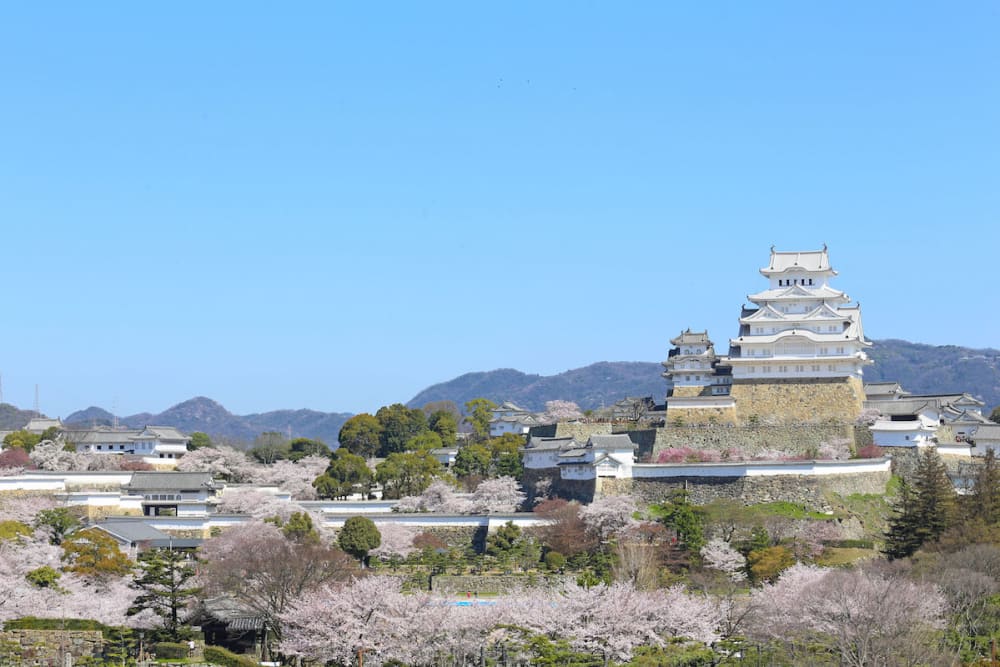
Himeji Castle is one of the most rewarding historic sites to visit in western Japan. Its white-plastered towers, winding defensive passages and largely surviving wooden structures explain why the fortress is known as the White Heron Castle. This practical guide covers what to see, how to get there, current 2026 admission fees, the nearby gardens and ways to plan a worthwhile visit. For a broader route, browse our japan destination collection.
Key Takeaways
Himeji Castle at a glance
Himeji-jo is a UNESCO World Heritage property and a National Treasure of Japan. Its surviving early-17th-century castle architecture combines a dramatic six-storey interior main keep with defensive gates, narrow routes and multiple baileys. The castle is not a reconstructed concrete tower: much of the original timber construction remains. UNESCO describes the property as a group of 83 buildings whose layout illustrates sophisticated Japanese defensive planning. Its striking exterior is created by white plaster walls and layered tiled roofs.
The castle stands at 68 Honmachi, Himeji, Hyogo Prefecture, around a 15–20-minute walk from JR Himeji Station. Allow roughly two hours for the paid castle grounds and longer if you also visit the gardens or stop to photograph the exterior. The hilltop keep involves steep wooden stairs and is not accessible by lift.
Himeji Castle tickets, opening hours and visitor rules in 2026
How much does entry cost?
Since 1 March 2026, the standard castle admission for adults aged 18 or older who are not Himeji City residents has been ¥2,500. Qualifying Himeji City residents pay ¥1,000, and the official fee schedule provides free admission for visitors under 18 (subject to its age cut-off definition). A combined castle-and-Kokoen Garden ticket costs ¥2,600. These prices supersede the ¥1,000 general adult ticket quoted in many older travel articles. The city’s fee categories depend on local residency, not nationality; check proof requirements and current prices before departure.
The official castle site lists 09:00–17:00 as standard hours, with final entry at 16:00, and scheduled closure on 29 and 30 December. Seasonal operations and crowd management can change; always verify the day’s hours at the official Himeji Castle website. The site’s digital ticket information is particularly useful during cherry-blossom season, weekends and Japanese public holidays.
How long should you allow?
For a comfortable first visit, plan 90–120 minutes inside the castle grounds and another 45–75 minutes for the nearby gardens. Queues at the keep may add significant time during sakura season. Arrive earlier in the day if climbing the keep is important; a late-afternoon ticket does not guarantee enough time to reach its entrance. Wear shoes that are easy to remove, and carry a compact bag because narrow wooden stairs and busy corridors make large luggage inconvenient.
Accessibility and preservation
The main keep has very steep stairs, low beams and uneven surfaces. There is no lift to the upper floors. Visitors with mobility limitations may enjoy views from the accessible exterior areas instead, but should confirm the current accessibility arrangements with castle staff. Do not assume the full keep is suitable for wheelchairs or strollers. Respect restrictions on pets, photography, food and protected structures; the official visitor FAQ provides updated operational guidance.
What makes Himeji Castle historically important?
From medieval fortifications to the early Edo period
The site developed over centuries, with earlier fortifications preceding the castle complex recognizable today. The major early-17th-century expansion is associated with the lord Ikeda Terumasa, and the surviving keep complex dates to the period around 1609. Rather than presenting a single isolated tower, the site preserves a network of gates, baileys and corridors designed to slow attackers. The white appearance also earned it the poetic name Shirasagi-jo, or White Heron Castle.
For context, compare Himeji’s largely original architecture with the restored landmark at Osaka Castle, the preserved historic setting of Akashi Castle Park, and the atmospheric ruins of Takeda Castle. Another useful comparison is Ako Castle in Hyogo, where surviving grounds tell a different chapter of regional castle history.
Why the approach feels like a maze
The entrance route bends through several gates and changes direction as it approaches the main keep. This was intentional: an invading force would be slowed, exposed and confused by the walls and tight passages. Look for defensive openings in the masonry, heavy timber doors and the way sightlines change between courtyards. The Japan National Tourism Organization heritage guide explains the military design without treating the castle as merely a scenic photo stop.
Top things to see inside and around the castle
The main keep and its timber interior
Walking up the main keep reveals wooden beams, defensive features and views from progressively higher floors. The external appearance suggests a complex series of roofs; inside, the main tower is arranged over six storeys plus a basement level. The upper floors are smaller, and the ascent becomes steeper. Signs and displays help explain how the building was constructed and used. The reward is not a lavish furnished palace but a rare opportunity to examine an authentic defensive building.
San-no-maru and the castle exterior
Visitors who do not buy an admission ticket can still appreciate views from the public parkland outside the paid castle area. San-no-maru’s lawns and the Otemon approach are good places to see the white keep rising above the walls. They are especially attractive in spring, though popular viewpoints become crowded. If your schedule is tight, an exterior walk and photos from Otemae-dori still provide a sense of the castle’s scale.
Cherry blossoms and seasonal scenery
Himeji’s grounds are known for their many cherry trees, usually flowering around late March to early April, although actual bloom timing varies with weather. The contrast between pink blossoms and the white castle makes this one of the region’s best-known spring scenes. Our separate guide to Himeji Castle cherry blossoms explores the seasonal appeal, while Hiokayama Park offers another Hyogo-area park option. Autumn foliage is attractive too, and winter can bring clearer views with fewer visitors outside holidays.
Kokoen Garden next door
Just west of the castle is Kokoen Garden, a group of nine walled Japanese gardens inspired by Edo-period landscaping. Expect ponds, bridges, carefully composed planting and a quieter atmosphere than the castle keep. The garden opened in 1992 on land associated with former samurai residences. Its standalone adult fee is ¥400 from March 2026, so the ¥2,600 castle-and-garden combination is often good value for visitors planning both attractions. Consult the official Himeji visitor guide to Kokoen for seasonal hours and entry details.
Other nearby cultural stops
If you have more time in Himeji, consider Shoshazan Engyoji Temple for a forested temple setting, or time your visit with the local Himeji Yukata Festival when its dates suit your trip. Travellers exploring Hyogo can also continue to the Hyogo Prefectural Museum of Art or the historic waterfront around Kobe Port Tower.
How to get to Himeji Castle
From Himeji Station
Leave JR Himeji Station by its north exit and walk straight along Otemae-dori toward the castle. The route is approximately one kilometre and takes most visitors 15–20 minutes. Alternatively, take a local bus toward the Himeji Castle Otemon-mae stop, then walk around five minutes. Check the bus destination and fare on the day rather than relying on a fixed historic fare. The castle’s official access instructions cover rail and bus connections.
From Osaka, Kobe or Okayama
Himeji is connected to Osaka, Kobe and Okayama by frequent rail services. The Sanyo Shinkansen can be useful for longer regional journeys, while regular JR services may be more economical depending on your starting point and pass. For itinerary planning, see Osaka Station, Osaka Station City, and Kobe Harborland for ideas to combine with the castle. Travellers arriving from Okayama may also enjoy comparing its architecture with Okayama Castle.
Suggested half-day and full-day itineraries
Two to three hours: castle-focused visit
Start from Himeji Station, photograph the castle along Otemae-dori, enter the paid grounds early enough to climb the keep, then walk through San-no-maru on your way back. This plan works best for visitors who primarily want the history and architecture rather than multiple nearby attractions.
Four to six hours: castle, gardens and lunch
Spend the morning exploring the main keep, then visit Kokoen Garden after lunch or a short rest. Add time for the historic streets and shops around the station. This is a balanced day trip for travellers staying in Osaka or Kobe, especially when paired with a visit to Kobe City Museum on another day.
Full day: Himeji and regional history
Combine the castle and gardens with Shoshazan Engyoji Temple if transport schedules and opening hours permit. Visitors interested in Japanese fortifications can build a broader Hyogo route around Motomachi in Kobe and the region’s other historic castle sites. Avoid packing too many locations into one afternoon, particularly during peak blossom season.
Practical tips before you visit
- Check the 2026 fee: the old ¥1,000 general-adult price is no longer the standard non-resident rate.
- Arrive early: the main keep is the busiest part of the visit and access can be limited by queues.
- Prepare for stairs: there is no elevator inside the main tower, and shoes may need to be removed.
- Travel light: bulky bags and suitcases are inconvenient in historic wooden interiors.
- Watch the weather: castle grounds are exposed to heat, rain and wind; carry water and suitable layers.
- Respect preservation rules: avoid touching fragile woodwork or obstructing narrow stairways.
- Verify special activities: moat boat rides and seasonal events are not guaranteed daily; confirm availability with local operators rather than assuming an old schedule or price still applies.
Frequently asked questions about Himeji Castle
Is Himeji Castle worth visiting?
Yes for travellers interested in authentic Japanese castle architecture, history and scenic gardens. The surviving timber keep and defensive layout make it distinct from reconstructed castle museums.
Can you see Himeji Castle without buying a ticket?
You can admire the exterior from public areas such as San-no-maru, but access to the inner paid grounds and main keep requires the appropriate admission ticket.
How much is the Himeji Castle ticket in 2026?
The standard non-resident adult ticket is ¥2,500 from 1 March 2026. The castle-and-Kokoen combined ticket is ¥2,600, with special resident and under-18 provisions as described by the official operator.
How far is Himeji Castle from the train station?
It is about one kilometre from the north exit of Himeji Station, generally a 15–20-minute walk along Otemae-dori.
Is Kokoen Garden part of the castle ticket?
Not automatically: it has separate admission, but a combined castle-and-garden ticket is offered. Compare prices on the official site before purchasing.
When is the best time to visit?
Spring is famous for cherry blossoms, but the castle is rewarding year-round. A weekday morning outside major holidays is often a more relaxed choice than peak blossom weekends.
Address And Maps Location:
68 Hon-machi, Himeji-shi, Hyogo-ken
Find Location And Direction On Google Maps
Official references and further reading
For updated hours, fees and site rules, consult the Himeji Castle management website, the Himeji official tourism guide and the UNESCO World Heritage listing. These sources are more reliable for changing visitor conditions than older travel posts. The original source of this article is the Japan National Tourism Organization’s Himeji Castle listing, preserved in the article’s original_link metadata.
Subscribe, follow travelbloggerindonesia.com