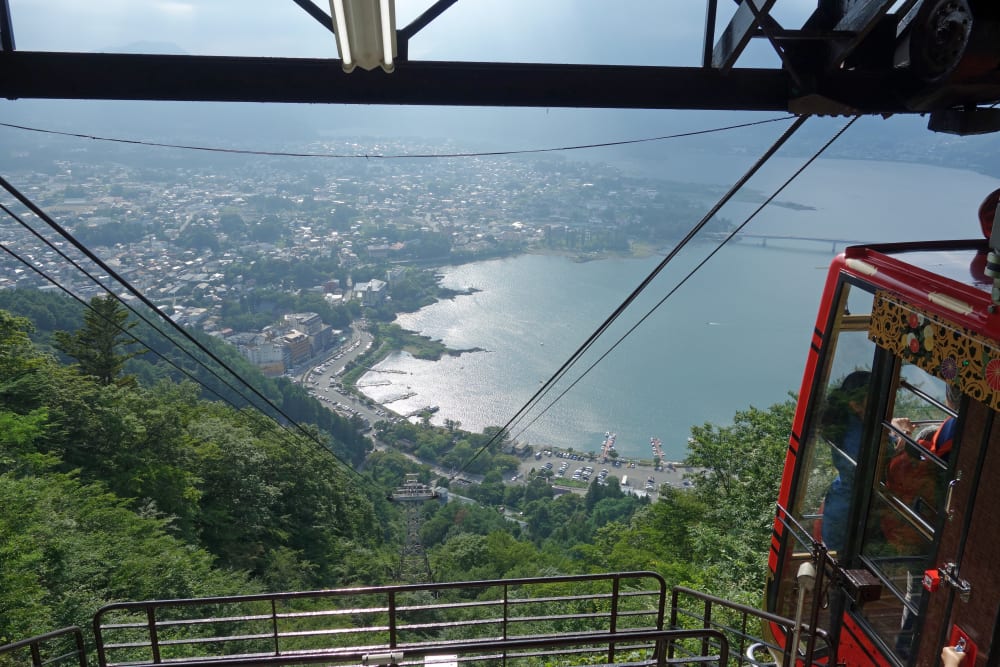
The Mt. Fuji Panoramic Ropeway is one of the easiest ways to enjoy a sweeping view of Mount Fuji and Lake Kawaguchi without committing to a strenuous mountain climb. The gondola rises from the eastern lakeshore to an observation area on Mount Tenjo in roughly three minutes. For visitors planning a trip through Japan, the appeal is simple: an accessible sightseeing stop with folklore, photo viewpoints and a useful starting point for exploring the Fuji Five Lakes. This guide explains the updated November 2026 fares, seasonal closures, transport options and what to expect at the top.
Key Takeaways
Mt. Fuji Panoramic Ropeway at a Glance
The ropeway is in Fujikawaguchiko, Yamanashi Prefecture, close to the southeastern shore of Lake Kawaguchi. The upper station, Fujimidai, provides access to an observation deck at approximately 1,075 metres above sea level. The ride itself is short, but waiting times can be considerably longer during peak foliage weekends, school holidays and clear-weather mornings.
It is important to distinguish the ropeway from a route to the summit of Mount Fuji. The cable car climbs Mount Tenjo, a smaller viewpoint above the lake; it does not take visitors onto Mount Fuji’s climbing trails. Families, casual photographers and travellers with only half a day in Kawaguchiko can enjoy the views without undertaking an alpine hike.
What can you see from the top?
On a clear day, the main panorama brings together the blue water of Lake Kawaguchi, the surrounding town and the broad outline of Mount Fuji. The operator also notes that distant peaks of the Southern Alps may be visible in favourable conditions. Clouds can hide the mountain even when the lakeshore is sunny, so a view of Fuji should never be guaranteed. Allow time to appreciate the lake scenery and the themed displays even if the summit is obscured.
2026 Ropeway Tickets and Prices
New individual fares took effect on 1 November 2026. The official operator lists an adult round trip at ¥1,200 and a child’s round trip at ¥600. One-way tickets are ¥800 for adults and ¥400 for children. Adult pricing applies from junior-high-school age; the child category generally covers elementary-school pupils. One preschool child may travel free with each accompanying adult, subject to the operator’s rules.
| Individual ticket | Adult | Child |
|---|---|---|
| Round trip | ¥1,200 | ¥600 |
| One way | ¥800 | ¥400 |
| Disability concession, round trip (subject to eligibility) | ¥600 | ¥300 |
These are the operator’s published November 2026 individual prices, not an estimate from a booking platform. Group, combination and concession tickets have separate conditions. Before paying for a lake cruise and gondola separately, compare the current combination products on the official ropeway ticket and business-hours page; set-ticket prices and availability can change independently of ordinary fares.
Do you need a reservation?
Regular visitors generally buy tickets at the lower station and join the boarding queue; the operator does not require a standard individual advance reservation. A paid ticket does not guarantee clear weather or a short wait. If your itinerary has a fixed train or bus departure, leave a generous buffer rather than assuming the three-minute ride is the full visit time.
Opening Hours, Maintenance and Weather Closures
Operating hours vary with the season and weather. A typical published schedule has the ropeway running from around 8:30 a.m. until late afternoon, but the final uphill and downhill rides differ. The official website should be treated as the final authority on the day of travel, especially during winter or adverse weather.
Important dates for late 2026: the operator has announced shortened operation on 25–26 November 2026, with the last ascent at 3:00 p.m. and last descent at 3:20 p.m. A scheduled annual inspection closure is planned for 7–18 December 2026. Strong winds, lightning, sudden storms, snow or ice can also interrupt services without advance notice. Check the operator’s live notices immediately before setting out.
The scenic swing and observation structure usually have their own operating window, approximately 9:30 a.m.–4:00 p.m., and may close in rain or wind while other facilities remain open. Visitors who plan to walk down should check trail conditions separately; a ropeway closure is not an invitation to attempt an unfamiliar mountain path in bad weather.
When is the best time to go?
Early mornings can offer clearer views and a calmer experience, although conditions change quickly. Spring brings fresh greenery; summer offers long daylight hours but can be humid and cloudy; autumn is popular for colourful foliage; and winter often rewards prepared visitors with crisp air and snow-capped views. The best choice depends on your priorities. For seasonal flowers near the lakes, compare the Fuji Shibazakura Festival guide; for another iconic Fuji viewpoint, see Arakurayama Sengen Park and Chureito Pagoda.
How to Get to the Mt. Fuji Panoramic Ropeway
From Kawaguchiko Station
The lower ropeway station is near the lake’s eastern shore, roughly a 15-minute walk or short sightseeing-bus ride from Kawaguchiko Station, depending on your walking pace and bus stop. The Red Line sightseeing bus serves this part of the lake. Confirm the route, stop and last departure before relying on the bus for your return; timetables can change with the season.
From Tokyo by train or highway bus
Rail travellers can use the JR Chuo corridor toward Otsuki and connect with the Fujikyu Railway to Kawaguchiko. Some services offer more direct connections, but availability and reservations depend on the date. Highway buses also operate from Tokyo-area terminals to Kawaguchiko Station. Compare total journey time, transfer requirements and return reservations rather than choosing solely on the advertised headline duration.
For the most reliable directions, consult the ropeway operator’s access guide. Travellers extending their visit into the foothills can use our guides to Oshino Hakkai’s spring-fed ponds and the Kitaguchi Hongu Fuji Sengen Shrine to build a broader Fuji-area itinerary.
Driving and parking
The ropeway does not operate a large dedicated visitor car park at the station. The operator directs drivers to the prefecture-run parking area beside Lake Kawaguchi. Traffic can be heavy in foliage season, and the nearest spaces may fill quickly. Do not park in private driveways or obstruct local roads. If you plan to visit other viewpoints by car, allow time for traffic around the lakeside attractions.
Things to Do at the Top of Mount Tenjo
Photograph Mount Fuji and Lake Kawaguchi
Begin at the main observation area. A wide-angle photo can capture the lake and town, while a longer focal length helps isolate Mount Fuji on a clear day. The best light is not necessarily the same as the shortest queue: early morning often provides soft light, whereas late afternoon can illuminate the lake differently. Stay within designated viewing areas and avoid blocking steps while taking pictures.
Discover the Kachi-Kachi Yama rabbit and tanuki story
Mount Tenjo is associated with the traditional Japanese tale of Kachi-Kachi Yama, featuring a rabbit and a tanuki, or Japanese raccoon dog. The ropeway uses characters from this folklore in its gondola decorations and summit displays. The story has appeared in many retellings, including a literary adaptation associated with Osamu Dazai; it is more accurate to describe it as an older folktale than to say Dazai invented it. Children may enjoy spotting the figures as they move between viewpoints.
Visit Rabbit Shrine, the bell and the snack shop
At the summit, look for Usagi Jinja (Rabbit Shrine), the Tenjo Bell and the Tanuki Jaya shop. These add interest beyond the landscape itself. Sweet-and-savoury grilled dango may be offered, although menus and availability can change. The small clay-disc throwing activity is another traditional attraction, subject to on-site availability and safety rules. Treat these as optional extras, not activities included automatically with the gondola ticket.
Consider the scenic swing or a mountain walk
The scenic swing is a separate paid attraction with height, weight and weather restrictions. Check the displayed rules before queuing. Walkers can also explore designated Mount Tenjo trails; the operator publishes official hiking guidance. Hiking is not appropriate for everyone, and trail time varies with route, fitness, weather and conditions underfoot. If you are visiting with young children or have limited mobility, a return ropeway ticket is usually the simpler plan.
Accessibility and Family Travel Tips
Although the gondola journey is brief, the station environment includes substantial staircases. The operator identifies 64 steps at the lower station and 112 at the upper station and warns that wheelchair movement is difficult. Travellers with reduced mobility should contact the operator before purchasing tickets and should not assume step-free access. Families with strollers may also find the stairs inconvenient.
Carry water, an extra layer in colder months and a charged phone. Hold children’s hands near queues and viewpoints. Small and medium dogs may be permitted in hard carriers for an additional fee, while large dogs are not accepted under the published pet rules. For a different family day out near Fuji, Fuji-Q Highland has a very different pace, with theme-park rides rather than a short scenic ascent.
What Else to See Around Lake Kawaguchi
The ropeway is best treated as one stop in a flexible Fuji Five Lakes day, rather than the only destination. For an art-focused afternoon, consider the Itchiku Kubota Art Museum; for natural landscapes, read about Aokigahara Forest and the nearby Narusawa Ice Cave. Both outdoor options require their own safety checks and appropriate footwear.
Visitors interested in Mount Fuji’s cultural importance can add the Fujisan World Heritage Center. If you want to understand the difference between sightseeing and an actual ascent, read about the Mount Fuji Yoshida Trail and Fuji Subaru Line Fifth Station; access to high-elevation areas follows separate seasonal rules and is not included with the ropeway. For a cultural event later in the year, our Yoshida Fire Festival article provides additional regional context.
Travellers spending several days in Yamanashi might also consider Shosenkyo Gorge or the Yamanashi Prefectural Museum of Art, though these are separate outings rather than quick walks from the ropeway.
Suggested Half-Day Plan
Arrive in Kawaguchiko early enough to check the mountain visibility before committing to a fixed schedule. Walk or take the sightseeing bus to the lakeside station, purchase a ticket and allow time for the queue. Spend roughly 30–60 minutes at the upper viewing area if conditions are good, then return to the lake for lunch or a lakeside stroll. Add a museum or another viewpoint only after checking transport times and opening hours. On a cloudy day, prioritise the lakefront and indoor attractions instead of waiting indefinitely for Fuji to appear.
Frequently Asked Questions
How long is the Mt. Fuji Panoramic Ropeway ride?
Approximately three minutes each way. The total visit is longer because of queues, photos, the summit attractions and the return trip.
How much does the ropeway cost in November 2026?
The published individual round-trip fare is ¥1,200 for adults and ¥600 for children; one-way fares are ¥800 and ¥400 respectively. Always check the operator for later revisions.
Is the ropeway open during December 2026?
Not throughout the month. An annual maintenance closure is scheduled for 7–18 December 2026, and other weather-related suspensions are possible.
Can you see Mount Fuji every day?
No. Visibility depends on cloud, haze and weather. The lakeside and summit can experience different conditions, and no ticket guarantees a clear mountain view.
Is it the same as climbing Mount Fuji?
No. The ropeway reaches an observation area on Mount Tenjo; climbing Mount Fuji is a separate undertaking with its own routes, season and safety requirements.
Official Sources and Further Reading
Practical information checked on 3 November 2026 against the Mt. Fuji Panoramic Ropeway fare page, operator’s notices and closure calendar, official access instructions and the Japan National Tourism Organization destination guide. The original article’s source attribution to JNTO is retained. Prices, timetables and temporary closures should be checked again immediately before travel.
Address And Maps Location:
Azagawa, Fujikawaguchiko-machi, Minamitsuru-gun, Yamanashi-ken
Find Location And Direction On Google Maps
Subscribe, follow travelbloggerindonesia.com