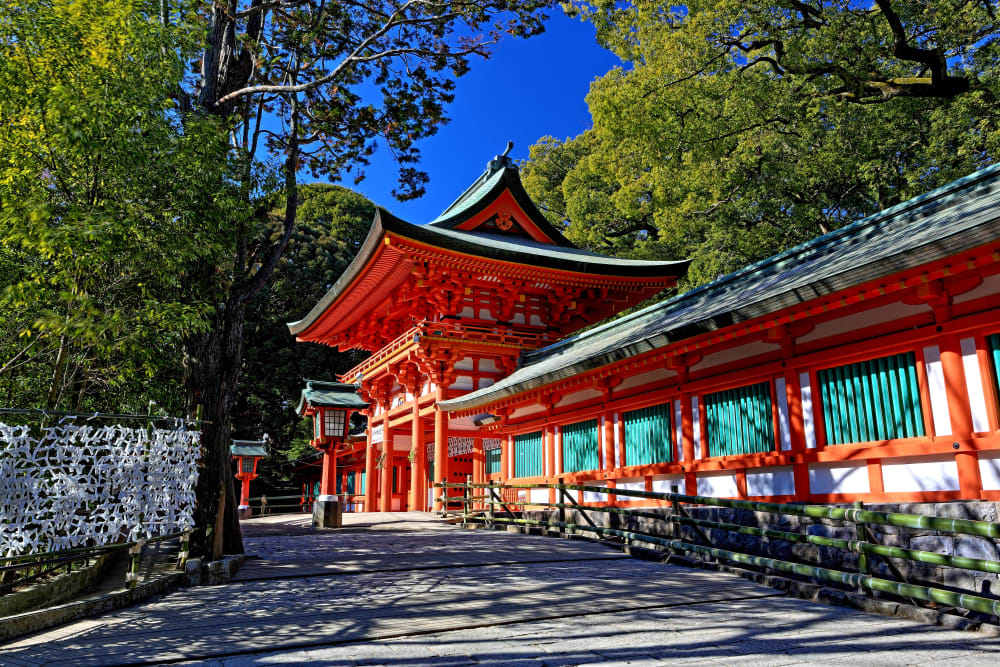
An Ancient Facility and Namesake of the Town
Omiya, a town in japan, derives its name from the Hikawa-jinja Shrine, which is a significant Shinto shrine in the history of the Kanto region. The shrine, known for its grandeur and revered by Emperor Meiji, continues to be a remarkable sight to behold even today.
How to Get There
Reaching the Hikawa-jinja Shrine is quite convenient as it is easily accessible by public transportation. From Shinjuku, one can take the Saikyo Line to Omiya, which is approximately a 30-minute journey. Upon reaching Omiya, visitors can either take a short taxi ride or enjoy a pleasant 20-minute walk to the shrine.
History
The roots of the Hikawa-jinja Shrine can be traced back to as early as the 5th century B.C. Its full name, Musashi Ichinomiya Hikawa-jinja Shrine, signifies its significance as the main shrine of the Musashi province. In ancient times, the province of Musashi encompassed present-day Tokyo, as well as a major part of Saitama and Kanagawa prefectures. During the Meiji era, Emperor Meiji proclaimed Hikawa Shrine as the guardian shrine for the province of Musashi, which corresponds to modern-day Saitama.
Away from the Urban Environment
Despite being within walking distance from Omiya Station, the Hikawa-jinja Shrine is enveloped by a serene and peaceful tree-lined path that sets it apart from the bustling urban environment. As visitors stroll along the path, they are greeted by three vibrant vermillion gates that lead to the shrine complex. The complex comprises various shrines, buildings, facilities, and a picturesque pond.
Other Elements in the Park
Adjacent to the shrine is a sprawling park that offers a multitude of attractions. Visitors can explore a museum, a zoo, a garden, a bamboo forest, and a plethora of cherry blossom trees. The park is particularly renowned for its ancient Japanese elms. While the shrine usually exudes a tranquil ambiance, it comes alive with enthusiastic visitors during significant holidays such as New Year and Golden Week.
Keywords
To summarize the essence of the Hikawa-jinja Shrine, the keywords that encapsulate its significance are history, shrine, and temples & shrines. These keywords reflect the rich historical background, the prominence of the shrine, and its association with the broader temple culture in Japan.
Recommended for You
For those looking for additional recommendations, two noteworthy attractions in the vicinity are Hikawa-jinja Shrine and Omiya Park. Hikawa-jinja Shrine, as previously described, offers a deep insight into the region’s history and spirituality. Omiya Park, on the other hand, presents a delightful retreat with its scenic beauty and recreational facilities.
In conclusion, the Hikawa-jinja Shrine stands as a testament to Japan’s rich cultural heritage and spiritual traditions. Its historical significance, peaceful ambiance, and proximity to other attractions make it a must-visit destination for tourists and locals alike. Whether one seeks solace, historical knowledge, or simply a serene walk in nature, the Hikawa-jinja Shrine and its surroundings offer a memorable experience.
Address And Maps Location:
1-407 Takahana-cho, Omiya-ku, Saitama-shi, Saitama-ken
Find Location And Direction On Google Maps
Subscribe, follow travelbloggerindonesia.com