Key Takeaways
Historical Significance of the Ancient Temple
Located at Mu 8, Tambon Sanchao Rong Thong, this ancient temple is a remarkable piece of history and culture. Situated near Wat Wiset Chai Chan, the temple is approximately 12 kilometers from Amphoe Mueang, a key location that underscores its accessibility and significance in the region. This temple is not just an architectural wonder but also a repository of cultural and religious narratives that have been preserved through centuries.
The temple’s location is strategic, nestled within a community that has historically been a center for spiritual and cultural convergence. Its proximity to Wat Wiset Chai Chan highlights its integration into a larger network of religious sites, each contributing to the region’s spiritual landscape. This interconnectedness reflects the temple’s role in the community, serving as a spiritual hub where locals and travelers alike can seek solace and inspiration.
Architectural and Artistic Marvels
The Mural Paintings
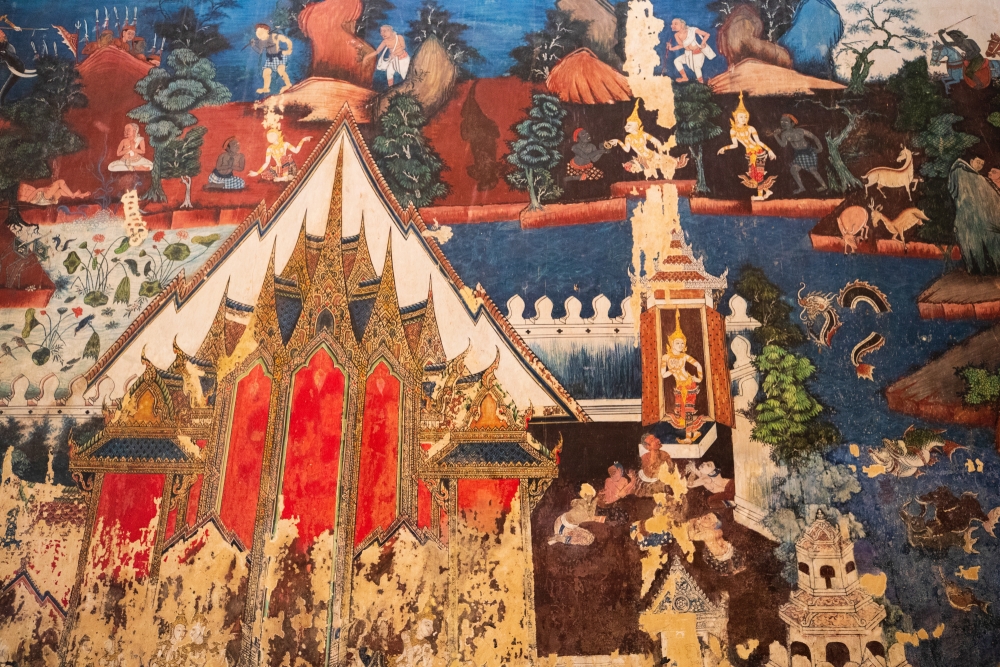
The temple’s ordination hall, or Ubosot, is adorned with exquisite murals that recount the stories of the ten former incarnations of the Lord Buddha. These paintings are not only artistic masterpieces but also narrative devices that convey Buddhist teachings and philosophies. Each mural captures a unique incarnation, offering insights into the virtues and moral lessons associated with each life.
Attributed to an art school in Mueang Wiset Chai Chan, these paintings were crafted during the late Ayutthaya period, a time known for its rich artistic endeavors. The style of these murals shares many characteristics with other works from the same era, such as those found in the Ubosots of Wat Ko and Wat Yai Suwannaram in Phetchaburi. This stylistic similarity points to a broader cultural and artistic movement that swept through the region during that period.
The murals are a testament to the skill and creativity of the artists, who managed to blend vibrant colors and intricate details to bring these stories to life. The use of perspective, color, and composition in these paintings reflects a mastery of technique that has been admired and studied by art historians and enthusiasts alike.
Architectural Features
Beyond the murals, the temple’s architecture itself is a marvel. The structural design reflects the traditional Thai architectural elements, with a focus on symmetry, balance, and harmony. The use of locally sourced materials and traditional construction techniques ensures that the temple is in harmony with its natural surroundings, a principle that is central to Thai architectural philosophy.
The temple’s layout is designed to facilitate spiritual practices, with spaces designated for meditation, prayer, and communal gatherings. The integration of open spaces and natural light creates an environment conducive to reflection and spiritual growth. This thoughtful design underscores the temple’s role as a sanctuary for those seeking peace and enlightenment.
Visiting the Temple
Directions and Accessibility
Reaching the temple is a straightforward journey. Visitors can follow Highway No. 3454 for approximately 1 kilometer, a route that offers scenic views of the surrounding landscape. The temple is easily accessible by car, and ample parking is available for visitors.
The temple is open daily from 8.00 am to 5.00 pm, allowing visitors ample time to explore and appreciate its beauty and significance. For those seeking further information or assistance, the temple can be contacted at 0 3553 5789. The staff are knowledgeable and eager to share insights about the temple’s history and cultural importance.
Visitor Experience
A visit to the temple is not just a journey through history but also a spiritual experience. The serene environment and the grandeur of the temple inspire a sense of reverence and contemplation. Visitors are encouraged to take their time exploring the various aspects of the temple, from the detailed murals to the architectural nuances.
The temple is a place where one can connect with the past, reflect on spiritual teachings, and find a sense of peace. Its tranquil setting, combined with the richness of its artistic and architectural elements, makes it a must-visit for anyone interested in history, art, or spirituality.
Conclusion
In conclusion, this ancient temple stands as a beacon of cultural and religious heritage. Its historical significance, coupled with its artistic and architectural marvels, makes it a vital part of the region’s spiritual and cultural landscape. A visit to this temple offers a unique opportunity to explore the intersection of history, art, and spirituality, providing insights into the rich tapestry of Thai culture and religion. Whether for spiritual reasons, artistic appreciation, or historical interest, the temple offers something for everyone, making it a cherished destination for both locals and visitors alike.
Address And Location:
Moo 8 San Chao Rong Thong Wiset Chai Chan Ang Thong 14110