Key Takeaways
Wat Buddha Ern: A Mystical Sanctuary in Chiang Mai
Introduction
Wat Buddha Ern, formerly known as "Wat Sri Suttawas Ern Mongkuth," is a serene temple nestled in Tambon Chuang Kerng, Amphoe Mae Jam, Chiang Mai. Renowned for its tranquil environment, the temple boasts lush greenery and a profound Buddhist atmosphere. A fascinating legend surrounds the holy well situated at the temple’s entrance. It is believed that Lord Buddha once visited the site, requested Ananda to fetch water, and upon gargling, the water from his mouth became an eternal spring. This miraculous occurrence inspired two monks to construct the temple.
Architectural Marvels
The Monastery and Its Unique Design
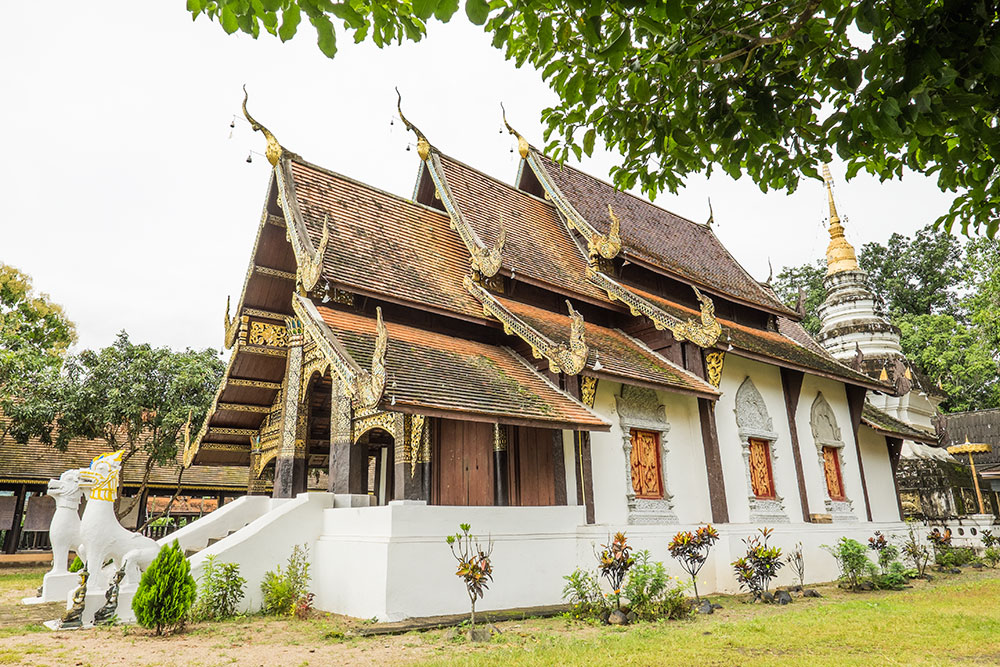
Upon entering the temple, visitors encounter the monastery on the right, which uniquely hovers over water. This structure, known as "Utokkasima," is characterized by its elevated floor supported by four pillars and enclosed by a laterite wall. This architectural style reflects the influence of Sri Lankan beliefs, where conducting ordination ceremonies over water is thought to produce the most virtuous monks. The monastery has been officially recognized by the National Fine Arts with a certificate of art registration.
Ancient Teak Monastery and Murals
The temple also houses an ancient teak monastery adorned with Chang Tai Yai-style wall paintings. Despite their historical significance, these murals have unfortunately faded over time. Within this sacred space, two significant Buddha images, Pra Chao Saen Tong and Pra Chao Tun Jai, flank the principal Buddha statue. The latter is famed for its ability to grant sudden wishes.
The Sacred Pagoda
Located behind the monastery is a revered pagoda containing Buddha’s relics. Its base is embellished with 12 zodiacs of the Lanna style, adding to its spiritual and cultural significance.
The Natural Beauty Surrounding the Temple
The temple is not only a spiritual haven but also a place of natural beauty. During the rainy season, the verdant fields opposite the temple offer a picturesque view. The distant Doi Intanon, visible from the temple, adds to the breathtaking landscape.
Accessibility and Visitor Information
Travelers can easily reach Wat Buddha Ern from Mae Jaem Municipality. The journey involves a short drive of 1 kilometer to an intersection near Mae Jaem Police Station. Turning right, visitors continue for 1.5 kilometers until they reach a bridge over Mae Jaem tributary. A final stretch of 1 kilometer leads directly to the temple. Despite the winding roads, the journey is rewarded with the temple’s serene environment and mystical allure. Wat Buddha Ern is undoubtedly a destination not to be missed.
—
Detailed Exploration of Wat Buddha Ern
Historical Significance and Origin
Wat Buddha Ern’s origins are deeply rooted in Buddhist mythology and regional history. The temple’s previous name, "Wat Sri Suttawas Ern Mongkuth," hints at its historical evolution and the cultural influences that have shaped its identity. The legend of Lord Buddha’s visit and the subsequent creation of the eternal spring underscore the temple’s spiritual importance. This narrative not only attracts pilgrims but also serves as a testament to the enduring legacy of Buddhist teachings in the region.
Architectural Insights
Design Philosophy and Cultural Influence
The temple’s architectural design embodies a fusion of traditional Thai and Sri Lankan elements. The concept of "Utokkasima," or conducting rituals over water, reflects a profound understanding of Buddhist rituals and their deeper symbolic meanings. The monastery’s construction, with its elevated platform and laterite enclosure, showcases a meticulous approach to temple architecture, ensuring both functionality and spiritual sanctity.
Preservation and Challenges
Preserving the ancient teak monastery and its murals poses significant challenges. The fading Chang Tai Yai-style paintings highlight the need for conservation efforts to safeguard these cultural treasures. Understanding the techniques and materials used in these murals is crucial for effective restoration and preservation, ensuring that future generations can appreciate their historical and artistic value.
Spiritual and Cultural Significance
Buddha Images and Their Symbolism
The presence of Pra Chao Saen Tong and Pra Chao Tun Jai in the temple reflects the rich tapestry of Buddhist iconography. These images are not mere representations but embody specific spiritual attributes and stories. Pra Chao Tun Jai, known for its wish-fulfilling powers, illustrates the deep-seated belief in the intercession of divine figures in everyday life.
The Pagoda: A Spiritual Beacon
The pagoda, with its Lanna-style zodiac decorations, is more than a religious monument. It serves as a spiritual beacon, guiding devotees and symbolizing the journey towards enlightenment. The relics housed within the pagoda connect the temple to the broader Buddhist tradition, providing a tangible link to the teachings of the Buddha.
The Role of Nature in Spiritual Practice
The Temple’s Natural Setting
The temple’s natural surroundings play a crucial role in enhancing its spiritual ambiance. The lush greenery and seasonal transformations of the landscape offer a serene backdrop for meditation and reflection. The juxtaposition of the temple’s architectural beauty against the natural scenery fosters a harmonious environment conducive to spiritual practice.
Doi Intanon: A Distant Guardian
The distant presence of Doi Intanon, visible from the temple, adds a layer of majesty to the setting. This towering peak, often shrouded in mist, serves as a guardian of the temple, embodying the connection between the natural world and the spiritual realm. Its presence reinforces the idea of nature as an integral part of spiritual journeys.
Visitor Experience and Practical Information
Navigating the Journey to Wat Buddha Ern
The journey to Wat Buddha Ern is as much a part of the experience as the destination itself. The drive from Mae Jaem Municipality, with its scenic views and winding roads, prepares visitors for the tranquility that awaits them. Clear signage and well-maintained paths ensure that the temple remains accessible to all who seek its spiritual and cultural riches.
Embracing the Temple’s Mystical Allure
Visitors to Wat Buddha Ern are encouraged to embrace the temple’s mystical allure fully. Whether participating in rituals, exploring the architectural wonders, or simply enjoying the natural beauty, the temple offers a holistic experience that nourishes both the mind and spirit.
—
Conclusion
Wat Buddha Ern stands as a testament to the enduring appeal of Buddhist spirituality and the harmonious blend of architecture and nature. Its rich history, coupled with its serene environment, makes it a unique destination for pilgrims and tourists alike. As visitors explore its sacred spaces and absorb its tranquil atmosphere, they are reminded of the timeless wisdom that continues to resonate within its walls.
Address And Location:
4 Moo 15 Chang Khoeng Mae Chaem Chiang Mai 50270