Key Takeaways
Wat Bang Pla: A Historical and Cultural Hub
Wat Bang Pla, located in Moo 4, Ban Bang Pla village, Ban Koh subdistrict, Mueang district, Samut Sakhon province, is a significant cultural and religious center for the Mon community in the region. This temple is renowned for hosting all major festivals and religious ceremonies, such as Visakha Bucha Day and the end of Buddhist Lent. On these occasions, Mon monks from various temples gather at Wat Bang Pla to partake in the ceremonies, maintaining a tradition that has persisted for generations.
Historical Significance of Wat Bang Pla
Constructed during the Early Rattanakosin period, Wat Bang Pla is an ancient temple with rich historical significance. The temple’s old ordination hall features arches made from Sema stone, marking the monasterial boundary. The pediment is adorned with molded porcelains depicting a dragon clutching a glass marble, a testament to the intricate artistry of the period.
On July 31, 1905, King Rama V, Phra Bat Somdet Phra Chunla Chomklao Chaoyuhua, visited the temple. During this visit, Luang Phu Thao Kao Yot, also known as Luang Phu Noot, served as the abbot. The King’s visit was not merely ceremonial; he cooked and dined at the temple, underscoring the temple’s importance. Furthermore, Prince Krommaluang Chumphon Khet Udomsak commissioned the construction of a waterfront pavilion and a long covered walkway, with eaves boards elaborately engraved, enhancing the temple’s architectural grandeur.
The Legacy of the Abbots
The temple’s legacy is also defined by the influential abbots who have served there. Four mortuary urns at the temple house the ashes of former abbots. The first urn contains the ashes of Luang Phu Noot, a revered figure in the temple’s history. The second urn holds the ashes of Master Plien, a disciple of Luang Phu Noot, who later became the abbot of Wat Chai Mongkol. The third urn is dedicated to Luang Phu Khaek, another disciple of Luang Phu Noot and a former abbot of Wat Bang Pla. The fourth urn contains the ashes of Luang Phu Song, who succeeded as abbot after Luang Phu Khaek.
Master Lom, the current abbot, is constructing an assembly hall in honor of three respected abbots: Luang Phu Noot, Luang Phu Khaek, and Master Thee, a disciple of Luang Phu Khaek who succeeded Luang Phu Song as abbot at Wat Bang Pla. This dedication reflects the temple’s ongoing commitment to preserving its rich heritage and honoring those who have contributed to its legacy.
Visiting Wat Bang Pla
For those interested in visiting Wat Bang Pla, the journey from Mahachai is straightforward. Travelers can drive along Setthakit Road (Mahachai-Krathum Baen) for approximately five kilometers before turning left and continuing for another four kilometers. The temple shares an entrance with Wat Pa Chai Rangsi, making it easily accessible for visitors.
Cultural and Religious Importance
Wat Bang Pla’s role as a cultural and religious hub cannot be overstated. It serves as a focal point for the Mon community’s spiritual and cultural life, hosting numerous ceremonies and festivals that draw participants from across the region. These events not only reinforce the community’s cultural identity but also provide an opportunity for cultural exchange and spiritual reflection.
Festivals and Ceremonies
The temple’s festivals and ceremonies, such as Visakha Bucha Day and the end of Buddhist Lent, are significant events in the Buddhist calendar. These occasions draw monks and laypeople alike, fostering a sense of community and shared spiritual purpose. The participation of Mon monks from various temples highlights the temple’s importance as a center of religious activity and cultural preservation.
Through these ceremonies, Wat Bang Pla plays a critical role in maintaining the cultural and religious practices of the Mon community. The temple’s ongoing commitment to hosting these events reflects its dedication to preserving the community’s cultural and spiritual heritage for future generations.
Architectural and Artistic Heritage
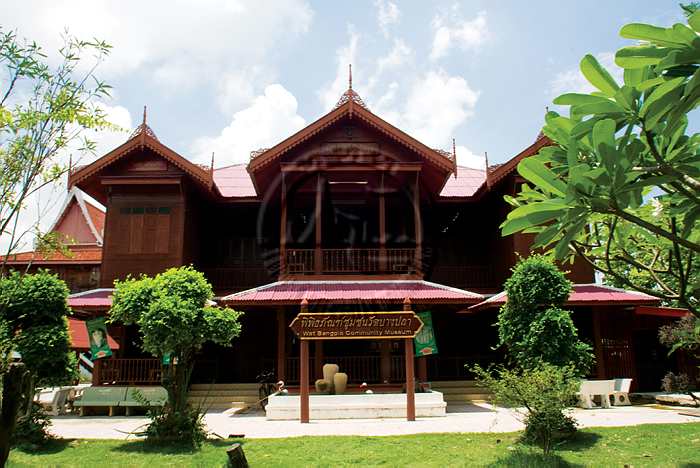
Wat Bang Pla is not only a center of religious activity but also an architectural and artistic treasure. The temple’s structures, such as the ordination hall with its Sema stone arches and the intricately decorated pediment, showcase the artistic and architectural styles of the Early Rattanakosin period. The elaborate engravings on the eaves boards of the covered walkway further highlight the temple’s artistic significance.
These architectural and artistic elements are integral to the temple’s identity, providing a tangible link to the past and serving as a source of inspiration for future generations. The temple’s preservation of these elements underscores its commitment to maintaining its cultural and historical legacy.
Conclusion
Wat Bang Pla stands as a testament to the rich cultural and religious heritage of the Mon community in Samut Sakhon province. Its historical significance, architectural grandeur, and role as a center of cultural and religious activity make it a vital part of the region’s cultural landscape. Through its ongoing commitment to hosting festivals, preserving its architectural heritage, and honoring the legacy of its abbots, Wat Bang Pla continues to play a central role in the cultural and spiritual life of the community.
In conclusion, Wat Bang Pla is more than just a temple; it is a living embodiment of the Mon community’s cultural and religious traditions. Its rich history, artistic and architectural significance, and role as a hub of cultural activity make it an invaluable asset to the region and a symbol of the enduring legacy of the Mon people.
Address And Location:
Moo 4 Ban Ko Mueang Samut Sakhon Samut Sakhon 74000