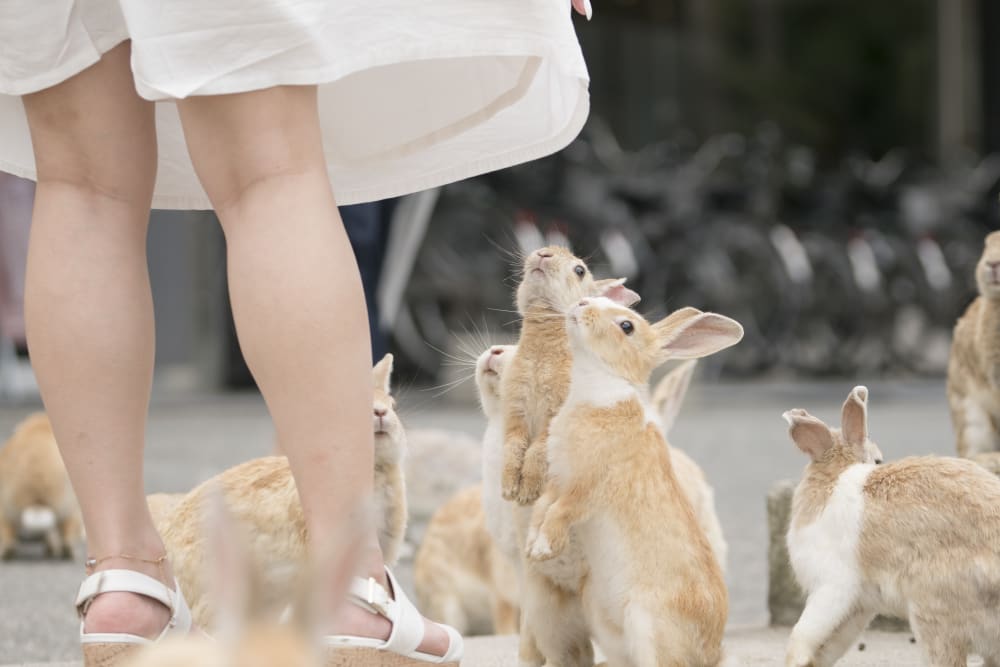
Okunoshima, widely known as Rabbit Island, is a small island in Japan’s Seto Inland Sea near Takehara, Hiroshima Prefecture. Visitors come to see free-roaming rabbits and enjoy peaceful coastal walks, but the island has an important and difficult history as a former poison-gas production site. A responsible visit means treating rabbits gently, respecting restricted buildings and checking the ferry timetable before leaving the mainland.

Key Takeaways
Rabbit Island (Okunoshima): Key Information
- Location: Takehara City, Hiroshima Prefecture, Japan.
- Main access: Ferry from Tadanoumi Port, reached from JR Tadanoumi Station on the Kure Line.
- Time needed: Around three to five hours including ferry travel, or longer if staying overnight.
- Main activities: Watching rabbits, coastal walks, learning about wartime history and enjoying Seto Inland Sea views.
- Important restriction: Never chase, pick up or hug wild rabbits; avoid feeding them inappropriate human food.
- 2026 transport warning: An alternative Mihara–Okunoshima Rabbit Line has published service-suspension notices; verify actual operations rather than assuming this route is available.
Why Is Okunoshima Known as Rabbit Island?
Free-roaming rabbits
The island is famous for its population of rabbits that roam around paths, grassy areas and some visitor facilities. Their exact numbers are not fixed and should not be presented as an accurate current census. The animals are not pets: sudden handling can cause severe stress or injury.
How did the rabbits arrive?
There are different accounts of how the rabbits became established, including stories involving released domestic animals. The theory that today’s rabbits are direct descendants of wartime laboratory animals should not be presented as established fact. Their current welfare and habitat are more important for a visitor than repeating an uncertain origin story.

How to Visit Rabbits Responsibly
Choose suitable food, or simply observe
Hiroshima’s official tourism guidance explains that rabbit food is not sold on Okunoshima, though appropriate food may be found near Tadanoumi Port or Station before crossing. Do not give bread, sweets, onions or random snacks. Avoid leaving any uneaten food behind, as it can spoil and attract pests.
Never pick up or chase a rabbit
Rabbits have fragile bones and can be injured easily. Keep a respectful distance, especially when children are present. Don’t offer food on roads or near vehicles, and keep walking and cycling paths unobstructed.
Do not bring pets to interact with rabbits
The island’s special wildlife setting requires careful attention to local rules on animals and facilities. Check current restrictions before travelling, and never allow dogs or other pets to chase wildlife.
Okunoshima’s Dark Wartime History
The poison-gas factory
During the 1930s and World War II, Okunoshima was used for Japanese military poison-gas production. This history is an essential part of understanding the island and should not be reduced to a strange footnote beneath the cute rabbit photographs.
The Poison Gas Museum
The island has a museum and historical remains addressing the chemical-weapons period. Opening hours, admission and permitted access to former facilities can change. Never enter fenced or unstable ruins. For broader wartime reflection, visit Hiroshima Peace Memorial Museum and the Atomic Bomb Dome on a separate city day.

How to Get to Rabbit Island
Train to JR Tadanoumi Station
Take the JR Kure Line toward Tadanoumi from the Hiroshima/Mihara region, accounting for transfers and limited regional train frequency. From Tadanoumi Station, the ferry terminal is a short walk away. Confirm train departures before booking the return boat.
Ferry from Tadanoumi
Tadanoumi Port is the standard visitor gateway to Okunoshima. Ferry departures can be infrequent and affected by weather, maintenance or passenger demand. Buy the correct return ticket and arrive at the pier with sufficient time.
Be careful with Mihara ferry information
Hiroshima’s official tourism listing for the alternative Mihara Rabbit Line includes a warning that its Okunoshima route is suspended, including after April 2026. Do not plan around an old timetable without confirming service directly with the operator. This can materially affect a day trip from a Shinkansen station.
What Else Can You Do on Okunoshima?
Coastal scenery and short walks
The island has gentle coastal views and scenic areas overlooking the Seto Inland Sea. Pack sun protection, water and practical shoes. Avoid unstable ruins, cliff edges and any fenced sections.
Photography and quiet observation
Photograph rabbits from their level without chasing them into a pose. Avoid feeding animals just for a picture. Wildlife watching can be enjoyable without touching or interacting directly.
Stay longer in the Setouchi region
Rather than making the island your only stop, consider Takehara’s historic townscape and the wider region around Onomichi and Fukuyama. They offer cultural streets, coastal scenery and different transport connections.

Suggested Rabbit Island Day Trip
Morning: reach Tadanoumi
Travel from your Hiroshima-area base by rail or road, allow time for ferry tickets and buy supplies before the crossing. Do not depend on getting all food and drinks on the island.
Midday: rabbits and historical sites
Spend time observing rabbits responsibly, visit the museum if open and enjoy a coastal walk. Leave enough time to return to the dock without rushing or blocking animals on the path.
Late afternoon: return and extend your itinerary
Catch a confirmed return ferry, then explore another local town or return to Hiroshima. For cycling and coastal scenery, consider Shimanami Kaido from Hiroshima or the Ehime side of Shimanami Kaido on a separate day.
Nearby Hiroshima and Seto Inland Sea Attractions
Hiroshima’s wider region includes Hiroshima Castle, Shukkeien Garden and Hiroshima Prefectural Art Museum. History-focused travellers can also learn about the annual Hiroshima Peace Memorial Ceremony.
Travellers exploring more of the Seto Inland Sea can also consider Naoshima Island for contemporary art, although this requires a separate ferry journey. For additional island and arts inspiration, see Miyajima Aquarium and Setouchi Triennale. Farther away, Kurashiki’s historic quarter and Himeji Castle require separate rail journeys rather than being nearby Okunoshima walking stops.
Frequently Asked Questions
Can you feed rabbits on Okunoshima?
Only with appropriate food and in accordance with local guidance. Never offer bread or sweets, and don’t leave food behind.
Can you hold the rabbits?
No. They are fragile free-roaming animals; do not chase, lift or hug them.
How long should I spend?
Several hours allows rabbit observation, a short coastal walk and time for the museum if open.
Is the island only about rabbits?
No. The former poison-gas factory and related history are a significant part of its identity.
Can I take a ferry from Mihara in 2026?
Do not assume the alternate service is operating: official tourism information includes a suspension notice. Check the operator and consider Tadanoumi as the main access route.
Official Sources
- Hiroshima Tourism — rabbit welfare and feeding guidelines
- Hiroshima Tourism — Rabbit Line ferry service warning
- Japan National Tourism Organization — Okunoshima
Find Location And Direction On Google Maps
Explore more Japan destinations at Travel Blogger Indonesia. Updated October 2026; ferry services change.