Home of the war god worshipped as the protective deity of the Imperial capital
Usa-jingu is believed to be the first shrine in japan in which the deity Hachiman was enshrined in the eighth century. As such, it has enjoyed the deep respect and patronage of the Imperial family, and is the head shrine of all Japan’s shrines dedicated to the deities of protection and military fortune.
Don’t Miss
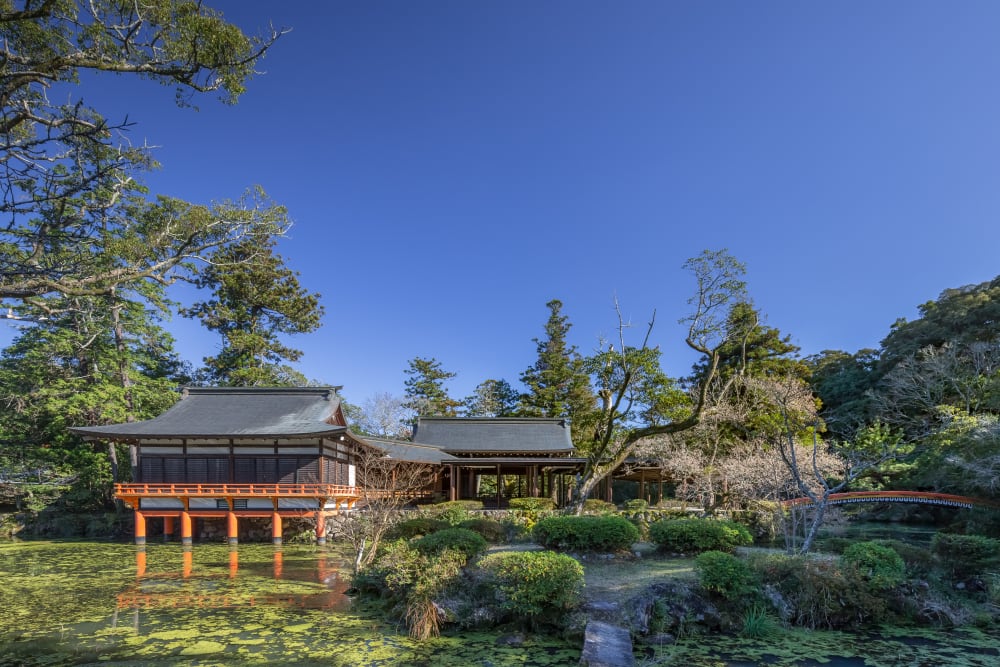
The contrasting white earthen walls and vermilion pillars
The two distinct buildings, one for the god’s use during the day, and the other for the night
How to Get There
You can reach the shrine by train and then by taxi. Usa Station is served by the Nippo Honsen line, connecting Usa and Hakata. Take a taxi from there.
Two homes for the god
There are two buildings situated in front of each other, according to the building style of the time. The front area is where the god stays during daytime, while the back area serves as his sleeping chamber.
Usa-jingu, located in Oita Prefecture, Japan, is a historic shrine dedicated to the worship of the deity Hachiman. It is believed to be the first shrine in Japan where Hachiman was enshrined in the eighth century. As a result, Usa-jingu holds a significant position in Japanese religious history and has enjoyed the deep respect and patronage of the Imperial family.
The shrine is renowned as the head shrine of all Japan’s shrines dedicated to the deities of protection and military fortune. It serves as a sacred place for prayers and rituals related to war, protection, and the blessings of the Imperial capital. The history and significance of Usa-jingu make it an important cultural and religious landmark in Japan.
One of the notable features of Usa-jingu is its contrasting white earthen walls and vermilion pillars. This architectural style is a characteristic of traditional Japanese shrines and adds to the shrine’s unique aesthetic appeal. The vibrant red color of the pillars stands out against the white walls, creating a visually striking contrast.
Usa-jingu consists of two distinct buildings situated in front of each other. This design follows the traditional building style of the time. The front area of the shrine is where the god, Hachiman, stays during the daytime. It is a sacred space where worshippers can offer their prayers and seek blessings. The rear area serves as Hachiman’s sleeping chamber, emphasizing the belief in the god’s presence and his role as the protector of the Imperial capital.
The shrine’s architecture and layout reflect the deep reverence and devotion towards Hachiman. The meticulous attention to detail and design showcases the craftsmanship and skill of the artisans who built the shrine. The combination of traditional elements and the spiritual significance of the shrine create a tranquil and sacred atmosphere for worshippers and visitors alike.
To reach Usa-jingu, visitors can take a train to Usa Station, which is served by the Nippo Honsen line, connecting Usa and Hakata. From Usa Station, a taxi can be taken to the shrine. The journey from the station to the shrine provides an opportunity to admire the scenic beauty of the surrounding area and immerse oneself in the tranquil ambiance of the shrine.
As visitors approach Usa-jingu, they are greeted by the majestic entrance gate, known as torii. The torii acts as a symbolic gateway between the secular world and the sacred realm of the shrine. Passing through the torii, visitors enter the hallowed grounds of Usa-jingu, where they can explore the shrine’s various buildings and experience the spiritual aura of the place.
Inside the shrine, worshippers can engage in various rituals and prayers to seek blessings and protection. The shrine offers a serene and peaceful environment for introspection and spiritual connection. Visitors can also learn about the rich history and traditions associated with Usa-jingu through informative displays and exhibits.
Usa-jingu holds regular ceremonies and festivals throughout the year, attracting worshippers and visitors from all over Japan and beyond. These events provide a glimpse into the vibrant and colorful religious traditions of Japan. The festivals feature traditional music, dance, and performances, creating a lively and festive atmosphere.
In addition to its religious and cultural significance, Usa-jingu is located in a picturesque setting surrounded by natural beauty. The shrine is nestled amidst lush greenery and offers stunning views of the surrounding landscape. The tranquil atmosphere and scenic surroundings make Usa-jingu a perfect destination for those seeking a peaceful retreat and a connection with nature.
Visiting Usa-jingu provides an opportunity to delve into the rich history and spirituality of Japan. The shrine’s significance as the first shrine dedicated to Hachiman and its association with the Imperial family highlight its importance in Japanese religious and cultural heritage. The architectural beauty, serene ambiance, and cultural events make Usa-jingu a must-visit destination for anyone interested in Japanese history, spirituality, and traditional arts.
In conclusion, Usa-jingu is a historic shrine in Japan that holds great religious and cultural significance. As the first shrine dedicated to the deity Hachiman, it has enjoyed the patronage of the Imperial family and serves as the head shrine of all Japan’s shrines dedicated to protection and military fortune. The shrine’s distinctive architecture, tranquil atmosphere, and rich history make it a captivating destination for visitors seeking a deeper understanding of Japan’s spiritual and cultural heritage.
Address And Maps Location:
2859 Minamiusa, Usa-shi, Oita-ken
Find Location And Direction On Google Maps
Subscribe, follow travelbloggerindonesia.com