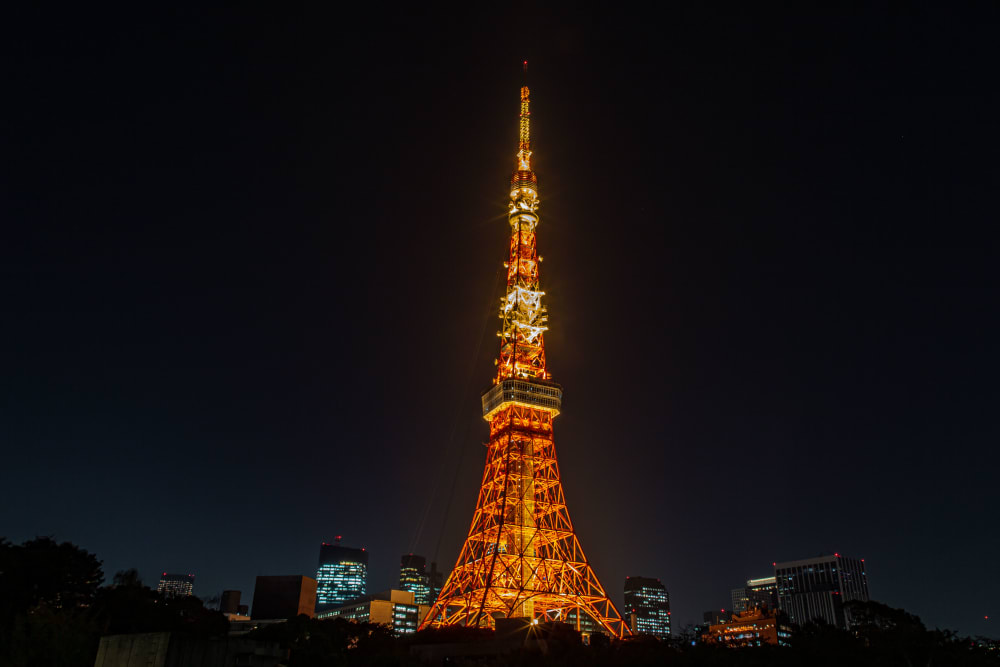
Rising above Minato City in distinctive international-orange and white, Tokyo Tower is more than a familiar skyline photograph. It is a practical place to understand Tokyo’s geography, a symbol of Japan’s postwar rebuilding, and an unusually atmospheric stop after dark. This guide covers whether the observation decks are worth the ticket price, how to reach the tower, when to visit, and how to combine it with other Tokyo attractions.
Key Takeaways
Tokyo Tower at a Glance
- Location: 4-2-8 Shibakoen, Minato-ku, Tokyo.
- Height: 333 metres; the Main Deck is at 150 metres, while the Top Deck is at 250 metres.
- Hours: Main Deck 9:00 a.m.–11:00 p.m., last admission 10:30 p.m.; Top Deck Tour operates within its own bookable time slots and normally closes at 10:45 p.m.
- Adult tickets as listed in October 2026: Main Deck ¥1,500; Top Deck Tour ¥3,300 online or ¥3,500 at the counter. Check before travelling because prices and operating rules can change.
- Time needed: about 60–90 minutes for the Main Deck, longer for photography, a Top Deck experience or nearby sights.
For another view across the capital, compare the tower with Tokyo Skytree, which offers a much higher vantage point, and the Tokyo Metropolitan Government Building, which offers a different skyline perspective.
What Makes Tokyo Tower Special?
Postwar architecture and broadcasting history
Completed in 1958, Tokyo Tower was designed by architect Tachū Naitō and built as a communications tower during a period of rapid reconstruction and economic growth. Its steel lattice design recalls the Eiffel Tower, but its striking paint scheme and setting within a dense Japanese city create a character of its own. The official height is 333 metres; it was once the tallest freestanding tower in Japan before the much taller Tokyo Skytree opened.
When you look out across the city, try to locate the green spaces around the Imperial Palace, Tokyo Bay and the residential districts spreading beyond the central business area. To explore the capital from street level, our guides to Tokyo Station and Shibuya Crossing offer two very different introductions to urban Tokyo.
Main Deck: the classic view at 150 metres
The Main Deck is the best choice for most first-time visitors. The panorama feels close enough to appreciate the street pattern, parks and buildings below, rather than viewing the city as an abstract map. On clear days, you may see distant mountains; visibility of Mount Fuji is never guaranteed. Look-down glass panels offer another perspective, though they can be popular photo spots.
Most travellers can enjoy the Main Deck without purchasing a premium ticket. It works especially well if you are combining the tower with nearby museums, temples or an evening in Roppongi.
Top Deck Tour: is the upgrade worthwhile?
The Top Deck, at 250 metres, provides a more elevated view and a guided, timed-entry visitor experience. It costs substantially more than the Main Deck, so the upgrade makes the most sense for skyline enthusiasts, special occasions and people who specifically want the higher viewpoint. If the weather is hazy, the difference in views may not justify the extra cost for every visitor.
Book using Tokyo Tower’s official ticket site, especially when visiting on weekends, during school holidays or near sunset. The Top Deck may close in poor weather or due to operational restrictions; check the terms before buying.
Tokyo Tower Tickets, Opening Hours and Budget
Current admission overview
| Experience | Adult price | What it includes |
|---|---|---|
| Main Deck | ¥1,500 | Observation at 150 m |
| Top Deck Tour | ¥3,300 online / ¥3,500 counter | Main Deck and 250 m Top Deck experience |
| Tokyo Diamond Tour | From ¥7,000 | Premium hosted experience, two decks and dedicated lounge |
These are advertised adult rates, not universal prices. Children, students and eligible visitors with disabilities have different rates; confirm the details on the official fee and hours page. Top Deck visitors should follow their reserved departure slot. The Main Deck normally admits visitors until 10:30 p.m., but opening arrangements may change for events or severe weather.
Best time to visit
Morning: Usually the simplest time for photography and exploring nearby sites at an unhurried pace. Late afternoon: Arrive before sunset if you want both daylight and city lights; this is also a popular period. Evening: Ideal for seeing illuminated streets and the glow of Tokyo’s skyline. Check the forecast rather than choosing the time solely by sunset photos: clear conditions matter more than a precise minute.
If your itinerary has room for another spectacular evening experience, consider teamLab Planets Tokyo or dinner and sightseeing around Tsukiji Outer Market earlier in the day.
How to Get to Tokyo Tower
By subway or train
The tower is not directly attached to a major JR station, but several rail stops are within walking distance. Akabanebashi Station on the Toei Oedo Line is one of the nearest approaches; Onarimon Station on the Toei Mita Line and Kamiyacho Station on the Tokyo Metro Hibiya Line are also convenient. Hamamatsucho Station, served by JR lines and the Tokyo Monorail, involves a longer walk of roughly 15–20 minutes, depending on your route and pace.
Visitors arriving via Japan’s intercity rail network can first orient themselves with our Tokyo Station guide, then use a route planner to identify the simplest transfer. Travel time varies considerably by hotel location; always check your actual departure station and exits.
Walking route and accessibility
Allow extra time for traffic lights and the gentle slopes around Shiba Park. The district is pleasant to explore on foot, and the tower is easy to recognise as you approach. If mobility is a concern, check the official accessibility information in advance; the outdoor stairway experience is not a replacement for elevator access and may be suspended due to weather.
Things to Do Near Tokyo Tower
Zojoji Temple and Shiba Park
The best nearby pairing is Zojoji Temple, a historic Buddhist temple whose traditional buildings create a remarkable contrast with the orange-and-white tower in the background. The surrounding Shiba Park area provides open space for photographs and a welcome break from crowded shopping districts. Approach temple precincts respectfully, especially when services or ceremonies are in progress.
Roppongi, galleries and design
For contemporary culture, continue to Mori Art Museum or 21_21 DESIGN SIGHT. Both are strong alternatives when the weather is too cloudy for city views. If you want more historical context on Tokyo’s communications and media, see the NHK Museum of Broadcasting.
Extend your day into another Tokyo neighbourhood
Tokyo Tower also works as part of a larger sightseeing itinerary. Visit Sensoji Temple and Asakusa for traditional streets, or spend another afternoon at Ueno Park. For city gardens and seasonal flowers, explore Shinjuku Gyoen National Garden; for technology, games and anime shopping, go to Akihabara. These are distinct neighbourhood outings, rather than places to squeeze into a quick walk around the tower.
A Simple Half-Day Tokyo Tower Itinerary
Option A: cultural afternoon followed by sunset
Start at Zojoji Temple and Shiba Park, grab lunch or coffee nearby, then head into Tokyo Tower in the late afternoon. Leave a cushion for ticket queues and sunset crowds. After dark, continue to Roppongi for dinner or another skyline viewpoint.
Option B: photography and museums
Visit the tower in the morning, when you are less likely to be rushed by sunset demand. Follow with the NHK Museum of Broadcasting or one of Roppongi’s cultural venues. If you would prefer a full day of family entertainment, save the tower for another date and consider Tokyo Disney Resort or KidZania Tokyo instead.
Photography, Weather and Practical Tips
- Use a lens hood or hold the camera close to the glass to reduce reflections when shooting through windows.
- Check Tokyo’s visibility forecast; distant Fuji views are most likely on exceptionally clear days, but never guaranteed.
- Keep valuables close in busy observation and elevator areas.
- Allow time for security, ticket validation and elevator queues, especially during popular hours.
- If you are travelling with children, check the relevant age ticket categories rather than assuming one flat family rate.
- Do not confuse Tokyo Tower with Tokyo Skytree: they are different landmarks in different districts, with separate tickets.
Frequently Asked Questions About Tokyo Tower
Is Tokyo Tower worth visiting if I have already seen Tokyo Skytree?
Yes, if you enjoy architecture, classic Tokyo landmarks or a closer view of central Minato. The Skytree gives a higher panorama; Tokyo Tower offers a more intimate vantage point and a strong pairing with Zojoji Temple.
Can I visit Tokyo Tower without buying an observation ticket?
You can admire and photograph the exterior and explore the surrounding neighbourhood without paying for an observation-deck ticket. Access to particular commercial spaces and facilities may have separate conditions.
How much time should I allow?
Most visitors should plan approximately one to one-and-a-half hours for the Main Deck, and more if taking a Top Deck Tour or visiting at a particularly busy time.
What is the best station for Tokyo Tower?
Akabanebashi is a convenient short walk, while Onarimon and Kamiyacho also work well. The best station depends on your starting point and the rail line you are already using.
Does Tokyo Tower stay open at night?
Yes. The official published Main Deck hours extend to 11:00 p.m., with last admission at 10:30 p.m., subject to operational changes.
Address and Google Maps Directions
4-2-8 Shibakoen, Minato-ku, Tokyo-to, Japan.
Find Location and Directions on Google Maps
Official Sources and Further Reading
- Tokyo Tower official visitor website
- Tokyo Tower current opening hours and fees
- Tokyo Tower official reservations
- Japan National Tourism Organization — Tokyo Tower
For more destination ideas, explore Travel Blogger Indonesia. Information reviewed in October 2026; confirm tickets and hours with the venue before departure.