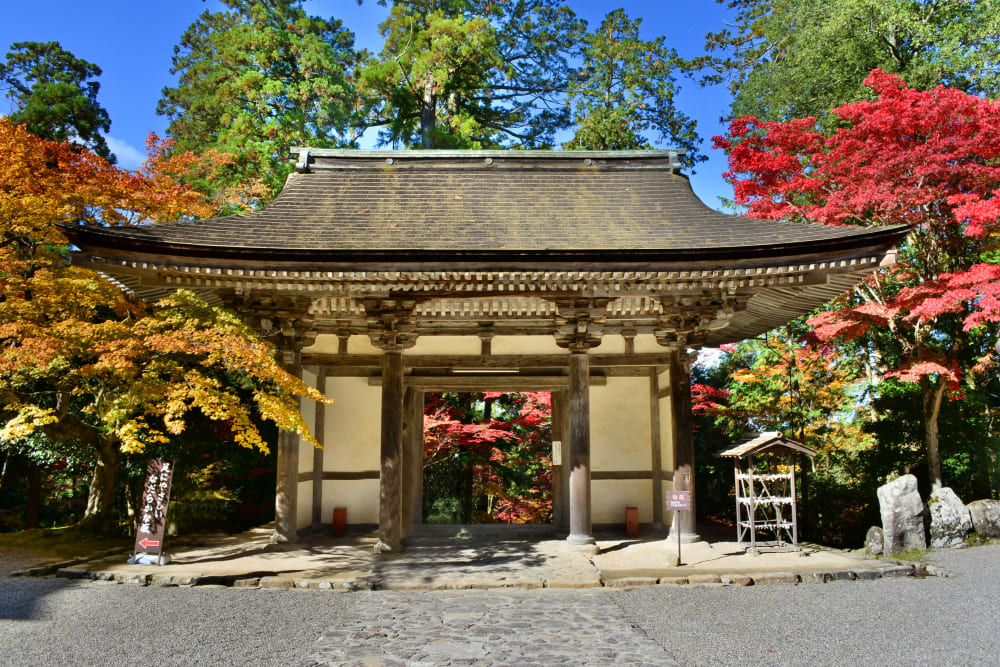
You can see fall foliage and cherry blossoms at the same time at Saimyoji Temple, a National Treasure located in Hino-cho, Gamou-gun, Shiga-ken. This temple has a rich history dating back to the Kamakura period (1192-1333) and is known for its stunning autumn leaves and cherry blossoms that bloom simultaneously. It attracts a large number of visitors during the autumn season who come to witness this unique natural phenomenon.
Saimyoji Temple’s main temple building was named japan‘s first National Treasure, making it a significant cultural and historical landmark. The temple’s architecture is a testament to the craftsmanship and ingenuity of the Kamakura period, as it was constructed without the use of nails. The main temple and the three-tiered pagoda, adorned with colorful paintings, have survived various challenges throughout history, including attempts by local warlord Oda Nobunaga to burn them down during the Warring States period in 1571.
One of the highlights of Saimyoji Temple is its Horaitei Garden, which boasts over 1,000 maple trees. In mid- to late November, the grounds of the temple are covered in a vibrant carpet of crimson leaves, creating a breathtaking spectacle. What makes this garden even more special are the fudanzakura cherry trees scattered among the maples. These unique cherry trees bloom in autumn, allowing visitors to witness the beauty of sakura cherry blossoms and autumn foliage at the same time. It is a rare sight that can only be experienced at Saimyoji Temple.
To reach Saimyoji Temple, you can take a train to Hikone or Kawase station on the JR Tokaido Line, or to Amago Station on the Omi Tetsudo Line. From there, you can either take a taxi or hop on the Koto Sanzan Shuttle Bus. During the peak autumn season in November, this shuttle bus operates between the three Koto Sanzan temples (Saimyoji, Kongorinji, and Hyakusaiji) and Hikone and Yokaichi stations. You can start your tour at either Hikone or Yokaichi Station, depending on your preference.
Saimyoji Temple is part of an elite trio of Tendai temples, along with Kongorinji and Hyakusaiji. These temples belong to the Tendai sect of Buddhism and are collectively known as the Koto Sanzan temples. The name Koto Sanzan refers to the three mountains on the east side of Lake Biwa where these temples are situated. Each temple has its own unique features and historical significance, making them popular destinations for tourists and pilgrims alike.
When visiting Saimyoji Temple, make sure not to miss the colorful paintings in the pagoda, which are a testament to the artistic talent of the craftsmen of the Kamakura period. The combination of cherry blossoms and autumn leaves is another sight that should not be missed. It is a rare opportunity to witness the vibrant colors of both seasons in one place. Additionally, take some time to appreciate the nail-less architecture of the temple, which is a remarkable feat of engineering.
In conclusion, Saimyoji Temple offers a unique experience to witness the beauty of fall foliage and cherry blossoms at the same time. Its historical significance, stunning architecture, and picturesque garden make it a must-visit destination for nature enthusiasts and history buffs. Whether you are captivated by the vibrant colors of autumn leaves or the delicate beauty of cherry blossoms, Saimyoji Temple is sure to leave a lasting impression. Plan your visit during the peak autumn season in November to witness this extraordinary natural phenomenon and immerse yourself in the rich cultural heritage of Japan.
Address And Maps Location:
Saimyoji, Hino-cho, Gamou-gun, Shiga-ken
Find Location And Direction On Google Maps
Subscribe, follow travelbloggerindonesia.com