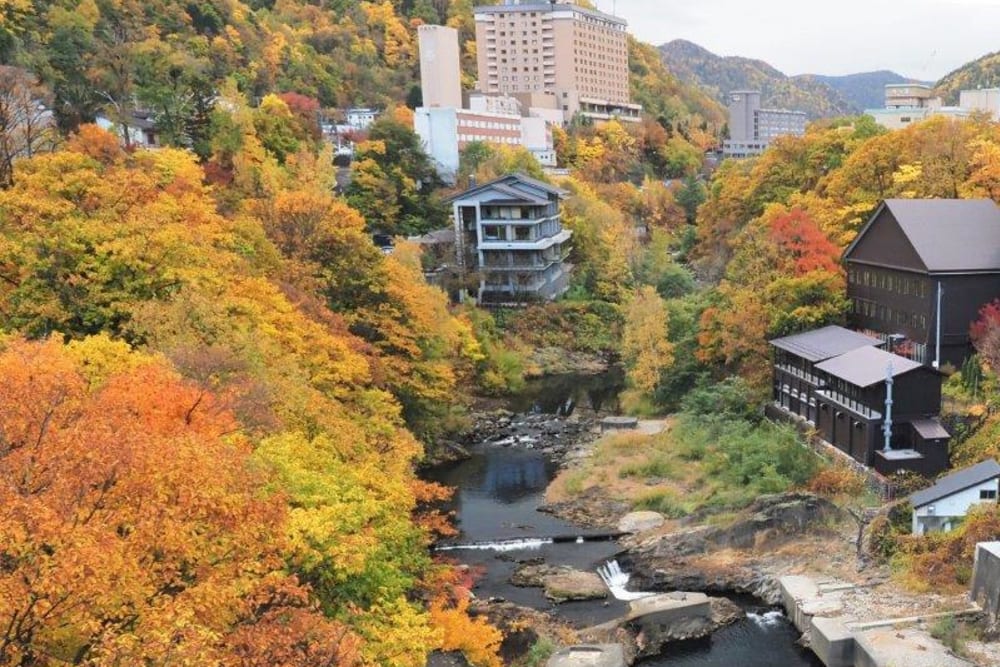
Jozankei Onsen is a mountain hot-spring town within Sapporo, where a day trip can combine riverside walks, outdoor footbaths and a traditional Japanese bath. The area is especially popular for autumn colours, but winter snow and quieter green-season scenery make it a rewarding Hokkaido escape throughout the year. This guide explains how to get to Jozankei from Sapporo, what to see, how to enjoy an onsen respectfully, and why you should check the latest bus schedule rather than rely on older travel timetables.
Key Takeaways
Where Is Jozankei Onsen?
Jozankei lies in the Minami Ward of Sapporo, in the wooded valley of the Toyohira River near Shikotsu-Toya National Park. Although it feels far removed from the city, the resort is accessible by road and bus from central Sapporo. It is part of japan‘s established hot-spring culture and works as either a full-day outing or a relaxing overnight stay.
The Japan National Tourism Organization’s Jozankei guide traces the town’s development to 1866, when the monk Miizumi Jozan helped establish bathing facilities beside the river. You may see the founder’s name transliterated differently in older English-language sources. The area’s hot springs, forest scenery and ryokan inns remain the main reasons to visit.
How to Get to Jozankei Onsen from Sapporo
For most independent travellers, public transport is the practical choice. Start by planning your route from Sapporo Station or the Namboku subway line. Do not assume a bus timetable quoted several years ago still applies: the Jozankei Tourist Association announced a substantial timetable revision effective 1 December 2025.
Option 1: Direct Kappa Liner bus
The reserved-seat Kappa Liner runs between central Sapporo and Jozankei. The local tourism association’s updated access notice describes approximately 60 minutes from Sapporo Station and eight round trips following the December 2025 changes. Reservations are required. The notice also identifies the central Sapporo boarding location as bus stop 27 in front of the Hokuren Building, near subway exit 23, during the Sapporo Station redevelopment period.
Services, boarding points and reservations may change. Check the operator’s current timetable before leaving, particularly in winter or during busy autumn weekends. An older JNTO page mentions a different service frequency and a roughly 75-minute journey; the local association’s newer transport notice is the more appropriate reference for current planning.
Option 2: Subway to Makomanai, then bus
Take the Namboku subway line to Makomanai and connect to a Jozankei-bound bus. The tourist association reports buses from Makomanai approximately every 30 minutes under the revised arrangement and estimates around 70 minutes for the Sapporo Station–Makomanai–Jozankei journey, depending on connections. Confirm your destination stop and route before boarding.
Travellers arriving at New Chitose Airport may also consider the airport-bus connection to Makomanai followed by a local bus, which the association estimates at about two hours in total. Leave a buffer for baggage, weather and transfer time rather than treating the published estimate as a guaranteed connection.
Option 3: Car or hotel shuttle
Driving can be convenient for travellers combining Jozankei with nearby viewpoints, but travel time depends on weather and road conditions. In snowy months, winter-driving experience and suitable tyres matter. Some ryokan offer shuttle services, often with advance booking and specific pickup locations. Confirm directly with your accommodation instead of assuming that every hotel provides free transfers.
Best Things to Do in Jozankei Onsen
1. Relax in a traditional onsen bath
Bathing is the defining Jozankei experience. You can choose a ryokan stay, a facility offering day-use bathing, or a footbath if you prefer not to use a full communal bath. Individual properties set their own admission fees, opening times, towel arrangements and rules about tattoos, children and private baths. Check these details before arriving; not every ryokan welcomes day visitors at all times.
Jozankei’s mineral-rich springs are part of a long bathing tradition. Some tourism descriptions attribute health benefits to the waters, but such claims should not be treated as medical advice or a promise of treatment. If you have cardiovascular problems, pregnancy-related concerns or another condition affected by hot water, seek appropriate medical guidance and avoid excessively hot or prolonged bathing.
2. Visit Jozan Gensen Park
Jozan Gensen Park commemorates the resort’s founder and offers an accessible introduction to the area’s geothermal landscape. According to the Jozankei Tourist Association’s park information, the park has footbaths, a founder statue and a place associated with cooking onsen eggs. The published general hours are 7:00 a.m. to 9:00 p.m., with free entry, but verify the latest information and any temporary restrictions before travelling.
The park is in the hot-spring district, making it easy to combine with a riverside walk. The water can be extremely hot at its source; follow local instructions and use designated bathing areas only.
3. Try Taro-no-yu footbath
The free Taro-no-yu footbath is another low-commitment stop. It is linked to the local kappa folklore and has a sheltered setting for a short break. The tourist association’s Taro-no-yu listing publishes 7:00 a.m. to 8:00 p.m. hours and notes that towels can be obtained from a vending machine. Bring a small towel if you already have one, and check for maintenance closures.
4. Walk beside the Toyohira River and admire the bridges
Jozankei’s river valley is attractive in every season. The Toyohira River, surrounding trees and bridges provide photo opportunities without requiring a strenuous hike. Nishiki Bridge is associated with particularly attractive autumn views, while smaller walking paths let visitors experience the sound of the river close to town. Trails may be wet, icy or temporarily closed, so choose a route suitable for the weather and your footwear.
For a broader Hokkaido landscape itinerary, consider comparing Jozankei’s wooded valley with Lake Toya or the volcanic scenery near Noboribetsu Onsen. Those are separate destinations and should not be squeezed into a short Jozankei day trip without accounting for travel time.
5. Discover the kappa statues and local folklore
Jozankei’s mascot is the kappa, a mythical water creature from Japanese folklore. Small statues and souvenir motifs appear around the resort. One local legend tells of a fisherman who vanished in the river and later appeared in a dream saying he lived with a kappa family. Treat this as a story that contributes to the town’s identity, not as a historical or safety claim. The statues make a fun scavenger hunt during a leisurely walk.
6. Explore Hoheikyo Dam and Jozankei Dam
The area around Jozankei includes dramatic dam scenery, especially when the leaves change colour. Hoheikyo Dam is a popular autumn destination, while Jozankei Dam provides another view of the surrounding landscape. Access, parking, shuttle operations and seasonal opening periods vary, so check local tourism information rather than assuming every viewpoint is available all year. The official Jozankei autumn-viewpoint guide is useful when planning a foliage visit.
7. Combine a winter trip with Sapporo Kokusai Ski Resort
Jozankei is convenient for visitors interested in nearby winter sports. Sapporo Kokusai Ski Resort offers skiing and snow activities when conditions permit. A hot-spring bath can be a pleasant way to end a cold day, but confirm transport between the resort and your chosen onsen and check the ski area’s actual seasonal schedule. For other Hokkaido winter options, compare Sapporo Teine and Niseko’s ski areas rather than assuming they are all within easy reach of Jozankei.
Best Time to Visit Jozankei
Autumn: colour and busy weekends
Autumn foliage is one of the town’s strongest draws. The Japan National Tourism Organization describes around mid-October as a typical peak, earlier than in much of central Japan. This is a seasonal pattern, not a fixed annual date. Temperature and rainfall can shift the colours, and popular buses and ryokan may book up. Check the latest foliage reports before planning a trip around a particular weekend.
Winter: snowy ryokan atmosphere
Snow creates a different experience: steaming outdoor baths against a winter landscape. Winter travel requires more caution, however. Footpaths may be slippery, daylight is limited and buses may run late in severe weather. If your Hokkaido holiday includes city events, see our Sapporo Snow Festival guide and Sapporo White Illumination overview for ideas to pair with a separate onsen outing.
Spring and summer: green landscapes
Spring and summer are good for river scenery, short walks and enjoying a quieter side of the resort. Conditions can still be cool in the mountains, especially after rain. Check trail closures, bring layers and avoid approaching fast-flowing water. For an urban contrast, consider Sapporo Art Park or Maruyama Park on another day.
Day Trip or Overnight Stay?
Choose a day trip if your priorities are one onsen session, a footbath and a short walk. An early departure from Sapporo gives you more time to enjoy the area without rushing for the final bus. Confirm whether your chosen bathing facility accepts non-overnight guests and reserve the Kappa Liner when needed.
Stay overnight if you want a traditional ryokan experience, meals, several baths and a calmer morning before the day-trippers arrive. Prices vary by season, room, meal plan and whether a private bath is included; obtain live quotes directly from the property. For city accommodation and onward journeys, Sapporo Station is a useful transport reference.
Onsen Etiquette for First-Time Visitors
- Wash and rinse your body thoroughly at the shower area before entering a shared bath.
- Follow the facility’s rules about bathing attire; many traditional communal baths do not allow swimsuits.
- Keep towels, phones and cameras out of the bath water, and respect other guests’ privacy.
- Check tattoo policies and private-bath options before booking.
- Drink water, take breaks and leave the bath if you feel dizzy or uncomfortable.
- Observe quiet hours and all property-specific instructions, especially in mixed-use hotel facilities.
If you enjoy comparing hot-spring towns, our Noboribetsu Onsen guide and Nyuto Onsenkyo overview describe different onsen settings. These are alternative trips rather than neighbouring stops.
Suggested One-Day Jozankei Itinerary
Morning: Leave central Sapporo after checking the bus reservation and forecast. Arrive in Jozankei, explore the river area and stop at Jozan Gensen Park. Midday: Have lunch and enjoy a day-use onsen, if available. Afternoon: Visit Taro-no-yu, photograph the kappa statues and take another short walk before your return bus. In foliage season, consider replacing one activity with a planned dam viewpoint visit if the transport connections work.
For a longer Hokkaido itinerary, Sapporo itself offers Sapporo Clock Tower, the Sapporo Beer Museum and Hokkaido Shrine. A separate day in Otaru can add canals and historic streets; winter visitors may also be interested in the Otaru Snow Light Path event. Do not attempt to fit all of these into a single onsen day.
Frequently Asked Questions
How far is Jozankei from Sapporo?
The local tourism association’s updated access guidance estimates around 60 minutes on the direct Kappa Liner and about 70 minutes using the subway and connecting bus. Journey times depend on departure point, connections, traffic and weather.
Do I need to book the Kappa Liner?
Yes, the tourist association describes the direct Kappa Liner as reservation-required. Verify the latest schedule and reservation process before departure.
Can I visit Jozankei without staying at a hotel?
Yes. Footbaths, walks and some day-use bathing facilities make a day trip possible. Each private bath or ryokan sets its own admission policy, so check before arriving.
Is Jozankei suitable for a winter visit?
Yes, provided you plan for snow, slippery paths and possible transport disruption. Check weather and road conditions, and leave sufficient time for your return.
Address And Maps Location:
Minami-ku, Sapporo-shi, Hokkaido
Find Location And Direction On Google Maps
Official References
Updated 3 November 2026. Verify local bus times, access, seasonal facilities and bath policies shortly before travel. Key references include:
- Japan National Tourism Organization: Jozankei Onsen
- Jozankei Tourist Association: December 2025 transport changes
- Jozankei Tourist Association: Jozan Gensen Park
- Jozankei Tourist Association: Taro-no-yu footbath
- Jozankei Tourist Association: autumn viewpoints
Subscribe, follow travelbloggerindonesia.com