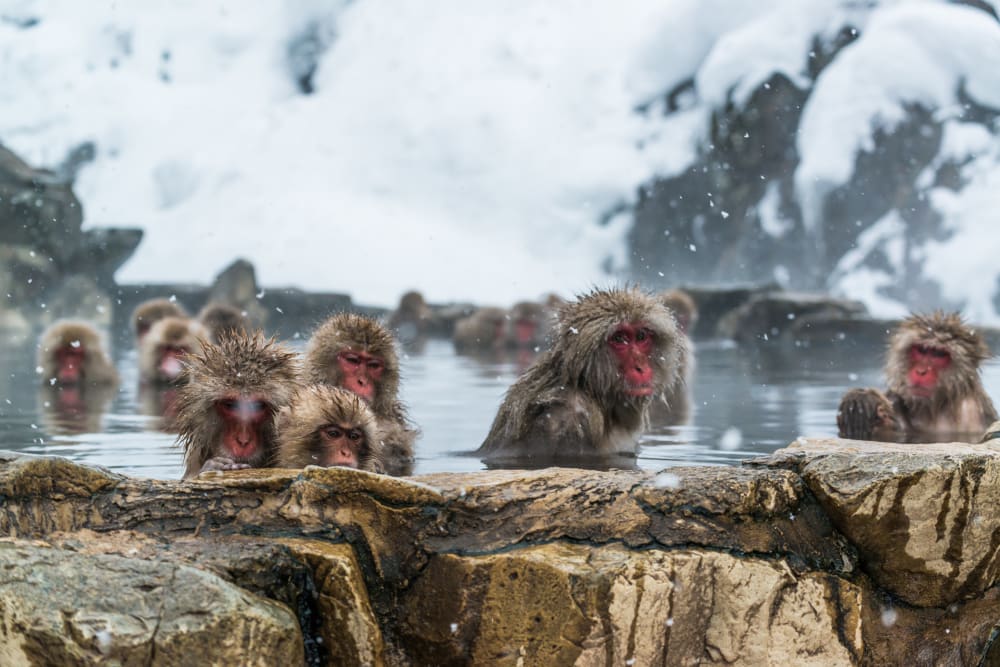
Jigokudani Snow Monkey Park is one of Japan’s most memorable wildlife experiences, but it is not a zoo and a visit does not guarantee a photograph of monkeys in a hot spring. The animals are wild Japanese macaques that move between the surrounding mountains and the observation area. Seeing them depends on season, weather and their behaviour. This guide explains how to reach the park in Nagano, what the walk involves, when monkeys are most likely to bathe, the latest visitor rules and how to plan a responsible visit.
Key Takeaways
What is Jigokudani Snow Monkey Park?
Jigokudani Yaen-Koen lies in the Yokoyu River valley in northern Nagano Prefecture, within the wider Joshinetsu-Kogen mountain environment. The observation park opened in 1964 and is internationally known for Japanese macaques that sometimes bathe in hot spring water. Its name means something like ‘Hell Valley’, referring to the area’s rugged terrain and geothermal activity. The park sits at about 850 metres above sea level and can be cold and snowy in winter.
Unlike animals kept in a conventional enclosure, these monkeys can leave the viewing area. Park staff maintain an observation environment, but they cannot promise that monkeys will be present on any particular day. The official Snow Monkey Park website publishes current conditions and notices. The JNTO destination guide explains the park’s setting and its place in Nagano tourism.
When can you see the snow monkeys bathing?
Winter is the classic season
The familiar photographs of macaques surrounded by snow are most closely associated with the coldest months, roughly December through March. Monkeys may enter the hot spring to warm themselves, but even in winter there is no guaranteed bathing schedule. Some may be eating, grooming, playing or resting away from the water. Watch their natural behaviour rather than expecting them to perform for visitors.
Winter is also the busiest time for tourism, particularly around holidays and weekends. Cold weather, slippery paths and transport queues can make the trip longer than expected. Check the park’s first-time visitor guide and daily monkey reports before leaving your accommodation.
Spring, summer and autumn are different experiences
In spring, visitors may observe young macaques and the troop’s social interactions. Summer brings green forest scenery and a more comfortable walking season, though rain can affect the trail. In autumn, food is abundant in the mountains and the animals may spend more time away from the observation area. The park specifically warns that monkey appearances can be sporadic in autumn.
This distinction matters if you are planning a trip primarily for photography. A summer visit can still be interesting for wildlife observation, but expecting a snow-covered hot spring scene in July would be unrealistic. Check current reports, and consider a flexible itinerary if seeing the monkeys is your main goal.
Jigokudani Snow Monkey Park opening hours and tickets in 2026
Seasonal opening hours
According to the park’s official visitor information, the standard April–October opening window is 8:30 a.m.–5 p.m., while November–March normally operates 9 a.m.–4 p.m. Visitors are asked to reach the park at least 30 minutes before closing. There are no fixed weekly closing days, but weather, landslides, snowfall or monkey behaviour can lead to shorter hours or temporary closure.
Admission prices and the December 2026 change
As checked on 25 October 2026, the park’s published general admission is ¥800 for adults aged 18 and over and ¥400 for children aged 6–17, with younger children admitted free when accompanied by a guardian. Importantly, the operator has announced an admission-fee revision effective 1 December 2026. Anyone travelling after that date should verify the updated tariff rather than relying on the October prices quoted here.
The park has also introduced online ticketing, and its website advises that winter visitors with online tickets may receive entry priority in certain periods. Consult the official ticket page for the latest purchase options, ticket conditions and any seasonal arrangements. Do not buy from an unverified reseller merely because a search result promises priority access.
How to get to Jigokudani Snow Monkey Park
From Nagano Station by express bus
One practical route is to take an express bus from Nagano Station toward the Snow Monkey Park area, then walk to the observation park. The operator’s access guide gives an example bus journey of about 41 minutes followed by roughly 35 minutes on foot. Bus timetables, traffic and walking conditions affect the total duration, so allow substantially more than an hour for the entire trip.
From Nagano Station via Yudanaka
An alternative is the Nagano Dentetsu train to Yudanaka Station, followed by a local bus and a forest walk. The park’s published example uses approximately 38 minutes by limited-express train, 15 minutes by bus and 35 minutes walking. Check current connections rather than assuming buses wait for delayed trains. For accommodation nearby, Yudanaka Onsen is a useful base to research.
The final walk through the forest
The normal approach from Kanbayashi Onsen follows an unpaved trail of around two kilometres, typically taking about 30–40 minutes. It includes uneven ground, steps and some slopes. Winter ice, snow and mud can make it slower. This is a real mountain walk, not a short paved path from a car park. The park’s official access page provides route diagrams and walking information.
Because the approaches are uneven and include steps, the park states that wheelchairs and pushchairs cannot access the observation area by the normal routes. Travellers with limited mobility should assess this carefully before booking transport. There is no substitute viewing platform at the trailhead that guarantees the same wildlife experience.
Driving and parking considerations
Parking is available in the wider Kanbayashi area, but winter congestion can be severe. The park has warned visitors about full car parks and traffic queues and encourages public transport when possible. Some mountain access roads close seasonally. If driving, check the operator’s instructions rather than following a navigation app onto a narrow or winter-closed road.
What to expect inside the park
Wild macaques, not trained performers
Japanese macaques live in social groups and interact through grooming, play, feeding and other natural behaviours. Visitors may see adults sitting quietly, youngsters chasing one another or members of the troop entering the water. None of these moments can be scheduled. Observe calmly and let the animals decide how close they want to be.
The park is an opportunity to learn about wildlife rather than a petting attraction. There are educational signs and an observation area, but visitors must follow staff instructions. If monkeys are absent, that is part of the reality of visiting a wildlife site rather than a service failure.
Photography etiquette
Photography is permitted under the park’s rules, but visitors should not crowd, chase, touch or provoke monkeys for a photograph. Avoid selfie sticks and methods that surprise the animals. Keep your equipment under control, especially when the observation area is busy, and do not block other visitors for long periods.
Rules that protect people and monkeys
Do not feed the monkeys, touch them, stare aggressively into their eyes or bring pets. Do not eat or drink in the observation area, and never enter the monkey bathing pool. The hot spring is for wildlife, not a human onsen. The official park rules explain these restrictions in detail. They protect animal behaviour, visitor safety and the park environment.
What to wear and bring
Comfortable footwear is essential throughout the year. In spring and summer, walking shoes with grip are more suitable than sandals. In winter, wear insulated layers, waterproof outerwear and boots appropriate for snow or ice. The operator recommends considering simple traction aids such as crampons for winter conditions. Check the forecast for the valley rather than only the city of Nagano.
Carry what you need for the walk, but follow restrictions on food and drink at the park itself. A phone battery can drain quickly in the cold, and buses may be less frequent outside peak periods. Leave enough time for the return trail before the last transport connection.
Best nearby places to combine with Snow Monkey Park
Yudanaka and Shibu Onsen
A visit to Yudanaka Onsen or Shibu Onsen is a natural extension because both towns are associated with traditional hot-spring accommodation. They provide an opportunity to enjoy a human onsen after observing the monkeys, while respecting each bathhouse’s etiquette and admission rules. An overnight stay also makes an early park visit easier.
Shiga Kogen and winter sports
The nearby highlands of Shiga Kogen are popular for mountain scenery and seasonal recreation. Skiers can compare Shiga Kogen Ski Area with other Nagano ski resorts. Resort opening dates and lift operations depend on snowfall and weather, so check individual operators before travelling.
If you are building a longer winter holiday, Nozawa Onsen Snow Resort is another well-known destination in the broader region. Its travel logistics are separate from a quick Snow Monkey Park visit, so do not assume both can be combined without careful transport planning.
Nagano city culture and nearby museums
Travellers based in Nagano can explore Zenkoji Temple as a cultural counterpoint to the wildlife park. Art lovers may consider the Hokusai Museum in Obuse. These attractions are useful alternatives if mountain conditions force a change of plan, but their hours and transport connections should be checked separately.
More of Nagano beyond the monkey park
For a multi-day trip, the region offers diverse landscapes and experiences. Hakuba is known for alpine scenery and winter sports, while Togakushi Ninja Museum introduces another side of local heritage. Hot-spring travellers might look into Bessho Onsen, and those exploring by car can research the Japan Romantic Road in Nagano. These are regional ideas rather than nearby stops on the park’s walking route.
For longer outdoor itineraries, Tateyama Kurobe Alpine Route and Nagano kayaking are different seasonal experiences. Choose them only if the time of year, transport and your fitness level fit the plan. The Nozawa Fire Festival is a date-specific cultural event, not an attraction that operates every day.
A realistic Snow Monkey Park day trip
Morning: travel and forest walk
Start from Nagano or a nearby onsen town with a confirmed bus or train departure. Allow time for the approach walk, including extra minutes if conditions are icy. Check the official monkey updates before setting off; if the park announces a closure, change plans rather than heading into the mountains hoping to enter.
Midday: wildlife observation
Spend time watching the monkeys without rushing from one photograph to the next. A one- to two-hour observation window can be reasonable, but it depends on animal presence and weather. If no monkeys appear, do not leave the designated area to search for them in the forest.
Afternoon: return and onsen
Walk back to the transport stop while there is plenty of daylight, then visit a nearby onsen town or return to Nagano city. Build in buffer time for a missed bus or a slower winter trail. Travellers who want a more relaxed pace can stay overnight in the area.
Frequently asked questions
Are the snow monkeys always in the hot spring?
No. Bathing is most associated with cold winter weather, and the wild monkeys may not appear in the park at all on some days. Check current conditions and keep expectations realistic.
Can visitors bathe with the monkeys?
No. The park prohibits human bathing in the monkeys’ hot spring. Choose a designated public bath or ryokan onsen elsewhere in the region for a human bathing experience.
Is the park suitable for young children?
Families can visit if children can safely manage the unpaved forest approach and follow wildlife rules. Guardians must supervise children closely. The park’s terrain is not accessible for pushchairs, and winter ice makes the walk more demanding.
How much time should I allow?
From Nagano, plan a substantial part of the day for travel, walking, observation and the return journey. The final trail alone is typically around 30–40 minutes each way, and transport connections can add waiting time.
What changes after November 2026?
The park has announced new admission prices effective 1 December 2026. Winter opening hours also differ from summer hours. Confirm the latest ticket price, online booking arrangements and any closure notices on the official website before travelling.
Final planning advice
Jigokudani Snow Monkey Park offers a rare opportunity to watch Japanese macaques in a mountain setting, but responsible planning matters more than chasing a perfect photograph. Dress for the trail, respect the animals, allow time for transport and check official daily updates. If the monkeys are absent or the weather is difficult, nearby onsen towns and Nagano’s cultural attractions can still make the trip worthwhile.
Official references
Snow Monkey Park hours and admission · Official access and trail information · Official visitor rules · JNTO Jigokudani guide
Address And Maps Location:
6845 Hirao, Yamanouchi-machi, Shimotakai-gun, Nagano-ken
Find Location And Direction On Google Maps
Subscribe, follow travelbloggerindonesia.com