Key Takeaways
Wat Ou Sai Kham: A Historical and Cultural Gem in Chiang Mai
Introduction
Wat Ou Sai Kham is a remarkable temple located in the Changmoi Sub-District of Muang District, Chiang Mai, thailand. It is a site rich in history and culture, offering a deep connection to the Buddhist faith and the local traditions of Chiang Mai. The temple, originally named Wat Uppakham, was founded by laywomen who migrated from Chiang Saen City. Over time, the name evolved to Wat Ou Sai Kham, reflecting its deep-rooted heritage. This article will provide an in-depth exploration of the temple’s unique features, historical background, and cultural significance.
The Origin and Renaming of Wat Ou Sai Kham
Historical Beginnings
The origins of Wat Ou Sai Kham can be traced back to the laywomen from Chiang Saen City who settled near the area. These women played a pivotal role in establishing the temple, which served as a spiritual hub for the community. Initially, the temple was known as Wat Uppakham. However, as the years progressed, the name was changed to Wat Ou Sai Kham, a name that resonates more with its current identity and cultural significance.
Significance of the Name Change
The renaming of the temple is not just a change in nomenclature but a reflection of its evolving role in the community. The name Wat Ou Sai Kham embodies the temple’s heritage and its connection to the local populace. This change also signifies the temple’s adaptation to the cultural and spiritual needs of its devotees over the centuries.
The Phra Buddha Sihing Yok: A Masterpiece of Buddhist Art
The Creation and Composition
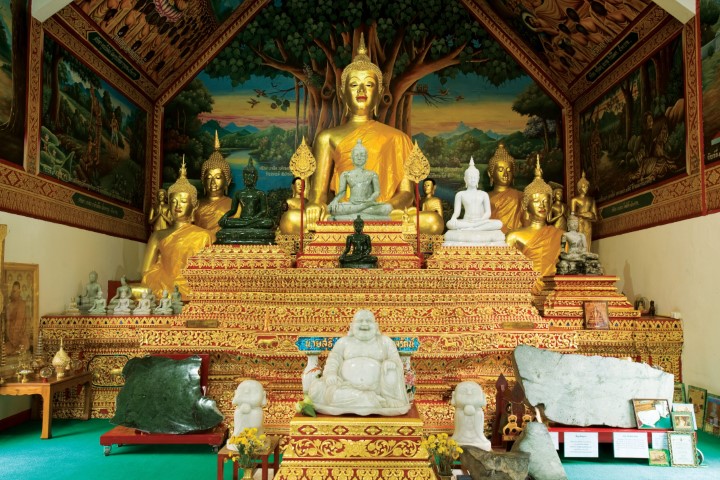
One of the most notable features of Wat Ou Sai Kham is the Phra Buddha Sihing Yok statue, also known as "Phra Sing Yok." This exceptional statue is crafted from natural emerald or Jadeite, specifically the Commercial Jade type. The statue’s composition includes a fascinating array of colors: pearl gray, purple at the left shoulder, green at the left hand, chest, and throne, with white spots adorning the left knee. The statue’s hardness is rated at level 7, a testament to its durability and the skilled craftsmanship involved in its creation.
Cultural and Spiritual Importance
The Phra Buddha Sihing Yok holds immense cultural and spiritual importance. It embodies the Chinese people’s qualities of greatness, known as Hok Lok Siu. Originating from the Pha Kan region in Ka Chin, northern Burma, the statue was auctioned in Mandalay, Burma, and eventually made its way to Thailand. It stands as the largest Burmese Jadeite in the country, signifying both artistic and spiritual grandeur. The statue’s posture, known as Mara Vichaya, is executed in the Singha 1 Lanna style, adding to its cultural richness.
The Temple’s Architectural and Artistic Treasures
Ancient Pulpit and Wall Paintings
Beyond the Phra Buddha Sihing Yok, Wat Ou Sai Kham is home to several other significant artifacts and architectural features. The ancient pulpit, still in use today, is an embodiment of traditional craftsmanship and serves as a functional piece of the temple’s religious practices. Additionally, the wall paintings behind the chapel offer a glimpse into the artistic expressions of the past, depicting scenes and stories significant to the Buddhist faith and local folklore.
The Tripitaka Hall: A Repository of Knowledge
Another notable feature is the ancient Tripitaka Hall, constructed in the Lanna-Thai style and locally referred to as "Lang Kai Castle." This hall is a repository of ancient texts and scriptures, making it a vital center for religious scholarship and the preservation of Buddhist teachings. The hall’s architecture reflects the traditional Lanna style, with intricate carvings and design elements that highlight the region’s artistic heritage.
Wat Ou Sai Kham as a Center of Learning and Tradition
A Hub for Bali Studies and Dhamma Discipline
Wat Ou Sai Kham has long been a center for Bali studies and Dhamma discipline, attracting scholars and practitioners from across the region. The temple plays a crucial role in the preservation and dissemination of Buddhist teachings, offering programs and courses that delve into the Dhamma and its applications in daily life.
Preserving Traditions and Customs
The temple also serves as a custodian of the traditions and customs of the Chiang Mai people. It hosts various cultural events and ceremonies that celebrate the region’s heritage, fostering a sense of community and continuity. The temple’s commitment to preserving ancient alphabets and scripts further underscores its role as a guardian of cultural knowledge.
Visiting Wat Ou Sai Kham
Location and Accessibility
Wat Ou Sai Kham is conveniently situated in the Changmoi Sub-District of Muang District, Chiang Mai. It is easily accessible to visitors, being open daily from 7 a.m. to 6 p.m. This accessibility ensures that both locals and tourists can experience the temple’s spiritual and cultural offerings.
Contact Information
For more information about visiting Wat Ou Sai Kham, interested parties can contact the temple at 0-5323-2410. This contact point provides an opportunity to learn more about the temple’s history, events, and ongoing activities.
Conclusion
Wat Ou Sai Kham stands as a testament to the rich cultural and spiritual heritage of Chiang Mai. From its origins and the significant Phra Buddha Sihing Yok statue to its architectural treasures and role as a center of learning, the temple offers a unique glimpse into the history and traditions of the region. As a place of worship, scholarship, and cultural preservation, Wat Ou Sai Kham continues to be a vital part of the community, welcoming all who seek spiritual enlightenment and a deeper understanding of the local customs.
Address And Location:
Chang Moi Mueang Chiang Mai Chiang Mai 50300