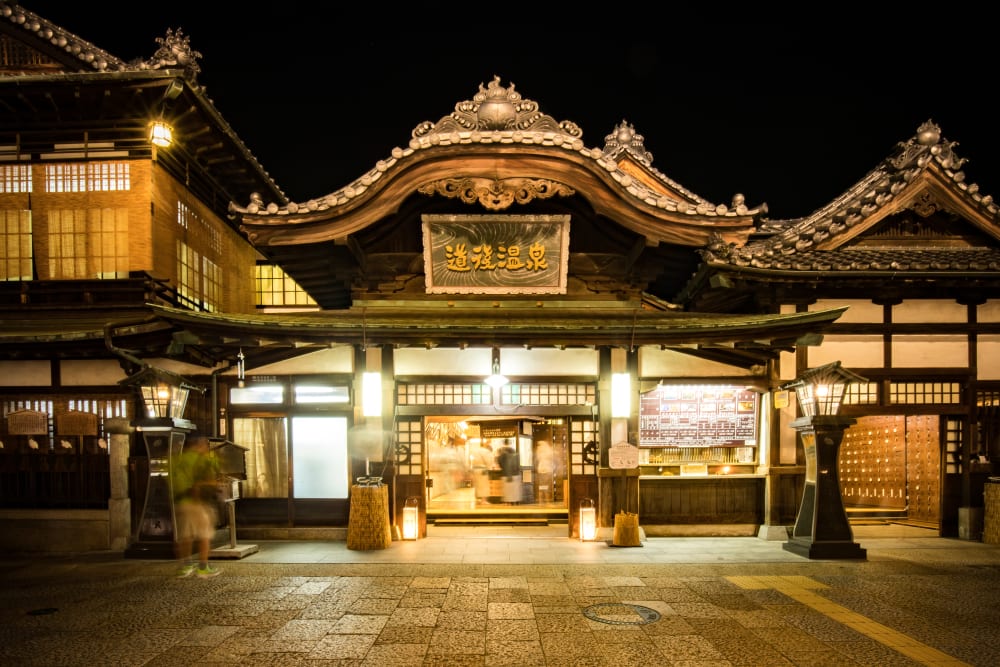
Dogo Onsen is a historic hot-spring district in Matsuyama, Ehime Prefecture, on Japan’s Shikoku island. Its celebrated wooden bathhouse, traditional shopping arcade and nearby temples make it an appealing half-day excursion or overnight ryokan stay. This guide explains the different public baths, how to arrive by tram, what to see nearby and what to check before booking a soak.
Key Takeaways
Why Visit Dogo Onsen?
Dogo is often described as one of Japan’s oldest hot-spring areas, with a bathing tradition popularly traced back roughly 3,000 years. The historic Dogo Onsen Honkan, completed in 1894, is the neighborhood’s most recognizable landmark: a multi-storey timber building with a distinctive tower and egret ornamentation. Its age and architecture are part of the attraction, but Dogo is also a working bathing district rather than simply a museum.
The neighborhood is compact enough to explore on foot. You can arrive at the tram terminus, browse the covered arcade, visit a public bath and walk to cultural attractions. Travelers exploring wider Ehime can combine Dogo with Matsuyama, Matsuyama Castle or Matsuyama Shiroyama Park.
Which Dogo Onsen Bath Should You Choose?
Dogo Onsen Honkan: The Historic Main Bathhouse
The Honkan is the classic choice for visitors who want the atmosphere of the old wooden building. Different admission plans may include different bathing and resting arrangements; the options and availability can change. Check the current official bathhouse information before choosing a plan, especially if you want access to an upstairs rest area or a particular bathing room.
Its maze-like interior and historical detailing are part of the experience. The building has undergone extensive conservation work, so older travel accounts describing closures or limited access should not be treated as current instructions. Do not assume that every room is included in the cheapest admission.
Tsubaki no Yu: A Local Public-Bath Experience
Tsubaki no Yu is an alternative for visitors who primarily want a straightforward public hot-spring bath. It is useful when you prefer a simpler bathing visit over a historic-building tour. Bring or purchase the toiletries you need according to the facility’s current arrangements, and allow time to dry off and change afterward.
Asuka no Yu: Another Bathing Option
Dogo Onsen Annex Asuka no Yu offers a different architectural atmosphere and is worth comparing with the Honkan. It is especially helpful for travelers planning more than one bath experience. Facilities, admission categories, reservation rules and operating hours can differ across the bathhouses; check the latest details directly rather than relying on a single price quoted in an old article.
How to Get to Dogo Onsen
From JR Matsuyama Station
Take the local Iyotetsu tram toward Dogo Onsen. The Japan National Tourism Organization describes tram route 5 as a connection from JR Matsuyama Station, with a journey of approximately 30 minutes. From the Dogo Onsen tram stop, the bathhouse district is about five minutes on foot through a lively shopping area. Confirm the platform, tram service and fare locally on your travel day.
From Matsuyama Airport
Airport limousine buses have traditionally connected the airport with the Dogo area. Check current route and timetable information before arrival, particularly for late flights. A taxi can be more convenient with large luggage, but costs vary with traffic and distance.
From Elsewhere in Matsuyama
The tram network is often the easiest way to reach Dogo from central Matsuyama. The nostalgic Botchan Train is a separate sightseeing attraction rather than an everyday replacement for the regular tram; its operating days and availability should be checked before planning around it.
Things to Do Around Dogo Onsen
Walk the Dogo Shopping Arcade
After a bath, explore the covered shopping streets for local sweets, small souvenirs and cafés. Popular regional products include Imabari towels, Tobe-yaki ceramics and mikan citrus goods. A casual stroll in a yukata is part of Dogo’s traditional atmosphere, especially for guests staying at nearby ryokan.
See the Botchan Karakuri Clock
Near the tram terminus, the Botchan Karakuri Clock celebrates characters from Natsume Soseki’s novel Botchan. It is an easy stop before or after your bath. Show times and any associated footbath availability may change, so look for posted information rather than treating historic schedules as guaranteed.
Visit Dogo Park and the Shiki Museum
Dogo Park is a pleasant place to walk, particularly during cherry-blossom season. The area preserves the history of Yuzuki Castle. The nearby museum dedicated to poet Masaoka Shiki provides additional context for Matsuyama’s literary heritage. Museum hours and admission should be checked separately.
Explore Isaniwa Shrine and Ishiteji Temple
Isaniwa Shrine is known for its striking shrine architecture and is a short walk uphill from the Dogo district. Ishiteji Temple is associated with the Shikoku 88 Temple Pilgrimage and is another worthwhile stop. Respect worshippers, observe photography restrictions and allow extra time if you plan to visit both.
Food and Souvenirs to Try
Ehime is famous for citrus fruit, particularly mikan, which appears in juices, sweets and desserts. Other local treats include botchan dango and taruto, a rolled cake. For a more substantial meal, look for taimeshi, a sea-bream rice specialty served in different regional styles. Menus, ingredients and prices vary by restaurant; ask about allergens and dietary restrictions before ordering.
Shopping highlights include towels from Imabari, ceramics from Tobe and locally produced souvenirs. If you plan to buy fragile ceramics or liquids, consider how you will transport them on your onward journey.
Practical Bathing Etiquette and Planning Tips
Before Entering the Water
Public onsen usually require guests to wash thoroughly at the shower stations before entering a shared bath. Swimwear is generally not worn in traditional communal baths, and a small towel should be kept out of the bathwater. Rules for tattoos, children, accessibility, personal belongings and private bathing differ by facility; check the specific bathhouse’s policies in advance.
How Long Should You Stay?
For a short visit, allow roughly two to three hours for the tram journey within Matsuyama, one bath and a stroll through the arcade. A half day gives more room for a temple or museum. Staying overnight in a ryokan lets you experience the quieter morning and evening atmosphere, but compare room packages carefully because bath access and meals may not be included.
When to Visit
Dogo is a year-round destination. Spring offers opportunities for cherry blossoms around Dogo Park, while cooler months make a hot bath particularly appealing. Weekends and Japanese holiday periods can be busy. Check weather forecasts, bathhouse operating notices and any timed admission or reservation arrangements before traveling.
Address And Maps Location
Location: Matsuyama-shi, Ehime-ken, Japan. The original Google Maps directions link is retained below, including its destination and routing parameters.
Find Location And Direction On Google Maps
A new embedded map has not been added because an authentic embed URL for the exact original destination was not independently verified. Use the preserved directions link for navigation.
Frequently Asked Questions About Dogo Onsen
Is Dogo Onsen worth visiting without taking a bath?
Yes. The historic Honkan exterior, arcade, Botchan Clock, shrines and nearby park can be enjoyed without entering the baths. Bathing is the signature experience, but it is not the only reason to visit.
Can I visit Dogo Onsen as a day trip?
Yes. Dogo is readily reached from central Matsuyama by tram, making it practical for a few hours. Allow additional time if you want to visit Ishiteji Temple, the Shiki Museum or several bathhouses.
Are bathhouse tickets and opening hours fixed?
No. Admission plans, schedules, special access and maintenance closures may change. Check official current notices before departure and avoid assuming that older travel-blog prices still apply.
Is Dogo Onsen the same as the bathhouse in Spirited Away?
No. The film’s bathhouse is fictional. Dogo Honkan is often mentioned among possible architectural inspirations, but it should not be described as a confirmed one-to-one filming location.
Official Sources and Further Reading
For destination background, see the Japan National Tourism Organization guide to Dogo Onsen and its Matsuyama destination overview. Verify current bath admission and closures with the operator before visiting. This article preserves its original source attribution to the Japan National Tourism Organization.
Subscribe, follow travelbloggerindonesia.com.