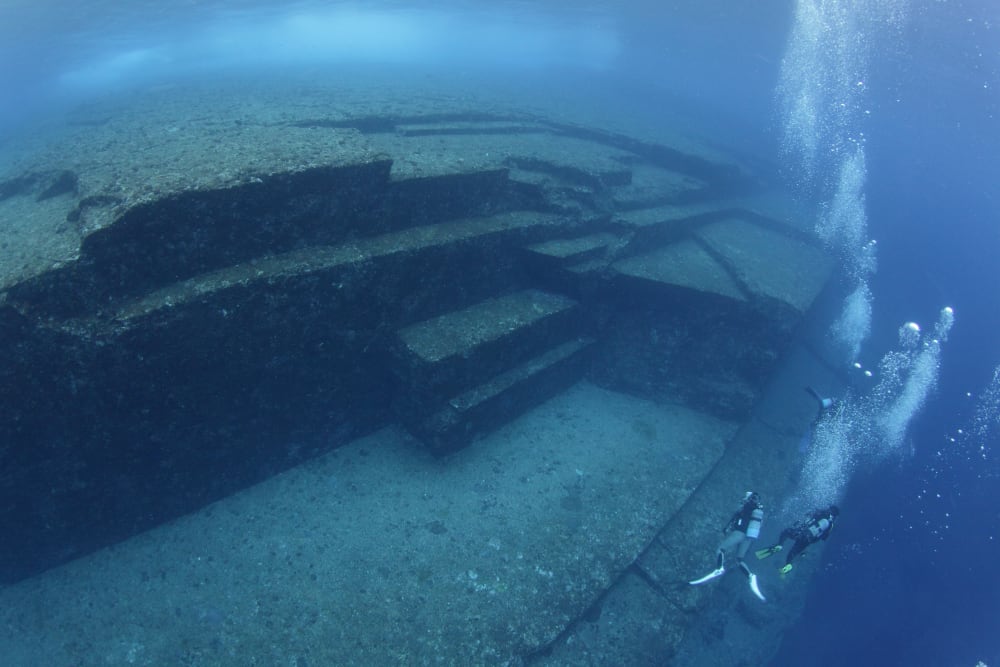
The Yonaguni Underwater Monument is one of Okinawa’s most unusual dive sites: a vast submerged rock formation with striking terraces, sharp edges and broad stone platforms. Often called Japan’s “underwater ruins,” it attracts curious travelers, but its origins remain debated. This guide explains what is known, how to visit safely, and how to reach remote Yonaguni Island.
Key Takeaways
What Is the Yonaguni Underwater Monument?
Located off the southern coast of Yonaguni Island in Okinawa Prefecture, the formation is roughly 100 meters long, 60 meters wide and 25 meters high, according to the Japan National Tourism Organization (JNTO). Its stepped surfaces and straight-looking rock faces resemble an enormous constructed terrace when seen underwater. It is a real geological site, but calling it an ancient city or proven human-built monument goes beyond the evidence.
Discovery and the Mystery of Its Origins
Discovery in 1986
Diving operator Kihachiro Aratake encountered the formation in 1986 while exploring waters near the island. Since then, it has become a signature Yonaguni attraction and a subject of competing interpretations.
Natural formation or ancient construction?
Some researchers have suggested that parts of the rock were deliberately shaped or adapted by people. Others point to natural sandstone bedding, fractures and marine erosion as explanations for the apparently regular steps and edges. No definitive archaeological consensus establishes the site as a lost civilization. The official Okinawa tourism guide also describes the origins as uncertain. Treat dramatic “Japanese Atlantis” claims as speculation, not established history.
Can You Dive at the Yonaguni Monument?
Yes, but this is not a casual snorkeling stop. Local dive operators arrange boat trips to the underwater formation when conditions allow. Currents around Yonaguni can be powerful and change quickly. JNTO recommends prior diving experience, while the official Visit Okinawa guide notes that many island dive sites are suited to advanced divers.
Safety and booking checklist
- Contact a reputable local dive operator before traveling and disclose your certification, logged dives and experience in currents.
- Ask whether the monument site is suitable for your ability on the planned day; the operator may change or cancel the dive.
- Confirm equipment, guide arrangements, weather policies and emergency procedures directly with the operator.
- Do not assume that the site will be accessible merely because the island’s weather looks sunny.
Is there an alternative for non-divers?
A local semi-submersible sightseeing boat may offer underwater views without scuba diving, depending on sea conditions and operating availability. The Yonaguni sightseeing-boat operator warns that seasonal winds can prevent visits to the southern monument area; alternative routes may be used. Check the current operating schedule before relying on this option.
Marine Life and Other Yonaguni Diving Experiences
Yonaguni is also known for seasonal hammerhead shark encounters. The official Okinawa guide describes November through April as a particularly popular period for these dives, although wildlife sightings are never guaranteed. The island has other dive locations, including cave and arch formations, so operators may suggest alternatives when conditions at the monument are unsuitable.
How to Get to Yonaguni Island
Flights from Ishigaki or Naha
Yonaguni is reached by air from Ishigaki (approximately 30 minutes) or Naha (approximately 90 minutes), subject to current airline schedules. Book flights and accommodation early if traveling in a busy diving period, and leave flexibility for weather-related disruption.
Ferry from Ishigaki
A ferry also connects Ishigaki and Yonaguni. The official Okinawa tourism guide describes a journey of about four hours, with service generally on Tuesdays and Fridays. Departures can be canceled by rough seas, so verify the operator’s latest timetable and allow buffer time for onward connections.
Planning Your Visit
Staying at least two nights provides more flexibility than a rushed day trip, especially when diving is the main reason to visit. Guesthouses and small hotels are concentrated around Sonai and Kubura. Bring enough time to explore the island’s coastal viewpoints, including Cape Irizaki, while respecting local rules and weather warnings.
For wider trip planning, browse our Japan destination guides and Yonaguni Island overview.
Frequently Asked Questions
Is the Yonaguni Monument definitely man-made?
No. Its origin is disputed, and the appearance of straight edges does not prove human construction.
Can beginners dive at the monument?
Strong currents make the site potentially challenging. A local professional must assess whether conditions and a diver’s experience are appropriate.
What is the best season for hammerhead sharks?
November to April is a commonly cited season, but encounters and diving access depend on sea conditions.
Can I see the monument without scuba diving?
Potentially, through a semi-submersible sightseeing tour when operating and weather conditions permit. Confirm availability directly.
Address And Maps Location:
Yonaguni, Yaeyama-gun, Okinawa-ken
Find Location And Direction On Google Maps
Official Sources and Further Reading
Check JNTO’s Yonaguni Underwater Ruins guide and Visit Okinawa’s Yonaguni Island information before departure. Transport and sea conditions can change without notice.
Subscribe, follow travelbloggerindonesia.com