Key Takeaways
Wat Nong Bua: An Ancient Temple of Tai Lue Heritage
Location and Historical Background
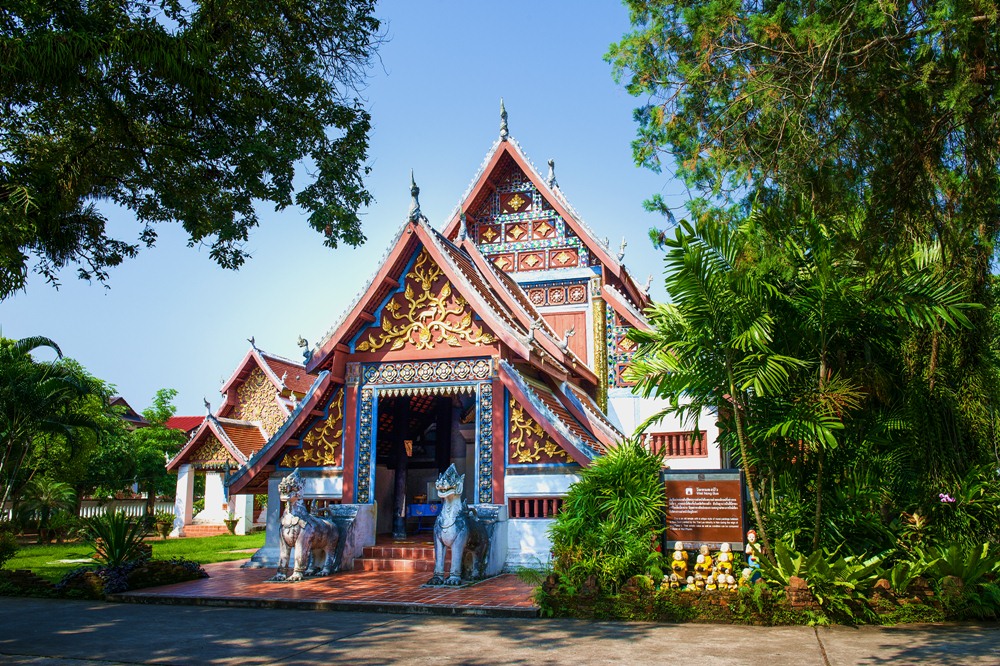
Wat Nong Bua is situated in Muban Ning Bua, within the Pa Kha Subdistrict. Recognized as an ancient temple of the village, it holds significant historical importance. According to village elders, this Tai Lue temple is believed to have been constructed around 1862, during the reign of King Rama I the Great. The temple serves as a testament to the rich cultural heritage of the Tai Lue community.
Mural Paintings: A Glimpse into the Past
The Ubosot of Wat Nong Bua is adorned with wall murals that depict the Jataka tales, illustrating one of the Buddha’s incarnations. These murals are credited to Thit Bua Pan, a renowned Lao Phuan writer. Thit Bua Pan was the father of Khruba Luang Su, also known as Nai Thep, a soldier under Chao Anantayot, the ruler of Nan from 1852 to 1891. Nai Thep hailed from Mueang Phuan, Luang Phrabang. Alongside Phra Saenphichit, Nai Thep contributed to completing the murals. Notably, these paintings include images of steamboats and bayonets, symbolizing the technological advancements that began to influence thailand during the reigns of King Rama IV the Great and King Rama V the Great.
The murals offer a vivid portrayal of the living conditions of the era, showcasing the attire of women who wore sarongs with watermarks or beautifully patterned sarongs. These artworks are celebrated for their artistic value and resemble the murals found in Wat Phumin in Nan. The detailed depictions provide valuable insights into the cultural and social dynamics of the time.
Architectural Features and Cultural Significance
Aside from the murals, Wat Nong Bua houses several smaller Lanna Buddha images enshrined at the base of the principal Buddha image. Additionally, the temple features a busabok from the Lanna era, reflecting the architectural influences of the period. A distinctive aspect of the temple is the replica of a Tai Lue house, known as Old Huan Tai Lue Ma. This exhibit showcases Tai Lue occupational equipment, offering visitors a glimpse into the traditional lifestyle and craftsmanship of the Tai Lue community.
Conclusion
Wat Nong Bua stands as a remarkable cultural landmark that embodies the historical and artistic legacy of the Tai Lue people. Through its murals, architectural elements, and cultural exhibits, the temple provides a window into the past, allowing visitors to appreciate the rich heritage and traditions that have shaped the community over centuries.
—
Detailed Exploration of Wat Nong Bua
Historical Context and Construction
Wat Nong Bua’s establishment in 1862 coincides with a period of significant historical transitions in Thailand. During the reign of King Rama I, the country was undergoing consolidation and cultural renaissance following the fall of Ayutthaya. The Tai Lue people, known for their unique cultural identity, contributed to this era by establishing temples like Wat Nong Bua, which served as both religious and community centers.
The temple’s construction reflects the architectural styles and religious practices of the Tai Lue community, emphasizing the integration of local culture within the broader Thai historical narrative. The temple’s location in Muban Ning Bua, Pa Kha Subdistrict, underscores its role as a focal point for the village’s spiritual and cultural activities.
Mural Paintings: Artistic and Historical Significance
The murals within the Ubosot are not merely decorative; they serve as historical documents that offer insights into the religious teachings and societal norms of the time. The Jataka tales depicted in the murals are part of a broader Buddhist tradition that conveys moral lessons through the stories of the Buddha’s past lives.
Thit Bua Pan, the primary artist, infused the murals with elements of Lao Phuan artistic traditions, thereby preserving and promoting this cultural heritage. The involvement of his son, Khruba Luang Su, and Phra Saenphichit highlights a collaborative effort that underscores the communal nature of such artistic endeavors.
The murals’ inclusion of steamboats and bayonets marks a significant historical moment when Thailand began to encounter Western technologies and influences. These images serve as a visual record of the country’s gradual modernization during the reigns of King Rama IV and King Rama V.
Architectural and Cultural Heritage
The presence of smaller Lanna Buddha images and the Lanna-era busabok within Wat Nong Bua emphasizes the temple’s role as a custodian of regional religious art and architecture. Lanna, a historical kingdom in Northern Thailand, has a distinct cultural identity that is reflected in its art and religious practices.
The replica of a Tai Lue house within the temple grounds offers a tangible connection to the traditional lifestyle of the Tai Lue people. It provides an educational experience for visitors, showcasing the craftsmanship and daily life of the community. This exhibit is crucial for preserving the cultural heritage and fostering an appreciation for the Tai Lue’s contributions to Thailand’s cultural mosaic.
Conclusion: A Cultural Treasure
Wat Nong Bua is more than just a religious site; it is a cultural treasure that encapsulates the history, art, and traditions of the Tai Lue community. Its murals, architectural features, and cultural exhibits provide a comprehensive understanding of the community’s historical context and its role in Thailand’s broader cultural landscape. As a living testament to the Tai Lue’s rich heritage, Wat Nong Bua continues to inspire and educate future generations about the enduring legacy of this vibrant community.
Address And Location:
Pa Kha Luang Tha Wang Pha Nan 55190