Key Takeaways
An Overview of the Temple’s Location and Significance
The temple under discussion is situated in Mu 1, Tambon Ngao, known for its expansive grounds and proximity to the famous Phu Khao Ya. This temple not only serves as a place of worship but also offers a rich tapestry of local history and culture. Its significant location near Phu Khao Ya enhances its appeal, making it a spiritual and cultural landmark in the region.
Architectural Design and Features of the Ubosot
Structure and Layout
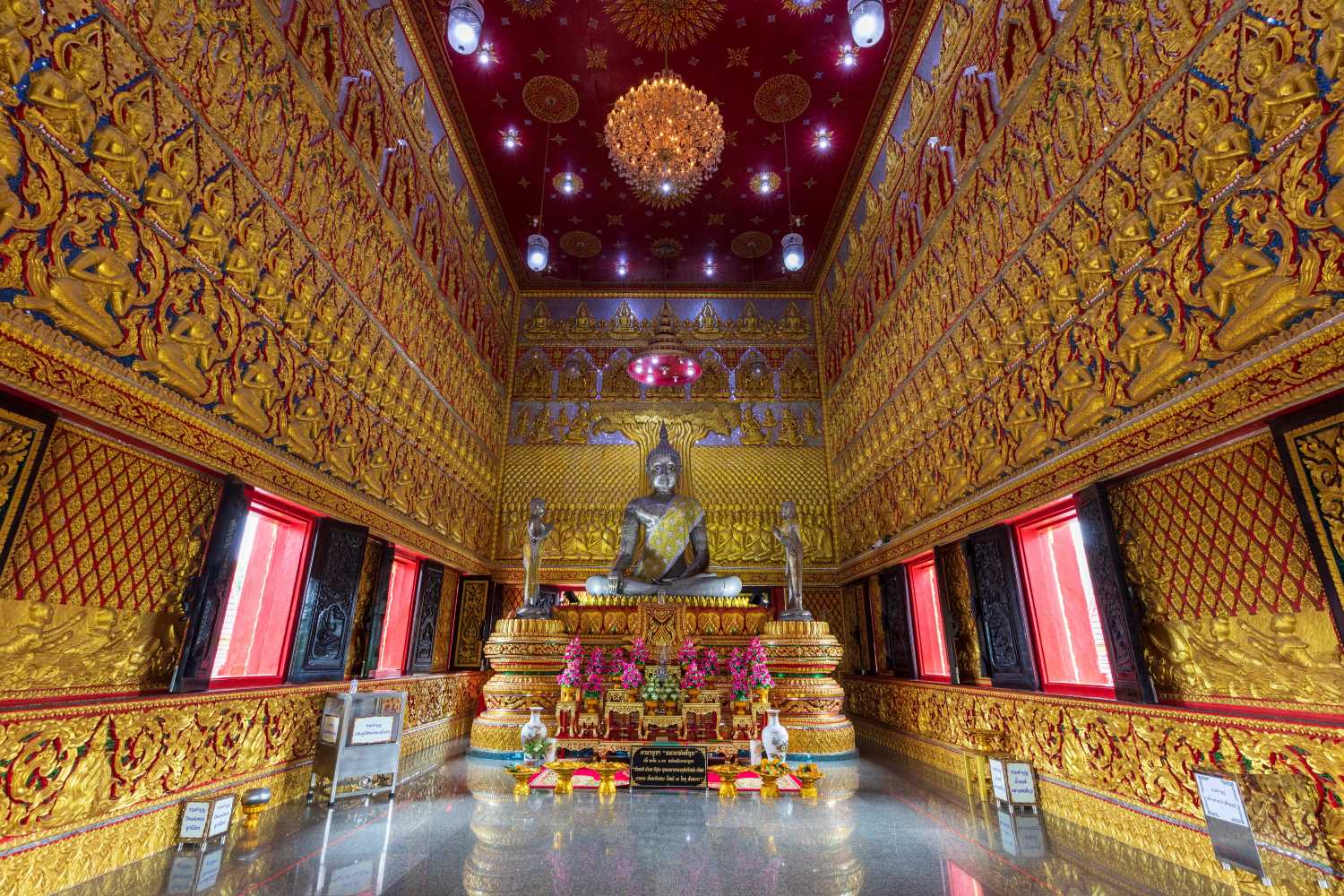
At the heart of the temple lies the Ubosot, uniquely positioned in the center of a vast courtyard. The building is accessible from all four cardinal directions, thanks to the elegant staircases that surround it. This architectural design emphasizes the temple’s openness and accessibility, inviting worshippers and visitors to explore its sacred spaces.
Stone Carvings and Historical Narratives
The base of the Ubosot is adorned with intricate stone carvings depicting the history of Ranong. These carvings are not merely decorative; they serve as a narrative tool, chronicling the rich cultural and historical tapestry of the region. Each stone tells a story, offering insights into the past and preserving the heritage of Ranong for future generations.
The Principal Buddha Image
Inside the Ubosot, the principal Buddha image, known as Luangpho Dibuk, is enshrined. This revered image is crafted in the subduing Mara posture, a significant pose in Buddhist iconography symbolizing enlightenment and victory over temptation. Made of tin, a vital economic mineral of Ranong in the past, the image not only represents spiritual significance but also reflects the region’s historical reliance on tin mining.
Cultural Practices and Traditions
Tak Bat Devo Tradition
One of the temple’s noteworthy features is the 300-step cement staircase located behind the Ubosot, built on a hill. This staircase plays a crucial role in the Tak Bat Devo tradition, a ceremonial event where the people of Ranong participate in offering alms to monks. This tradition is deeply embedded in the local culture, reflecting the community’s strong ties to their Buddhist faith and heritage.
Panoramic Views and Spiritual Reflection
The elevated position of the staircase also offers an opportunity for visitors to experience the breathtaking 360-degree panoramic views of the surrounding landscape. This vantage point allows for moments of spiritual reflection and appreciation of the natural beauty that envelops the temple, further enhancing the spiritual journey of those who visit.
Conclusion
This temple in Mu 1, Tambon Ngao, stands as a testament to the rich cultural and historical heritage of Ranong. From its architectural marvels to its spiritual significance and cultural traditions, the temple is a beacon of history, faith, and community. Whether one visits for spiritual reasons or to appreciate its historical and cultural narratives, the temple offers a profound and enriching experience.
—
For a more detailed exploration, each subsection could be expanded into its own full-length article, delving deeper into the various aspects of the temple’s significance, architecture, and traditions. Here’s an example structure to elaborate further:
—
The Temple’s Historical Context and Cultural Importance
Location and Historical Background
The temple’s strategic location in Mu 1, Tambon Ngao, places it at the confluence of history, culture, and spirituality. This section could explore the historical significance of the area, tracing back to its early settlement days, and how the temple has evolved over time to become a cultural landmark.
Architectural Significance and Design Philosophy
Design Elements and Symbolism
This section could delve into the architectural elements of the Ubosot, exploring the symbolism behind its design. The four-directional staircases could be analyzed in the context of Buddhist cosmology, and the significance of the Ubosot’s central placement within the courtyard could be explored further.
Stone Carvings and Artistic Heritage
A deeper exploration of the stone carvings could include a discussion on the artistic techniques used, the narratives depicted, and their significance in preserving Ranong’s heritage. Interviews with local historians or artisans could provide valuable insights into the artistic heritage of the region.
The Principal Buddha Image: Luangpho Dibuk
Historical and Spiritual Significance
An exploration into the history and spiritual significance of Luangpho Dibuk, examining how this Buddha image has become a focal point of worship and its role in the religious life of the community. This section could also explore the economic history of tin in Ranong and its connection to the crafting of the image.
Cultural Traditions and Community Engagement
The Role of Tak Bat Devo Tradition
Detailed insights into the Tak Bat Devo tradition, exploring its origins, significance, and how it fosters community spirit. Personal anecdotes from locals and monks could add depth, highlighting personal experiences and the tradition’s impact on community life.
A Spiritual Journey: Experiencing the Temple’s Surroundings
This section could offer a guided narrative of the visitor experience, from climbing the staircase to witnessing the panoramic views. Reflections on how the temple’s natural surroundings enhance the spiritual journey could be included, perhaps incorporating perspectives from visitors and spiritual leaders.
Conclusion
The Temple as a Cultural and Spiritual Beacon
A concluding section that synthesizes the temple’s multifaceted significance, reiterating its role as a beacon of spirituality, culture, and history in Ranong. This could also touch upon future initiatives to preserve and promote the temple’s heritage in the modern age.
By expanding each section with research, interviews, and personal stories, the article could provide a comprehensive and engaging exploration of the temple, offering readers a profound understanding of its significance.
Address And Location:
64 Mu 1 Ngao Mueang Ranong Ranong 85000