Key Takeaways
Wat Takat Ngao: A Historical Overview
Introduction to Wat Takat Ngao
Wat Takat Ngao, a revered religious site located in the Takat Ngao subdistrict of Tha Mai district, boasts a rich history that dates back over two centuries. While the exact date of its establishment remains uncertain, official historical records indicate that the temple was founded in 1827, during the reign of King Nang Klao or Rama III (1824-1851). This historical context sets the stage for understanding the temple’s significance in thailand‘s cultural and religious landscape.
The Legend and Founding of Wat Takat Ngao
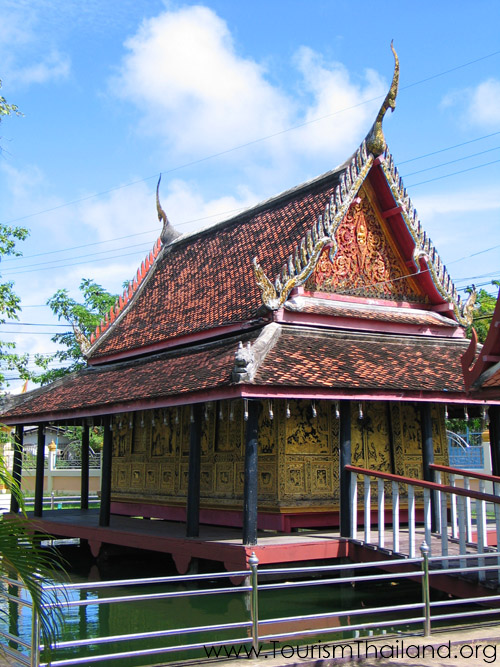
Legend has it that the temple’s origins are tied to a journey made by the first abbot, whose identity remains a matter of debate—either Luang Pho Khlai or Luang Pho Son. This abbot, noted for his exceptional medical knowledge, traveled to the capital to provide medical treatment to a member of the royal family. In gratitude for the successful recovery, the royal family member gifted a Tripitaka hall to the temple. This hall, now surrounded by water, stands as one of Wat Takat Ngao’s most prominent features.
Architectural Highlights of the Tripitaka Hall
The architectural style of the Tripitaka hall indicates that it was constructed towards the end of King Rama III’s reign. Each component of the hall is believed to have been sourced from different locations and carefully assembled using wooden tenons. The hall itself is a rectangular structure raised on stilts above the ground. Its roof finial features reduced frontal and dorsal edges, while the gable is adorned with a decorative pattern known as Krua Tao and an image of a deity. A surrounding cloister serves to protect the hall from splashing rains.
Restoration and Recognition as an Archaeological Site
Over time, the Tripitaka hall fell into disrepair until a significant restoration effort was undertaken in 2001. In 2002, the Fine Arts Department formally recognized Wat Takat Ngao as an archaeological site. This designation underscores the temple’s importance as both a historical artifact and a functioning place of worship.
Cultural and Religious Significance
The Tripitaka hall at Wat Takat Ngao serves as a repository for palm-leaf inscriptions, including the Tripitaka, which is the most sacred and crucial scripture in Buddhism. Beyond the Tripitaka hall, the temple also houses several ancient artifacts, such as a wooden carved Buddha image and a wooden pulpit. These elements contribute to the temple’s status as a site of deep cultural and religious significance.
Visiting Wat Takat Ngao
Wat Takat Ngao welcomes visitors daily, including on public holidays, without any admission fee. This accessibility allows tourists and devotees alike to explore and appreciate the temple’s rich history and cultural heritage.
—
The Historical Context of Wat Takat Ngao
Establishment During Rama III’s Reign
The establishment of Wat Takat Ngao in 1827 places it within a significant period in Thai history, during the reign of King Nang Klao or Rama III. This era was marked by a consolidation of power and cultural flourishing in Siam, as Thailand was then known. King Rama III was a patron of arts and religion, which likely influenced the establishment and development of religious sites like Wat Takat Ngao.
The Role of the Abbot in the Temple’s Founding
The founding legend of Wat Takat Ngao underscores the role of the abbot, who, through his medical expertise, formed a connection with the royal family. This relationship not only led to the gifting of the Tripitaka hall but also highlighted the interplay between religious and royal spheres during this historical period. The abbot’s journey and subsequent gift from the royal family exemplify the mutual respect and support between Buddhist institutions and the monarchy.
Architectural Style and Influences
The architectural style of the Tripitaka hall, constructed towards the end of King Rama III’s reign, reflects the artistic and cultural influences of the time. The use of wooden tenons to assemble the hall’s components showcases traditional Thai craftsmanship. The decorative elements, such as the Krua Tao pattern and deity imagery, are characteristic of the period’s artistic style, blending religious symbolism with intricate design.
—
The Architectural Marvel of Wat Takat Ngao
Design and Construction of the Tripitaka Hall
The Tripitaka hall at Wat Takat Ngao is an architectural marvel, embodying traditional Thai design principles. The hall’s rectangular structure is elevated on stilts, a common feature in Thai architecture that protects buildings from flooding and pests. The use of wooden tenons in its construction highlights the skillful craftsmanship of the period, allowing for the assembly of components from various locations into a cohesive structure.
Decorative Elements and Symbolism
The decorative elements of the Tripitaka hall are rich in symbolism. The gilded and carved gable, featuring the Krua Tao pattern and a central deity image, serves both aesthetic and spiritual purposes. The Krua Tao pattern is a traditional Thai motif that represents protection and auspiciousness, while the deity image signifies divine presence and blessing.
Preservation Efforts and Restoration
By the early 2000s, the Tripitaka hall had become dilapidated, necessitating a comprehensive restoration effort in 2001. This restoration was crucial in preserving the hall’s architectural integrity and historical significance. The involvement of the Fine Arts Department in certifying Wat Takat Ngao as an archaeological site in 2002 further emphasizes the importance of preserving such cultural heritage sites for future generations.
—
Wat Takat Ngao’s Role in Cultural and Religious Life
The Tripitaka Hall as a Custodian of Sacred Texts
The Tripitaka hall serves as a vital repository for sacred texts, including palm-leaf inscriptions of the Tripitaka. This role underscores the temple’s importance in preserving and disseminating Buddhist teachings. The Tripitaka, being the most sacred scripture in Buddhism, holds immense religious significance, and its preservation at Wat Takat Ngao highlights the temple’s role as a custodian of spiritual knowledge.
Other Ancient Artifacts and Their Significance
In addition to the Tripitaka hall, Wat Takat Ngao houses several other ancient artifacts, such as a wooden carved Buddha image and a wooden pulpit. These artifacts contribute to the temple’s historical and religious significance, offering insights into the artistic and spiritual practices of the time. The wooden Buddha image, in particular, represents the continuity of Buddhist iconography and its enduring influence on Thai culture.
Accessibility and Tourism
Wat Takat Ngao’s policy of free admission for visitors reflects its commitment to accessibility and cultural sharing. By welcoming tourists and devotees alike, the temple fosters an appreciation for Thailand’s rich religious and cultural heritage. This openness not only enhances the temple’s role as a spiritual center but also as a cultural landmark that attracts visitors from around the world.
—
Conclusion
Wat Takat Ngao stands as a testament to Thailand’s rich historical and cultural tapestry. From its founding during the reign of King Rama III to its recognition as an archaeological site, the temple embodies the interplay of religion, art, and history. With its architectural marvels, sacred texts, and ancient artifacts, Wat Takat Ngao continues to be a beacon of spiritual and cultural significance, welcoming visitors to explore and appreciate its storied past.
Address And Location:
Takat Ngao Tha Mai Chanthaburi 22120