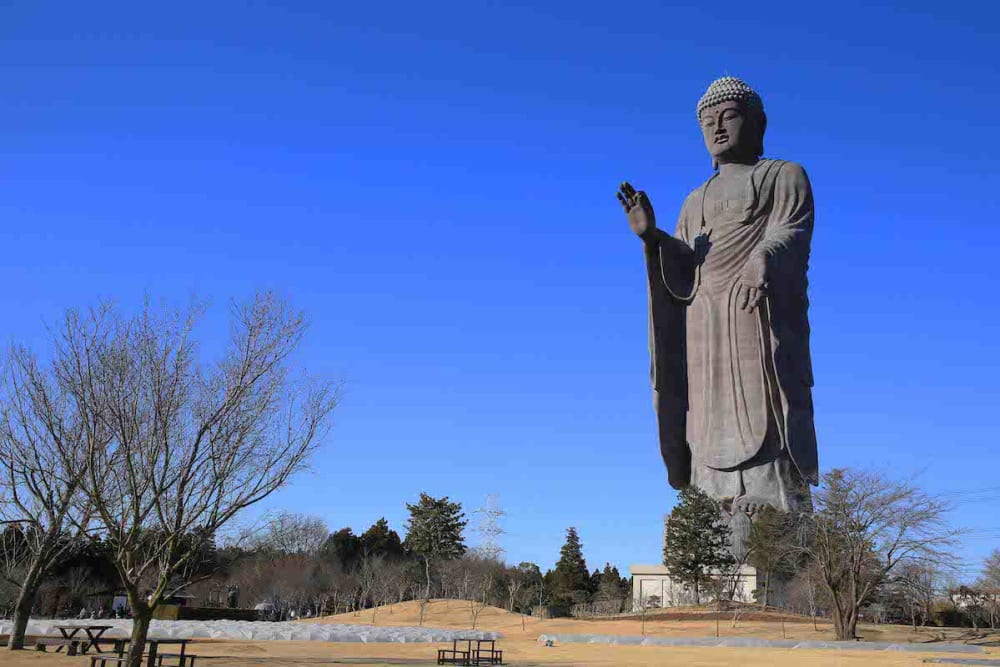
Ushiku Daibutsu is a 120-metre-tall bronze Buddha statue in Ushiku, Ibaraki Prefecture, northeast of Tokyo. More than a distant landmark, it is a place where visitors can enter the statue, see a sanctuary filled with small golden Buddha figures, ride an elevator to an observation level and walk through landscaped gardens. This practical 2026 guide covers what is inside, current official admission prices, seasonal opening hours and how to reach the site without a car.
For travellers exploring japan, Ushiku Daibutsu offers a different experience from Tokyo’s busiest attractions. It works best as a dedicated half-day outing, or as one stop on a carefully planned Ibaraki itinerary. Unlike the famous outdoor Great Buddha of Kamakura, this enormous statue has an interior route open to paying visitors.
Key Takeaways
Ushiku Daibutsu at a Glance
- Japanese name: 牛久大仏 (Ushiku Daibutsu).
- Address: 2083 Kuno-cho, Ushiku-shi, Ibaraki Prefecture 300-1288.
- Height: 120 metres including the base and lotus pedestal; the viewing level is approximately 85 metres above ground.
- Opened: The statue was completed in 1993 and is associated with the Jodo Shinshu (True Pure Land) Buddhist tradition.
- Nearest rail station: JR Ushiku Station on the Joban Line; continue by local bus or taxi.
- Time to allow: Approximately 90 minutes to two hours on site, plus travel and any waiting time for the bus.
- Official website: Ushiku Daibutsu.
The landmark is remarkable for its scale, but its religious context matters too. Visitors are entering a Buddhist site, not simply an observation tower. Quiet behaviour in prayer areas, respectful photography and following staff instructions are appropriate throughout the visit.
Ushiku Daibutsu Tickets and Opening Hours in 2026
Current Official Admission Fees
The site’s official ticket page lists the following regular individual prices:
| Ticket | Adult (junior-high age and older) | Child (ages 4 through elementary school) |
|---|---|---|
| Garden plus statue interior | ¥900 | ¥500 |
| Garden only | ¥600 | ¥400 |
| Age 3 and younger | Free | Free |
These prices are from the official admission page checked for this 2026 update. Some older English-language guides still quote ¥800 for the full adult ticket; do not rely on that older figure when budgeting. Group and disability rates are available under separate conditions, and prices can change without notice.
Seasonal Hours and Last Admission
March–September: 9:30 a.m.–5:00 p.m. on weekdays, and until 5:30 p.m. on weekends and public holidays. October–February: 9:30 a.m.–4:30 p.m. every day. The official website describes the grounds as open year-round, although temporary closures and special event schedules may occur.
The official ticket page gives last admission 45 minutes before closing for the combined garden-and-interior ticket and 30 minutes before closing for garden-only admission. This distinction is important: arriving 30 minutes before closing may be too late to enter the statue. Plan a morning or early-afternoon visit, especially during winter.
What Makes the Ushiku Great Buddha Special?
A 120-Metre Monument with Buddhist Symbolism
Ushiku Daibutsu represents Amitabha Buddha and is associated with Shinran’s True Pure Land Buddhist tradition. Its height is commonly described as 120 metres, including the lotus pedestal and base. For perspective, the famous seated Buddha at Nara’s Todaiji is much smaller. The site’s scale is striking from the approach road, but the experience becomes more interesting when you slow down and notice the gardens, gates and religious spaces that frame the statue.
The site was completed in 1993. Its immense dimensions are part of the attraction, but a visitor should not confuse size with a claim that it is currently the world’s tallest statue of any kind. It is one of the world’s best-known monumental bronze Buddhas, and the venue’s official materials provide the definitive measurements.
Five Levels Inside the Statue
The interior visitor route includes several themed floors. The first level introduces visitors to a contemplative space often described as the World of Infinite Light and Life. Higher floors include exhibitions about the construction of the statue and Buddhist practice, with opportunities to learn about sutra copying. The third floor contains a golden sanctuary with approximately 3,400 small Buddha images.
An elevator takes visitors to an observation level about 85 metres above the ground. Rather than an open-air rooftop, the view is through relatively narrow windows within the statue. On a clear day the surrounding Ibaraki landscape is visible; distant landmarks are weather-dependent and should not be promised as guaranteed sights. If you are sensitive to enclosed spaces, consider the interior route before buying the combined ticket.
The Lotus Pedestal, Garden and Seasonal Flowers
Outside, the approach includes gates, landscaped grounds and a garden designed around Pure Land Buddhist imagery. Flower displays vary by season. Cherry blossoms are generally associated with early to mid-April, moss phlox with spring, and cosmos with autumn. Bloom dates depend on weather, so treat online photos as seasonal examples rather than an exact forecast for your visit.
Garden-only admission can be a reasonable option for visitors who prefer outdoor walking or do not wish to enter the statue. The site also advertises a family-oriented animal area and performances on selected days, but availability varies; its official homepage notes that the petting zoo is normally a Sunday/holiday activity and is closed during certain winter months. Check before promising an activity to children.
How to Get to Ushiku Daibutsu from Tokyo
Step 1: Take the JR Joban Line to Ushiku Station
From central Tokyo, take a JR Joban Line service toward Ushiku. Travellers starting around Ueno may find this straightforward; those arriving from other areas can use our Tokyo Station guide to orient themselves before transferring. The rail journey from central Tokyo is often around one hour, depending on departure station, train type and connections. Confirm the current service and fare on your travel date.
Step 2: Bus from Ushiku Station East Exit
At JR Ushiku Station, use the East Exit bus area. The venue directs visitors to East Exit bus stop 2 for services toward Ushiku Daibutsu/Ushiku Jōen or Ami Premium Outlets, alighting at Ushiku Daibutsu. The bus ride takes roughly 20–30 minutes. Services are not necessarily frequent, particularly outside weekends, so check the outbound and return times before leaving Tokyo.
The official venue access page gives the bus route, while Kanto Railway’s Ushiku Station route and timetable page is the appropriate place to check current departures. The venue page displays a ¥560 fare, but confirm the current fare and the specific departure you will take rather than assuming every service operates at the same frequency.
Alternative: Taxi or Car
A taxi from Ushiku Station is an alternative if the bus timetable does not work for your group. The venue describes a drive of roughly 15 minutes from Ushiku Station, though traffic can change that. Drivers approaching by expressway can use the Ushiku-Ami or Ami-Higashi interchanges. The official site lists on-site parking; verify any event restrictions before driving during major holidays.
Suggested Half-Day Itinerary
Morning: Arrive, Explore the Grounds and Enter the Statue
Try to reach Ushiku Daibutsu in the morning. Start by walking the approach to appreciate the scale of the statue, then enter the interior while you have ample time. Explore the themed floors without rushing and visit the observation level if visibility is good. A calm pace is more appropriate than treating the site as a quick photo stop.
Midday: Gardens, Seasonal Flowers and a Rest Break
After the interior, spend time in the gardens and look for whatever is blooming during your visit. Check which garden features are open that day, especially if travelling with children. Leave enough time to return to the bus stop before your intended departure; missed buses may lead to a substantial wait.
Afternoon: Choose One Additional Ibaraki Stop
If you have a car or have planned transport carefully, you could combine the visit with a nearby Ibaraki attraction. Science enthusiasts might choose Tsukuba Space Center or Tsukuba Expo Center. For mountain scenery, consider Mount Tsukuba’s cable car and ropeway. Each requires separate travel planning, opening-hour checks and potentially more time than a half-day allows.
Other Places to Explore in Ibaraki Prefecture
Ushiku Daibutsu is a useful starting point for discovering a prefecture often overlooked by first-time Tokyo visitors. These are regional trip ideas, not attractions all within walking distance. Choose destinations according to your transport mode and the number of days available.
History, Gardens and Culture around Mito
Garden lovers can plan a separate visit to Kairakuen Garden, particularly during the Mito Plum Blossom Festival. The Art Tower Mito adds a contemporary cultural stop. Mito is a different part of Ibaraki, so avoid squeezing these into a short visit to Ushiku unless you have a realistic driving or rail itinerary.
Coastal Attractions and Food
On a longer Ibaraki trip, the coastal area offers Oarai Isosaki-jinja Shrine, Aqua World aquarium and Nakaminato Fish Market. Families might also research Oarai Mentai Park. These stops have different opening hours and travel routes, so build a coastal day around them rather than assuming they are adjacent to the Buddha.
Mountains, Waterfalls and Crafts
Nature-oriented travellers can investigate Fukuroda Falls and the Ryujin Suspension Bridge, both of which are better treated as dedicated outings. For crafts and local culture, consider Craft Hills Kasama. If you are comparing outdoor family attractions across the region, Hitachi Kamine Park is another possibility. Distances are significant, so do not plan all of these in one day.
Practical Visiting Tips
- Buy the right ticket: Garden-only entry does not include the statue interior and observation level. Choose the combined ticket if those are your main interests.
- Arrive well before closing: Combined-ticket last admission is 45 minutes before the scheduled closing time, not 30 minutes.
- Check bus times both ways: Local services can be infrequent; plan the return journey before entering the grounds.
- Dress for the weather: The approach and gardens are outdoors, while the observation windows can be less rewarding on hazy or rainy days.
- Respect the religious setting: Follow photography instructions, speak quietly in contemplative spaces and avoid obstructing worshippers.
- Travelling with pets: The official admission page states pets are not permitted inside the Buddha or Pure Land garden.
- Do not assume fireworks: Seasonal celebrations and fireworks are event-specific and subject to cancellation. Confirm any special program directly with the venue.
Frequently Asked Questions
How tall is Ushiku Daibutsu?
The monument measures 120 metres including its base and lotus pedestal. The interior observation level is about 85 metres above the ground.
How much does it cost to enter in 2026?
The official regular adult price is ¥900 for the statue interior plus garden, or ¥600 for the garden alone. Children aged four through elementary school pay ¥500 or ¥400 respectively; children aged three and younger enter free. Recheck the official website before travelling.
Can I visit Ushiku Daibutsu as a day trip from Tokyo?
Yes. Take the JR Joban Line to Ushiku Station, then a bus or taxi to the site. A comfortable visit typically needs 90 minutes to two hours on the grounds, in addition to transport time and potential waits.
Is Ushiku Daibutsu open in winter?
The venue lists regular year-round opening. From October through February, the usual hours are 9:30 a.m.–4:30 p.m. Special closures or event schedules should be checked in advance.
Official Sources and Further Reading
- Ushiku Daibutsu — official 2026 admission fees and opening hours.
- Ushiku Daibutsu — official directions and bus information.
- Japan National Tourism Organization — Ushiku Daibutsu overview.
- Kanto Railway — current bus routes and timetables.
Address And Maps Location:
2083, Kuno-cho, Ushiku-shi, Ibaraki-ken
Find Location And Direction On Google Maps
Subscribe, follow travelbloggerindonesia.com