Key Takeaways
Somdej Phra Naraesuan Shrine: A Symbol of Thai Victory
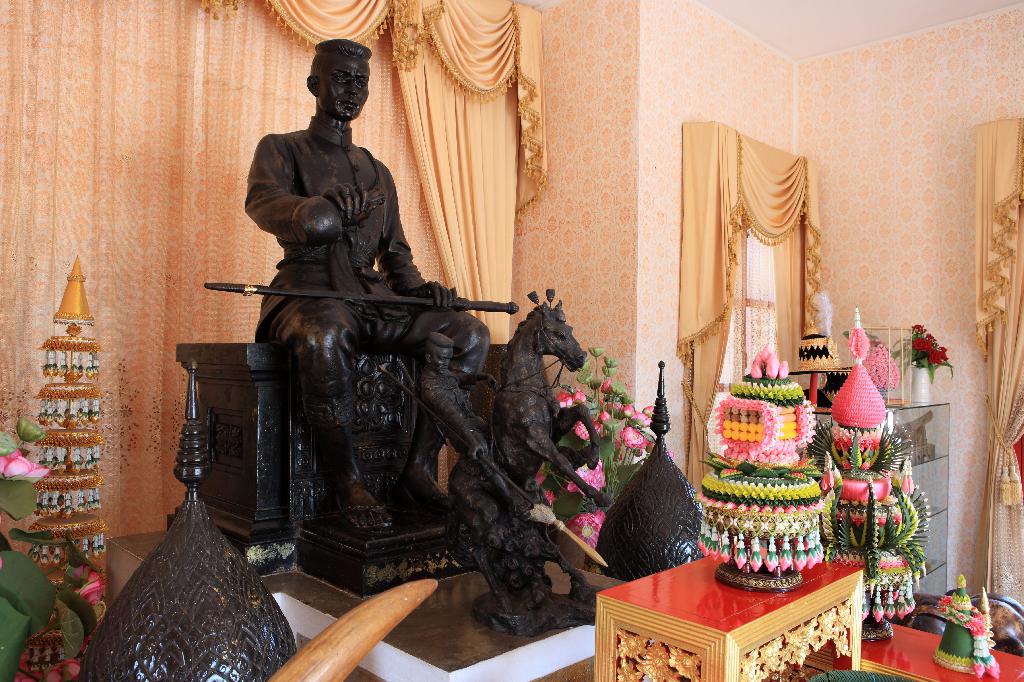
The Somdej Phra Naraesuan Shrine stands as a monument of Thai pride and historical significance. This white pavilion, designed in traditional Thai architectural style, houses the statue of King Naraesuan portrayed in the act of pouring water from a bottle gourd, symbolizing victory. This shrine is not merely a place of worship but a testament to thailand‘s rich history and the revered legacy of King Naraesuan.
Historical Background
The Legacy of King Naraesuan
Born in 1555, King Naraesuan is one of Thailand’s most esteemed monarchs, celebrated for his leadership and military prowess. His reign was marked by numerous victories that secured the independence of the Ayutthaya Kingdom from Burmese control. His most famous act was the legendary elephant duel against the Burmese Crown Prince, which became a turning point in Siamese history. These acts of valor are immortalized not just in stories but also in the form of the statue that resides within the shrine.
The Plot Against King Naraesuan
In 1584, a significant event unfolded where Phra Chao Krunghongsawadee conspired to have King Naraesuan killed. He ordered Phraya Kiat and Phraya Ram to execute the plan. However, Mahatera Kanchong, driven by loyalty and wisdom, intervened. As a teacher to Phraya Kiat and Phraya Ram, he persuaded them to abandon their mission and ally with King Naraesuan instead. This pivotal moment underscored the king’s influence and the unwavering loyalty he commanded among his people.
The Shrine’s Location and Architectural Significance
Phitsanulokpittayakom School: A Historical Site
The Somdej Phra Naraesuan Shrine is situated within the grounds of Phitsanulokpittayakom School. This site was once part of the Chan Palace, the birthplace of King Naraesuan. The shrine’s location is of immense historical importance, serving as a link to the past where the legacy of King Naraesuan began.
Architectural Design and Construction
The shrine, completed by the Department of Fine Arts in 1861, is an exquisite example of ancient Thai architecture. The structure’s design is a reflection of the cultural and historical values of the era, with intricate details and traditional motifs that adorn the pavilion. The statue within is crafted to match the life-size proportions of King Naraesuan, further enhancing the authenticity and reverence of the site.
Annual Commemoration and Cultural Significance
The Annual Ceremony
Every year, on January 25th, a ceremonial event is held at the shrine to commemorate King Naraesuan’s contributions and legacy. This ceremony not only honors the king’s memory but also serves as a cultural gathering, reinforcing the historical connections among the Thai people.
Cultural and Educational Impact
The shrine acts as a focal point for cultural education, providing current and future generations with insights into Thailand’s historical narrative. The stories and symbolism associated with the shrine are integral to understanding the national identity and pride of Thailand.
Recent Discoveries and Preservation Efforts
Discovery of Historical Evidence
In March 1992, the Department of Fine Arts unearthed significant evidence that provided insights into the original structure and design of the Chan Palace. These findings have sparked interest in further archaeological exploration and analysis to better understand the historical context of King Naraesuan’s life and reign.
Preservation and Future Research
The uncovered evidence was reburied to preserve its integrity until a comprehensive analysis can be undertaken. This decision reflects a commitment to safeguarding Thailand’s cultural heritage while planning for future research endeavors that could reveal more about this pivotal period in Thai history.
Conclusion
The Somdej Phra Naraesuan Shrine is more than a historical monument; it is a symbol of national pride and a testament to the enduring legacy of King Naraesuan. Through its rich history, architectural beauty, and cultural significance, the shrine continues to inspire and educate, preserving the stories of the past for future generations. As research and preservation efforts continue, the shrine stands as a beacon of Thailand’s storied past and a reminder of the resilience and unity of its people.
Address And Location:
Wang Chan Road Nai Mueang Mueang Phitsanulok Phitsanulok 65000