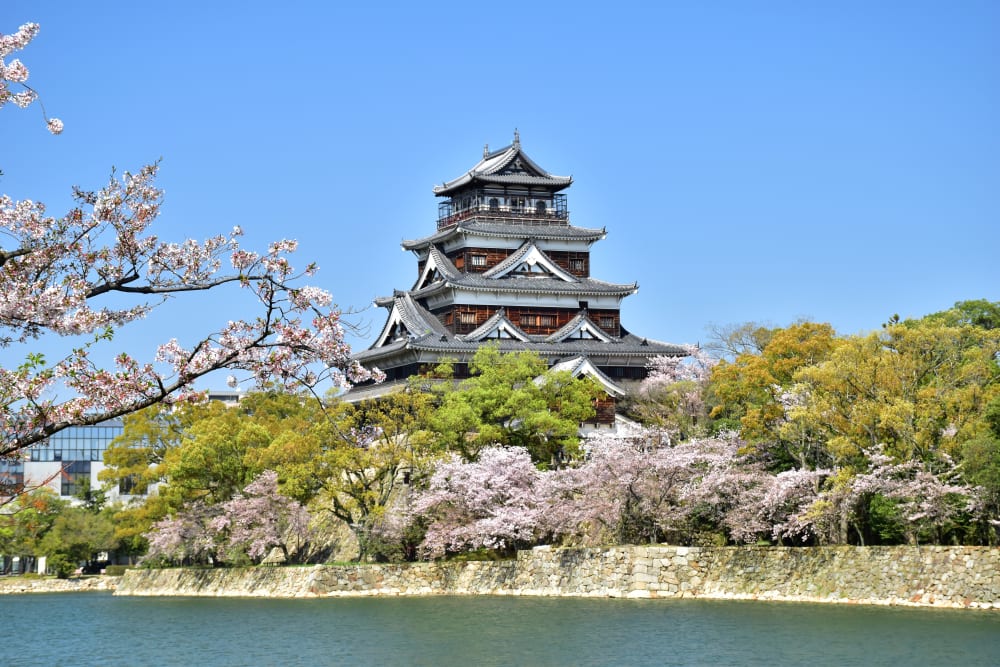
A castle that has seen tragedy and violence now offers tranquil views of Hiroshima
Hiroshima Castle, also known as Carp Castle, is a historic landmark in Hiroshima City. Although the castle that stands today is a replica built in 1958, it holds a significant place in the city’s history. The original fortress was constructed in the late 1500s, predating the city itself. Today, the castle serves as a museum, documenting the history of Hiroshima prior to the atomic bombing.
The castle is a faithful representation of the original building, offering visitors a glimpse into the past. It stands on foundations that are 12.4 meters high, with the castle itself towering at 26.6 meters. Hiroshima Castle is a relatively rare flat plains castle, distinct from the more common hilltop castles found in japan.
To reach Hiroshima Castle, visitors have several transportation options. They can take a tram or bus, with the castle being a 30-minute walk from Peace Memorial Park. Alternatively, they can take the tram to Kamiyacho-nishi or Kamiyacho-higashi tram stop and walk 15 minutes from there.
The castle holds a special significance in Hiroshima’s history, as it was destroyed by the atomic bomb that fell on the city on August 6, 1945. The new castle, while staying close to the original style on the outside, incorporates contemporary techniques on the inside. The keep at the top of the castle features a balcony that offers panoramic views of the city and its surroundings. From this vantage point, visitors can appreciate the city’s transformation from tragedy to rebirth.
Despite the devastation caused by the atomic bomb, three trees inside the castle walls miraculously survived. A holly, eucalyptus, and willow tree, located between 740 and 910 meters from the center of the blast, serve as symbols of the city’s resilience and ability to thrive in the face of adversity. These iconic trees have become a testament to Hiroshima’s strength and determination.
The strategic location of Hiroshima Castle, surrounded by three moats, provided a defensive advantage in the past. One of the moats still remains, fed by the nearby Ota River. Today, the castle’s strategic position offers tourists a magnificent view of the city and its surroundings. The serene landscape provides a stark contrast to the castle’s violent past, allowing visitors to reflect on the city’s journey towards peace and reconciliation.
In conclusion, Hiroshima Castle is more than just a replica of a historic fortress. It is a symbol of Hiroshima’s resilience and a testament to the city’s ability to rise from the ashes. The castle’s museum preserves the history of Hiroshima before the atomic bombing, while the panoramic views from the castle’s balcony offer a peaceful perspective on the city’s present and future. Visiting Hiroshima Castle is not only a journey through time but also a chance to reflect on the importance of peace and understanding in a world scarred by violence.
Address And Maps Location:
21-1 Moto-machi, Naka-ku, Hiroshima-shi, Hiroshima-ken
Find Location And Direction On Google Maps
Subscribe, follow travelbloggerindonesia.com