A real-world Shangri-La
The Miho Museum is a hidden gem nestled amidst the breathtaking natural beauty of the mountains of Shigaraki. Designed by the renowned Chinese-American architect I.M. Pei, who is best known for his iconic glass pyramid at the Louvre Museum in Paris, the Miho Museum is a masterpiece in itself.
Pei drew inspiration from the ancient Chinese work called the Taohua Yuan Ji, or The Peach Blossom Spring, which describes an ethereal utopia. He created an evocative and serene approach to the museum, giving visitors a sense of entering a mythical paradise. As they walk down a path enveloped by weeping cherry trees, go through a tunnel, and cross a suspension bridge, they are transported to a world of beauty and tranquility.
How to Get There
To reach the Miho Museum from Kyoto, you can take the JR Tokaido main line to Ishiyama Station. From there, you can catch the Teisan Bus 150, which is clearly marked for the museum. The bus ride takes approximately 50 minutes, and the destination is clearly indicated in both Japanese and English.
Quick Facts
The Miho Museum houses an impressive collection of art, with around 250 to 500 works displayed at any given time. What makes the museum even more fascinating is that approximately three-quarters of the building is carved into the mountain, seamlessly blending with its natural surroundings.
A Seeker of Beauty
The museum’s collection was started by its founder, Mihoko Koyama, with the aim of promoting beauty, peace, and joy through art. It showcases a wide range of Japanese art, as well as ancient works from Egypt, Greece, Rome, China, West Asia, and South Asia. The diversity of the collection reflects Koyama’s vision of celebrating beauty from different cultures and time periods.
Architecture as Stunning as the Work it Houses
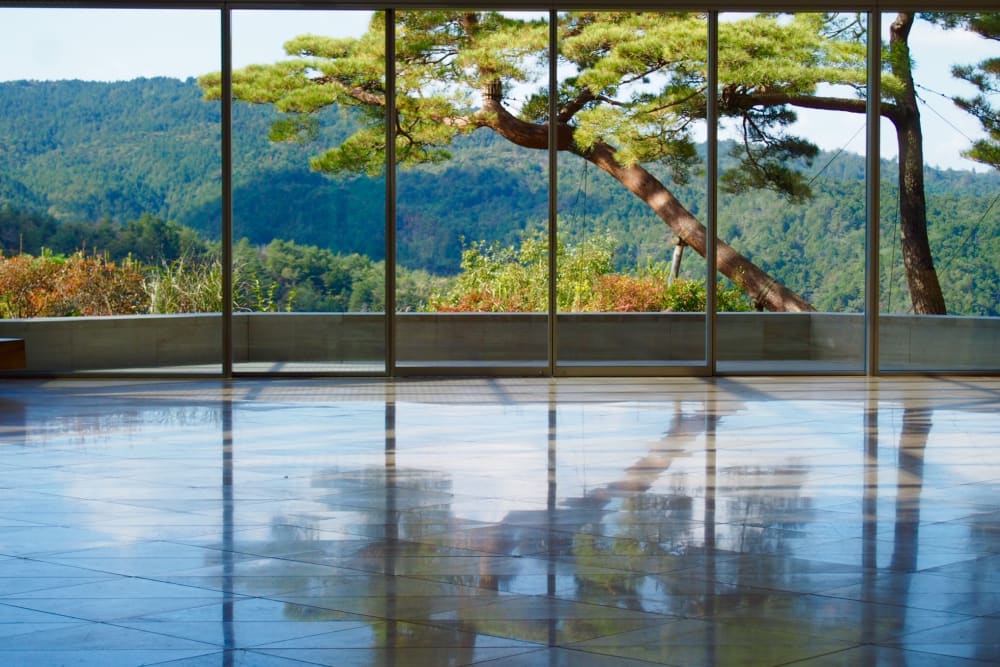
One of the most striking features of the Miho Museum is its architecture, which is as awe-inspiring as the art it holds. Approximately 80 percent of the museum is built underground to preserve the natural environment. As visitors enter the museum through an understated entrance, they are greeted by gentle honey-colored limestone walls and a glass roof that allows natural light to flood in. The roof, constructed using geometric combinations of triangles, showcases outstanding structural beauty. Its large space creates a sense of openness and highlights the museum’s integration with nature.
Upon exploring the exhibit area and immersing themselves in the Eastern and Western artworks, visitors experience a seamless transition from the curated space to the natural world outside. The design of the museum ensures that visitors can enjoy an introspective space while appreciating the various forms of beauty. Pei’s intention was to create a building silhouette that harmonizes with the surrounding landscape and provides a comfortable and contemplative environment.
Recommended for You
If you’re visiting the Miho Museum, we also recommend exploring other attractions in the area. One such place is the Shigaraki Ceramic Cultural Park, which showcases the rich history and craftsmanship of Shigaraki ceramics. This park is a perfect complement to the artistic experience offered by the Miho Museum.
Another nearby destination worth visiting is Koka, known for its ninja heritage and historical sites. Explore the Koka Ninja Village and immerse yourself in the world of ancient espionage and martial arts. Additionally, don’t miss the opportunity to visit the local Shigaraki pottery studios and witness the traditional techniques used to create these exquisite ceramic artworks.
In conclusion, the Miho Museum is a true masterpiece that combines breathtaking natural surroundings with exceptional architecture and a diverse collection of art. It offers visitors a unique and immersive experience, inviting them to appreciate beauty from different cultures and time periods. Whether you’re an art enthusiast, a nature lover, or simply seeking a moment of tranquility, the Miho Museum is a must-visit destination.
Address And Maps Location:
Koka-shi, Shiga-ken
Find Location And Direction On Google Maps
Subscribe, follow travelbloggerindonesia.com