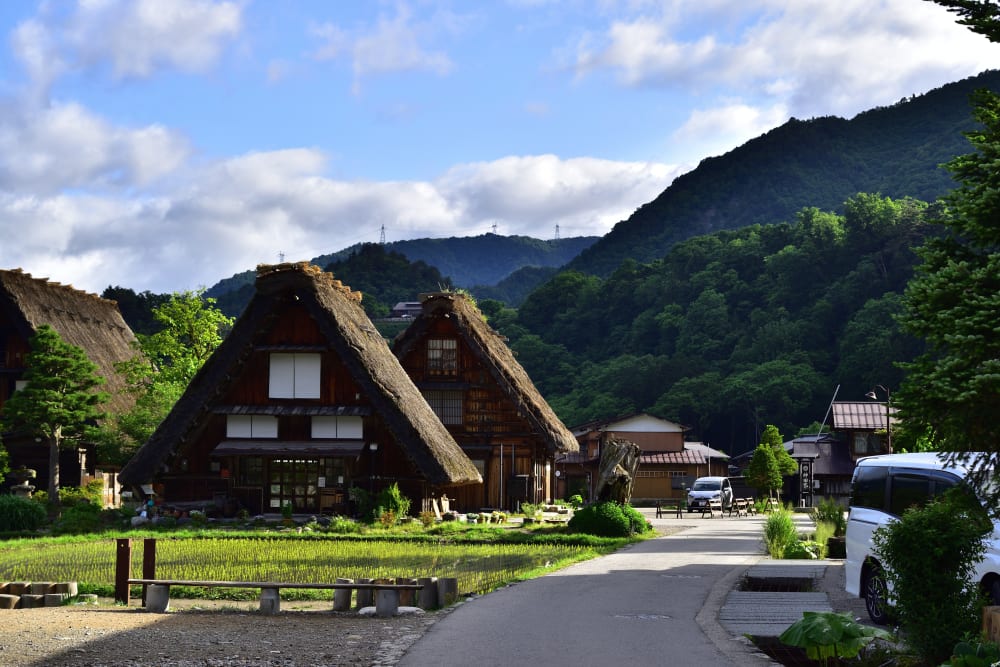
Shirakawa-go is a mountain village in Gifu Prefecture, central Japan, famous for its steep thatched-roof gassho-zukuri farmhouses. The Ogimachi settlement is part of the UNESCO-listed Historic Villages of Shirakawa-go and Gokayama. It is a living community rather than a theme park: people still work, worship and raise families here. A rewarding visit balances architecture, countryside scenery and local etiquette with practical transport planning.
This updated guide explains how to reach the village, what to see, how to avoid common mistakes and which nearby places make sense on a longer itinerary. Bus timetables, museum admission, parking rules and seasonal event arrangements can change, so use the official sources linked below before departure.
Key Takeaways
Why Shirakawa-go Is a UNESCO World Heritage Village
Shirakawa-go’s distinctive houses were developed for a snowy mountain environment. Their tall, sharply sloping roofs resemble hands pressed together in prayer, hence the name gassho-zukuri. The roof shape helps shed heavy snow and creates a spacious upper floor that historically supported sericulture, including silkworm cultivation. The combination of climate, traditional building techniques and communal village life makes the settlement culturally important.
Ogimachi is the principal village most travellers mean when they say Shirakawa-go. UNESCO recognition also encompasses the neighbouring Gokayama settlements of Ainokura Village and Suganuma Village. They are distinct destinations with different transport connections; do not assume a short stroll links them.
Japan’s national tourism organisation offers a useful World Heritage overview explaining the architectural and regional context.
How to Get to Shirakawa-go
From Takayama
For many independent visitors, the simplest approach is an express bus from Takayama Bus Center. The typical journey is around 50 minutes, subject to traffic and road conditions. Check the specific service, reservation requirements and return timetable in advance; buses can fill during peak autumn foliage and winter sightseeing periods. You can combine the village with time in the Hida region, including Hida Furukawa or a visit to Hida Takayama’s historic sake breweries.
From Kanazawa, Nagoya and Toyama
Highway buses also connect Shirakawa-go with Kanazawa and other regional transport hubs. From Nagoya, one option is a direct highway bus; another is rail to Takayama followed by bus. Travellers coming from the Hokuriku region can plan a stop at Kanazawa Station and, if time permits, Kanazawa Castle Park. Connections vary by route and season, and the village has no railway station.
The Shirakawa-go Tourist Association and Shirakawa Village access information are more reliable than an old screenshot of a bus timetable. Leave a buffer for the last departure rather than assuming you can find a late-night bus.
Driving and parking
Drivers should use designated parking outside the heritage village and walk across the bridge into Ogimachi. Private vehicles are restricted within the historic settlement. The official village guidance identifies Seseragi Park as a principal parking area and warns about winter snow, congestion and roadside parking. Parking prices and conditions have been revised over time, so check the current official page rather than relying on a fixed amount in a travel blog.
For the current visiting window, congestion information and parking procedures, consult the official Shirakawa-Going visitor guide. The site distinguishes daytime sightseeing from overnight guest access and describes special rules for winter light-up events.
Best Things to Do in Shirakawa-go
1. Walk through Ogimachi’s historic lanes
Start with a slow walk between traditional farmhouses, rice fields and waterways. Observe the rooflines and the way buildings face the surrounding mountains. Some houses are private residences, so never enter a courtyard or photograph residents at close range without permission. Narrow lanes are shared with local people and service vehicles.
2. Visit a preserved farmhouse
Wada House and other designated traditional homes provide a closer look at timber framing, household objects and the ways large families once used the steep-roofed structures. Not every house opens daily, and access can be restricted for conservation. Check the entrance sign and current opening hours before paying for admission. A single well-interpreted interior visit is often more informative than rushing through several similar houses.
3. Explore the Gassho-zukuri Minkaen open-air museum
This museum preserves relocated traditional buildings and presents aspects of historic rural life. It is especially useful for understanding the practical function of the buildings, rather than seeing them only as a photographic backdrop. Allow time for exhibits, craft displays and the short walk from the village centre. Confirm admission and seasonal hours directly with the museum.
4. See the village from above
Ogimachi’s elevated viewpoints are popular because the houses form a striking pattern across the valley. The walk uphill takes approximately 15 minutes for many visitors, although fitness, weather and slippery paths can change the experience. A paid shuttle may operate, subject to conditions. The official visitor guide lists access restrictions and service notices. Do not drive a private car to the viewpoint.
5. Learn about local festivals and traditional crafts
Shirakawa-go’s seasonal culture includes the Doburoku Festival, with religious observances and community traditions. Avoid assuming that every part of a festival is a tourist performance or that every venue is open to casual visitors. If you are interested in regional heritage beyond the village, the Takayama Spring Festival, Takayama Autumn Festival and Gujo Odori Festival offer different perspectives on Gifu’s traditions.
When Is the Best Time to Visit?
Spring and summer
Spring brings fresh greenery and, depending on the weather, blossoms around the village. Summer provides lush rice-field scenery but can be humid and busy. Rain can affect mountain roads and outdoor plans, so keep an indoor option available and carry appropriate footwear.
Autumn
Autumn foliage adds colour to the surrounding hills and is a particularly popular period for day trips. Crowds and traffic can be substantial. Arriving earlier in the sightseeing day and booking buses ahead is more useful than trying to predict an exact peak-colour date months in advance.
Winter and light-up events
Snow transforms the village, but icy paths and road restrictions make planning essential. Official guidance indicates that special winter light-up nights require advance reservations; the village is not illuminated for tourists every evening. Do not arrive expecting walk-in entry to a ticketed light-up event. Wear insulated, slip-resistant footwear and monitor weather and transport alerts. Travellers who enjoy alpine landscapes might also research Norikura Highland and Shinhotaka Ropeway, but winter operating conditions vary.
Suggested Shirakawa-go Itinerary
Half-day visit
Arrive by a prebooked morning bus, walk through Ogimachi, visit one historic farmhouse, pause for a local meal and climb or ride to a viewpoint if conditions allow. Keep enough time to return to the bus terminal before your booked departure. A half-day gives a useful introduction without pretending to cover every museum.
Full-day visit
Add the open-air museum, a longer photography walk and a second interpretive stop. A full day makes it easier to experience the settlement at a respectful pace and accommodate weather or queues. Check that restaurants and museums will be open on your travel date.
Overnight stay
Staying in an authorised farmhouse guesthouse can provide a quieter experience, but places are limited and should be reserved well ahead. Respect the household’s check-in rules, meal arrangements and quiet hours. An overnight visit is not a licence to enter restricted areas after the daytime sightseeing period.
Nearby Places Worth Combining with Shirakawa-go
Build a realistic route rather than adding distant attractions to one crowded day. A heritage-focused itinerary could include Hakusan Shirakawa-go White Road when its seasonal road access is open, Mt. Hakusan for mountain context, or Kaga Onsen on a wider Hokuriku trip. Cultural stops farther south include Gifu Castle and the Mino Washi Akari Exhibition. Each requires separate travel time and should not be described as being inside Ogimachi.
If traditional villages are your main interest, consider the different atmosphere of Ainokura and Suganuma; both have their own access constraints and local communities.
Practical Visitor Etiquette and Safety
- Remember people live here. Stay on public paths, respect privacy and do not block doorways for photographs.
- Protect historic buildings. Follow smoking, fire-safety and waste-disposal rules; traditional thatch is vulnerable to fire.
- Check the weather. Winter roads can be icy and heavy snow may disrupt buses; summer storms can also affect travel.
- Book key transport. Reserve required bus services and check the last departure, especially on weekends and holidays.
- Verify changing details. Museum hours, parking charges, shuttle service and event access are operational details, not permanent facts.
Frequently Asked Questions
Is Shirakawa-go worth visiting without a car?
Yes. The historic village is walkable and is served by buses from regional hubs. The key is coordinating your arrival and return services, because there is no railway station in Ogimachi.
Can you enter every gassho-zukuri house?
No. Many are private homes. Enter only museums or businesses that clearly welcome visitors, and follow their posted rules.
How long should you spend in Shirakawa-go?
A half-day covers the main streets and one or two attractions; a full day is more relaxed. Staying overnight is an option for travellers who reserve appropriate accommodation.
Is Shirakawa-go open at night?
Daytime visitor access and special event access are restricted. Official guidance generally directs day visitors to the 8 a.m.–5 p.m. window, with separate arrangements for overnight guests and ticketed winter light-up events. Check the rules for your specific date.
Address And Maps Location:
Ono-gun, Gifu-ken
Find Location And Direction On Google Maps
Official References and Further Reading
For background, see Japan National Tourism Organization: Shirakawa-go. For travel restrictions, refer to Shirakawa-Going, the Tourist Association and Shirakawa Village. This guide was fact-checked against official information available on 24 October 2026; always recheck operational details before travelling.
Subscribe, follow travelbloggerindonesia.com