Horyuji Temple: A Glimpse into japan‘s Rich Cultural Heritage
Introduction
Horyuji Temple, located in Ikaruga-cho, Ikoma-gun, Nara-ken, is a historic site of immense cultural significance in Japan. This temple, which has a history spanning over 1,400 years, is renowned for its architectural beauty, ancient relics, and status as the country’s first UNESCO World Heritage Site. In this article, we will delve into the fascinating history and features of Horyuji Temple, as well as explore the surrounding area of Nara, a city known for its rich cultural heritage.
A Temple Rooted in History
According to historical records, Horyuji Temple was founded in 607 by Empress Suiko and Prince Shotoku, a regent to the Empress and a fervent supporter of Buddhism in Japan. Prince Shotoku, an influential figure in Japanese history, is credited with promulgating “The Seventeen-Article Constitution,” the country’s first statutory law, in 604. With a vision to bring advanced culture and systems from China, Prince Shotoku sent envoys to the Sui Dynasty in pursuit of knowledge and progress for Japan.
The West Precinct: A Glimpse into the Past
Horyuji Temple is divided into two main precincts: the west precinct and the east precinct. Let’s begin our exploration with the west precinct, which houses some of the most iconic structures of the temple complex.
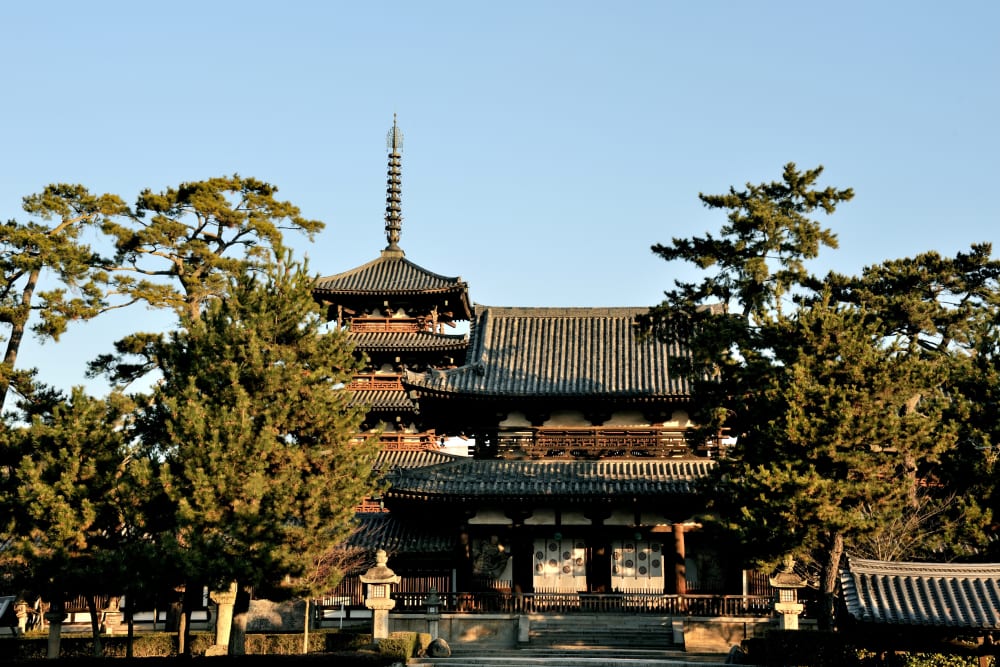
At the heart of the west precinct stands the five-storied pagoda, a true marvel of ancient architectural craftsmanship. This pagoda is not only a significant religious symbol but also the oldest surviving wooden pagoda in the world. With a height of approximately 32.5 meters, the pagoda has weathered the test of time since its construction in the 7th century. The central pillar, made from a cypress tree felled in 594, adds to the pagoda’s allure. Interestingly, the pagoda’s joints were designed to be flexible, allowing it to withstand Japan’s frequent seismic activity.
Another prominent structure in the west precinct is the Kondo hall, the oldest surviving wooden building in the world. This hall serves as the temple’s main building and enshrines a collection of important cultural properties. While the original elaborate paintings of the Pure Land and bodhisattvas were lost in a fire, reproductions are now on display for visitors to appreciate. The Kondo hall stands as a testament to the architectural mastery and artistic legacy of ancient Japan.
The East Precinct: A Tribute to Prince Shotoku
Moving on to the east precinct, visitors will encounter the Yumedono, or the Hall of Dreams. This octagonal-shaped hall was built on the site of Prince Shotoku’s private palace, where he resided until his death in 622. Legend has it that a golden Buddha appeared to Prince Shotoku in a dream, hence the name “Hall of Dreams.” The Yumedono serves as a memorial to Prince Shotoku’s contributions in promoting Buddhism in Japan during his lifetime.
Preservation of Cultural Heritage
Horyuji Temple is not only a treasure trove of architectural wonders but also a repository of historical and cultural artifacts. Within its grounds, approximately 2,500 important relics and structures spanning 1,400 years of Japanese history can be found. Among these, nearly 190 have been designated as National Treasures or Important Cultural Properties, showcasing the significance of Horyuji Temple in preserving Japan’s cultural heritage.
Recognition as a UNESCO World Heritage Site
In recognition of its outstanding universal value, Horyuji Temple was designated as a UNESCO World Heritage Site in 1993. This prestigious title acknowledges the temple’s exceptional cultural significance and its contribution to humanity’s shared heritage. Horyuji Temple holds the distinction of being Japan’s first temple to receive this prestigious nomination.
How to Get There
To visit Horyuji Temple, several transportation options are available. From JR Osaka Station, one can take the Yamatoji Line on the Osaka Loop Line and alight at JR Horyuji Station. From there, it is a convenient 20-minute walk to the temple. Alternatively, buses bound for Horyu-ji Sando can be taken from JR Osaka Station, JR Kyoto Station, or Kintetsu Kyoto Station.
Explore Nara: A City of Cultural Riches
After immersing yourself in the history and beauty of Horyuji Temple, take the opportunity to explore the city of Nara, a former capital of Japan. Nara is renowned for its wealth of historical and cultural heritage sites.
One of the must-visit destinations in Nara is Nara Park, a sprawling green space that encapsulates the natural beauty of the city. Within the park, you will find the Nara National Museum, an exquisite art museum that showcases Buddhist artworks and offers insights into the history of Japanese Buddhism.
Another iconic site in Nara Park is Kofukuji Temple, one of Japan’s oldest and most famous temples. With a history spanning over 1,300 years, Kofukuji Temple is a testament to Nara’s cultural legacy. Additionally, Todaiji Temple, one of Nara’s most recognizable landmarks, is home to the famous Great Buddha statue and is a must-visit for history enthusiasts.
For those visiting in March, the Omizutori Festival is an event not to be missed. This sacred water-drawing festival features spectacular displays believed to protect observers from illness and evil. Witnessing this traditional festival is a unique opportunity to immerse yourself in the vibrant culture of Nara.
Conclusion
Horyuji Temple stands as a testament to Japan’s rich cultural heritage and its commitment to preserving historical treasures. With its ancient wooden structures, important cultural properties, and recognition as a UNESCO World Heritage Site, the temple offers visitors a glimpse into Japan’s past. Combined with the cultural riches of Nara, including Nara Park and its historical temples, a visit to Horyuji Temple is an unforgettable journey through time. Experience the grandeur of Japan’s ancient history and immerse yourself in the spiritual ambiance of Horyuji Temple and its surroundings.
Address And Maps Location:
1-1 Horyuji Sannai, Ikaruga-cho, Ikoma-gun, Nara-ken
Find Location And Direction On Google Maps
Subscribe, follow travelbloggerindonesia.com