Heading 2: The Environmental Impact of Tourism
Tourism is a rapidly growing industry that has gained significant attention worldwide. However, the development of tourism has also brought about various environmental concerns. One of the main factors contributing to the environmental impact of tourism is the consumption behavior of tourists and the operations of tourism businesses. Specifically, transportation, hotels, accommodations, and other facilities in tourist destinations generate greenhouse gases (GHG), which are major contributors to global warming.
The Tourism Authority of Thailand (TAT) recognizes the importance of addressing the environmental impact of tourism activities. The organization aims to promote policies and operational changes that encourage eco-friendly practices among entrepreneurs in the production and service sectors. This includes creating opportunities to access and expand the market for environmentally friendly products and services for tourists. By adopting resource and energy-efficient practices, entrepreneurs can also reduce their costs.
Heading 3: TAT’s Collaboration with Chiang Mai University
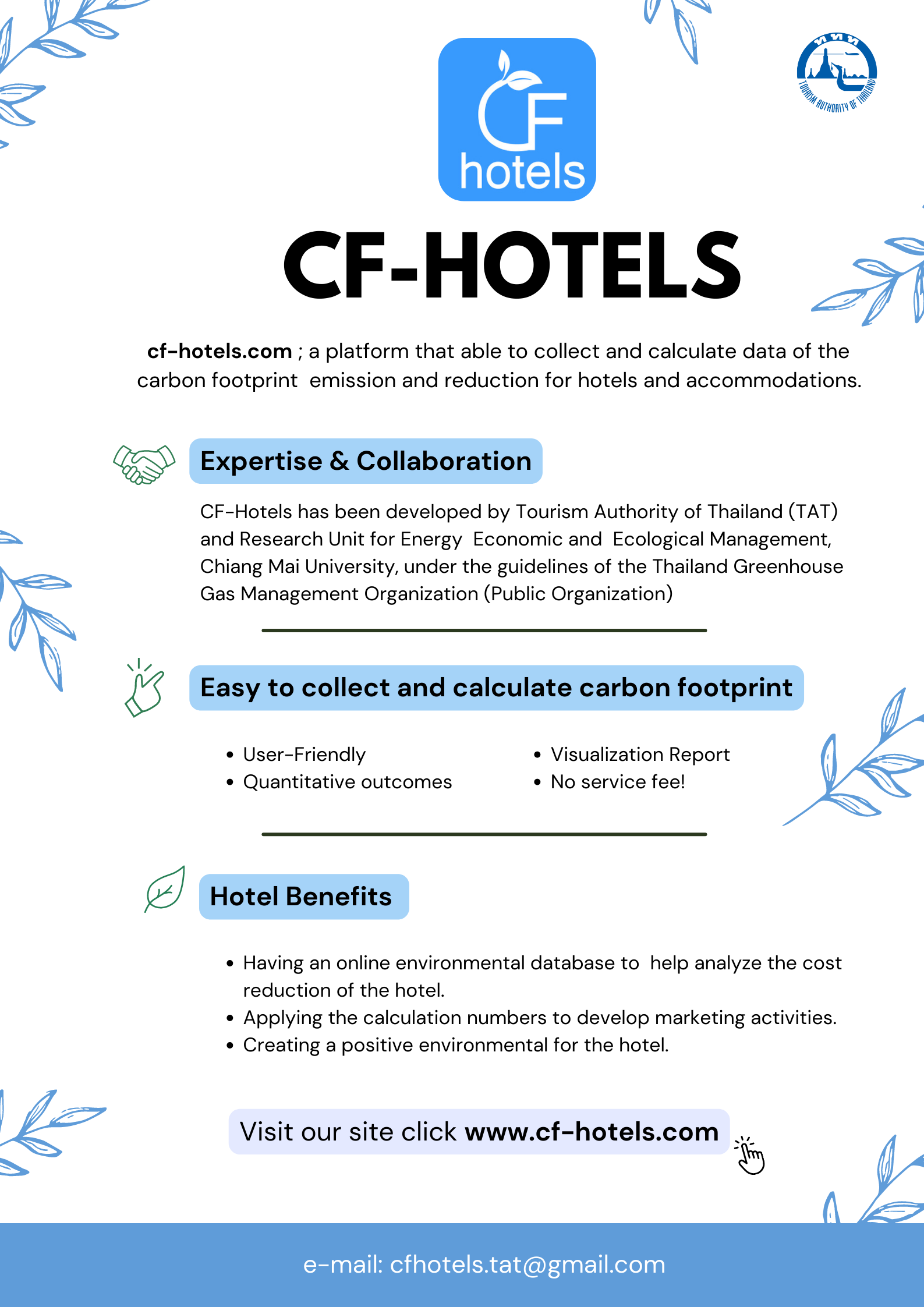
To achieve its goals, TAT has partnered with the Research Unit for Energy Management and Ecology at the Institute of Science and Technology Research Chiang Mai University. Together, they have developed an online platform called CF-Hotels, which enables hotel and lodging operators to create a database of their environmental inventory. This inventory includes data on energy consumption, water usage, waste management, and greenhouse gas emissions.
By utilizing CF-Hotels, hotel and lodging operators can calculate the carbon footprint of their activities. This calculation provides valuable insights into the impact of their operations on the environment and can indicate the effectiveness of their past sustainable management practices. Moreover, the data obtained from CF-Hotels can be analyzed to identify potential strategies for reducing greenhouse gas emissions.
Heading 3: Benefits of CF-Hotels
The CF-Hotels platform offers several benefits to hotel and lodging operators. Firstly, it provides a comprehensive and structured approach to environmental management. By collecting data on energy, water, waste, and greenhouse gases, operators can gain a better understanding of their resource consumption patterns and identify areas for improvement.
Secondly, CF-Hotels facilitates the calculation of carbon footprints. This information is crucial for making informed business decisions that can increase revenue and reduce expenses related to energy consumption. By identifying energy-saving opportunities, operators can reduce their environmental impact while also saving costs.
Heading 3: The Importance of Sustainable Management
Sustainable management is a key aspect of the tourism industry’s response to environmental challenges. With the help of CF-Hotels, hotel and lodging operators can evaluate their sustainability practices and identify areas where improvements can be made. This not only benefits the environment but also enhances the reputation and attractiveness of the business to environmentally conscious tourists.
By implementing sustainable practices, hotels and accommodations can differentiate themselves from their competitors. Today, more and more travelers are seeking eco-friendly accommodation options, and CF-Hotels provides a platform for operators to showcase their commitment to sustainability. This can attract a growing segment of environmentally conscious tourists and contribute to the overall growth and success of the business.
Heading 2: Conclusion
The development of tourism has undoubtedly brought significant economic benefits to many countries. However, it is essential to recognize and address the environmental impact associated with this industry. The Tourism Authority of Thailand, in collaboration with Chiang Mai University, has taken a proactive approach by developing the CF-Hotels platform.
This online platform enables hotel and lodging operators to create a database of their environmental inventory and calculate their carbon footprint. By doing so, operators can gain valuable insights into their environmental impact and make informed decisions to reduce greenhouse gas emissions and resource consumption. Ultimately, this promotes sustainable management practices and positions Thailand as a leader in eco-friendly tourism.
Through the collaboration between TAT and Chiang Mai University, CF-Hotels offers a structured approach to environmental management, benefiting both the operators and the environment. By adopting sustainable practices, hotel and lodging operators can contribute to the preservation of natural resources and attract environmentally conscious tourists. As the tourism industry continues to grow, it is crucial to prioritize sustainable management and ensure the long-term viability of the sector.
Subscribe, follow travelbloggerindonesia.com