Certainly! Below is the rewritten and expanded version of the provided text in English, with additional details under each subheading. The content is formatted with ‘Heading 2’ (H2) and ‘Heading 3’ (H3) to improve readability and organization.
—
## Ban Khu Bua Ancient Town
### Overview
Ban Khu Bua Ancient Town is a significant archaeological site located in Tambon Khu Bua, thailand. This ancient town provides evidence that Ratchaburi was a thriving city during the Dvaravati period. The city’s layout is a rounded rectangle, extending along a north-south axis, with dimensions of approximately 800 meters in width and 2 kilometers in length. The town was strategically built on a coastal terrace that is 1 to 2 meters higher than the surrounding landscape and 5 meters above sea level. Two streams, Huai Khu Bua and Huai Chinnasi, traversed the city, adding to its strategic advantage and aesthetic appeal.
### Architectural Influence and Historical Significance
The architecture of Ban Khu Bua Ancient Town reflects the influence of Gupta art from India. The presence of such architectural styles signifies the cultural exchanges and interactions between ancient Thailand and the Indian subcontinent. Evidence of Buddhism, through the well-preserved Buddha images and other religious artifacts, indicates that the religion has deep roots in Thailand, flourishing for over a millennium. Notably, the excavated artifacts, particularly the Buddha heads, are preserved at the Ratchaburi National Museum and partly at Wat Khlong Suwannakhiri.
### Ancient Monuments in Khu Bua Town
#### Moat
The moat surrounding Ban Khu Bua consists of two earthen dykes with a ditch in between. This ditch, filled with water, is approximately 50 meters wide. The dykes themselves are also 50 meters wide and rise to a height of 3 meters, with the exception of the northern moat, which was adapted from the natural stream Huai Khu Bua. These defensive structures highlight the strategic importance and the need for protection of the ancient city.
#### Religious Sites
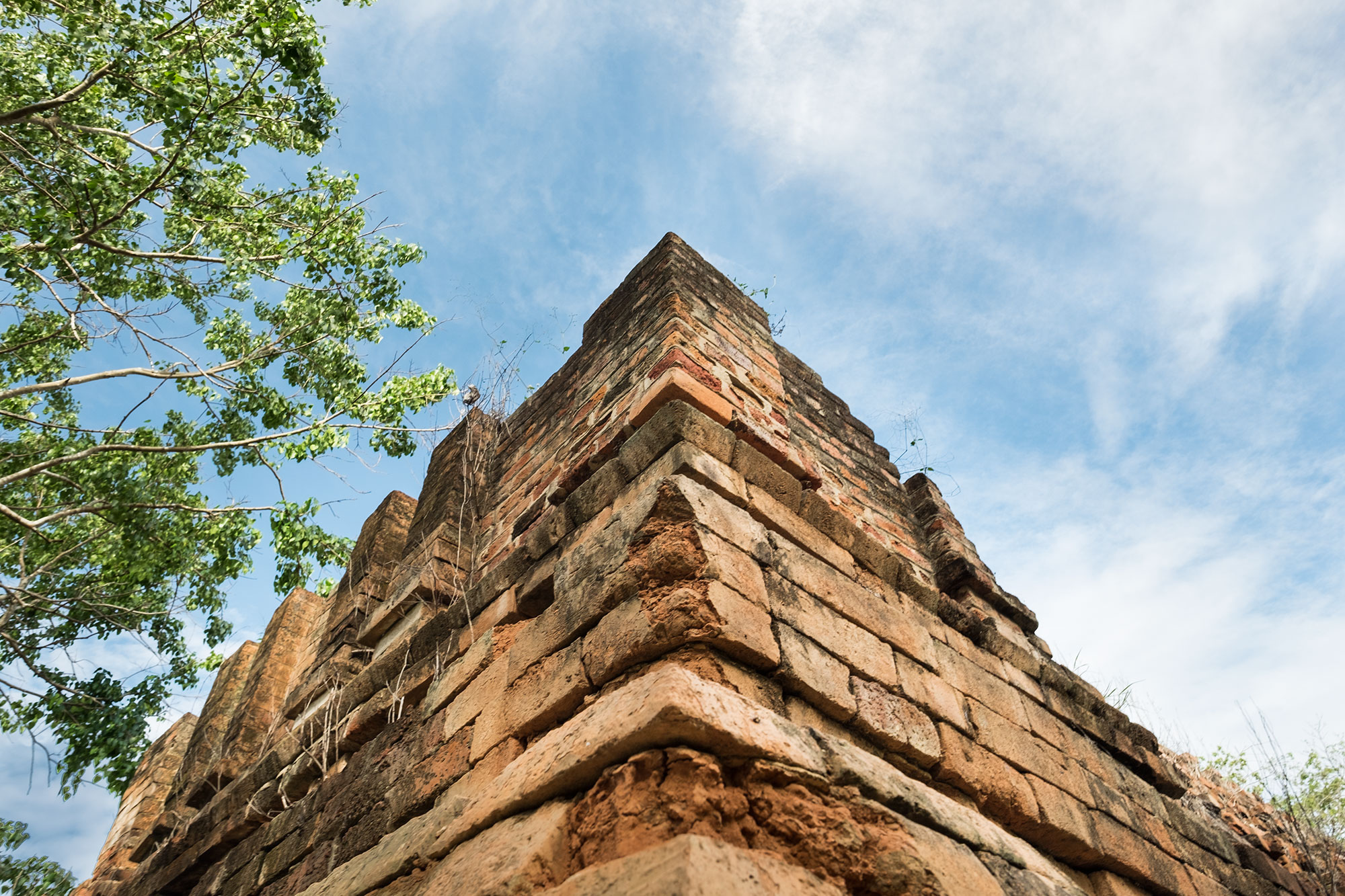
More than 60 Buddhist monuments, representing both Theravada and Mahayana schools, have been discovered in the area. The foundations of these sites are often adorned with earthen sculptures and plaster works depicting Jataka tales and other religious narratives. The primary construction material used is brick, measuring 34-35 centimeters in length, 17-19 centimeters in width, and 8-10 centimeters in thickness. The bricks were made using clay mixed with large-grain rice husks. While most monuments had brick foundations, only Ancient Monument No. 18 and No. 31 used laterite, indicating variations in construction materials over time.
### Antiques in Khu Bua Town
The archaeological findings in Khu Bua Town are diverse and provide insight into the technological advances of the period. Items such as plaster sculptures, baked clay decorations, and various artifacts like Buddha images, Bodhisattvas, and mythical creatures are prevalent. Additionally, imprinted baked clay vessels, censers, bullets, clay cowries, stone weapons, glass, metals, earrings, rings, bracelets, and beads have been unearthed. These artifacts not only display a continuity of design from pre-historical times but also reveal advanced technological capabilities that suggest Khu Bua was a promising city from the 11th to the 16th Buddhist centuries.
### Conclusion
Ban Khu Bua Ancient Town, located just five kilometers south of Ratchaburi’s downtown, remains an important historical site. It is open to visitors daily from 08:00 to 16:30 hours. The town’s rich history, architectural influences, and diverse archaeological finds provide a fascinating glimpse into the past, illustrating the cultural and technological advancements of the Dvaravati period.
—
This expanded text provides a detailed exploration of Ban Khu Bua Ancient Town, offering insights into its historical significance, architectural features, and archaeological findings.
Address And Location:
Na Mueang Mueang Ratchaburi Ratchaburi 70000