Wat Satue: A Historic and Sacred Destination
Wat Satue, a revered temple located in Ban Tha Ngam, Tambon Tha Luang, Amphoe Tha Rua, in the Phra Nakhon Si Ayutthaya province of thailand, is steeped in history and cultural significance. Initially constructed in the northern section of the city during the reign of King Rama V, the temple has undergone various transformations and has become a vital part of the local heritage. This detailed guide will explore the significant aspects of Wat Satue, including its history, architectural marvels, and sacred artifacts.
Key Takeaways
History and Relocation of Wat Satue
Wat Satue’s origins trace back to the northern part of the city during the reign of King Rama V. Its establishment marked a significant period in Thailand’s history, reflecting the religious devotion and architectural advancements of the time. The temple’s relocation was a notable event, initiated by Phra Buddhacharn Toh Phomarangsi, who played a crucial role in Wat Satue’s transformation. He commissioned the construction of the giant reclining Buddha by the Pa Sak River, prompting the temple’s permanent move to its current location to accommodate the revered statue.
Architectural Highlights of Wat Satue
Phra Ubosot: The Reinforced Concrete Sanctuary
One of the temple’s focal points is Phra Ubosot, a structure distinctively crafted from reinforced concrete. This building underwent a significant restoration process led by Major General Manoonkrit Roopkachorn, who has personal ties to the temple, having spent his childhood in proximity to the reclining Buddha. Within the ubosot, worshippers and visitors can find an inspiring image of Buddha in the Bhumisparsa Mudra, symbolizing the moment of enlightenment.
Phra Viharn: A Testament to the Ayutthaya Period
The Phra Viharn at Wat Satue is another architectural marvel, constructed during the late Ayutthaya period. Its unique design features an arch-like form reminiscent of a bark, showcasing the architectural style of the era. Inside the viharn, visitors will find the ancient head of the reclining Buddha image, preserved before the statue’s restoration, providing a glimpse into the temple’s historical evolution.
The Reclining Buddha: Luang Phor Toh
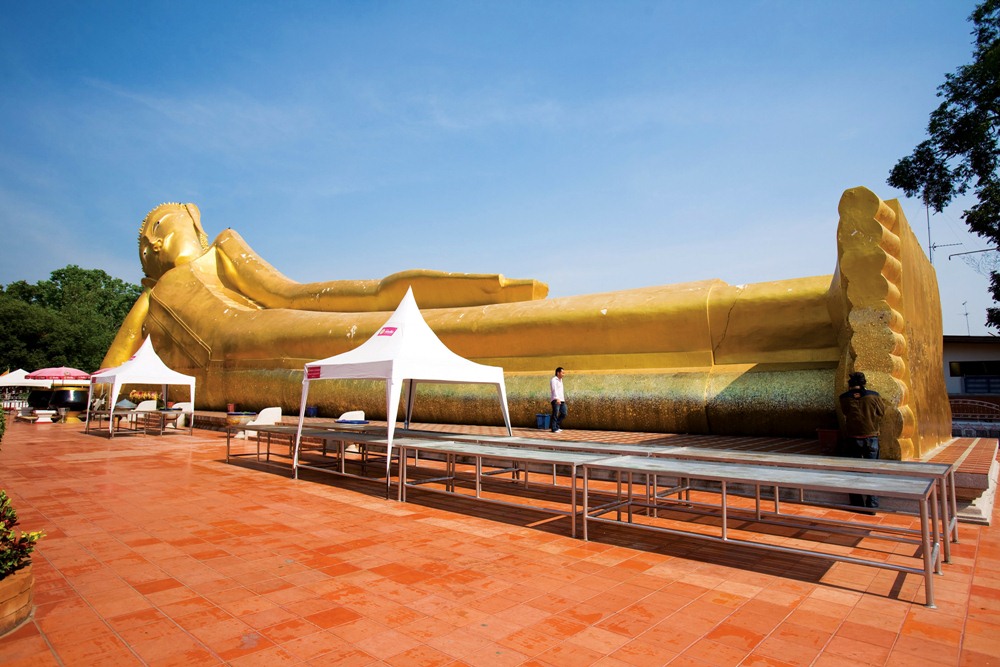
The temple’s most prominent feature is undoubtedly the reclining Buddha, known as ‘Luang Phor Toh.’ Situated on the southern bank of the Wat Satue canal or Pa Sak River, this colossal statue measures 52 meters in length, 16 meters in height, and 9 meters in width. It is recognized as one of the largest reclining Buddha images in Thailand, drawing visitors and pilgrims from all over the world who come to witness its grandeur and spiritual significance.
Sacred Artifacts and Relics of Wat Satue
Beyond its architectural wonders, Wat Satue houses an array of sacred objects that enhance its spiritual ambiance. Among these is a sandstone image of a naga-sheltered Buddha, symbolizing protection and enlightenment. Additionally, the temple is home to a centuries-old replica of Buddha’s footprint, revered by devotees for its historical and religious importance. A unique square-based stupa with twelve indented corners further adds to the temple’s collection of sacred artifacts, each item contributing to the rich tapestry of Wat Satue’s cultural and spiritual heritage.
Visiting Wat Satue
For those interested in exploring Wat Satue and its many offerings, additional information can be found at http://www.watsatue.com. The temple’s location map is available as well at http://www.tourismthailand.org/fileadmin/upload_img/Multimedia/Ebrochure/472/วัดสะตือ.pdf, providing helpful guidance for visitors planning their journey to this historic site.
—
Detailed Exploration of Wat Satue
Historical Context of Wat Satue’s Establishment
Wat Satue was established during a crucial period in Thailand’s history, under the reign of King Rama V. This era was marked by significant modernization and cultural evolution, with the king implementing various reforms to strengthen and modernize the country. The construction of Wat Satue during this time highlights the importance of religious institutions in supporting these changes, providing sanctuaries for spiritual growth and community gathering.
The temple’s initial construction in the northern part of the city served as a representation of the era’s architectural prowess. It wasn’t until the intervention of Phra Buddhacharn Toh Phomarangsi that the temple underwent its most significant transformation. Recognizing the spiritual importance of the reclining Buddha, he led the initiative to relocate the temple alongside the newly constructed statue, ensuring that the sacred image would be appropriately housed and worshipped.
Architectural Significance of Phra Ubosot
The Phra Ubosot at Wat Satue is a testament to both traditional design and modern engineering. Constructed with reinforced concrete, the ubosot combines durability with spiritual symbolism. Its restoration by Major General Manoonkrit Roopkachorn serves as a bridge between past and present, honoring the temple’s historical significance while ensuring its continued relevance and safety for future generations.
Inside the ubosot, the Buddha image in the Bhumisparsa Mudra is a focal point for reflection and meditation. This mudra, representing Buddha’s moment of enlightenment, is a powerful symbol of the temple’s spiritual purpose, encouraging visitors to seek their own path to enlightenment within its sacred walls.
Phra Viharn: Architectural Beauty from the Ayutthaya Period
The Phra Viharn in Wat Satue exemplifies the architectural beauty of the late Ayutthaya period. Its arch-like design, reminiscent of a bark, is not only aesthetically pleasing but also holds cultural significance, representing growth and resilience. The preservation of the ancient head of the reclining Buddha within the viharn serves as a historical record, allowing visitors to connect with the temple’s storied past while appreciating its ongoing legacy.
The Reclining Buddha: Symbolism and Significance
The reclining Buddha, or ‘Luang Phor Toh,’ is the centerpiece of Wat Satue, drawing admiration for its immense size and intricate craftsmanship. Measuring 52 meters in length, 16 meters in height, and 9 meters in width, the statue is not only a marvel of engineering but also a profound spiritual symbol. Its reclining posture represents the Buddha’s final entry into Nirvana, embodying the ultimate release from the cycle of rebirth and suffering.
Visitors to Wat Satue are often struck by the serene expression of the reclining Buddha, which exudes a sense of peace and tranquility. This powerful image serves as a reminder of the Buddha’s teachings, inspiring those who visit to cultivate mindfulness and compassion in their own lives.
Sacred Artifacts and Their Significance
Wat Satue’s collection of sacred artifacts adds to its spiritual ambiance, offering visitors a deeper understanding of Buddhist traditions and beliefs. The sandstone image of the naga-sheltered Buddha is a particularly significant piece, symbolizing protection and enlightenment. The naga, a mythical serpent in Buddhist mythology, is often depicted sheltering the Buddha, representing the protective force of spiritual wisdom.
The replica of Buddha’s footprint, dating back over a century, is another treasured artifact within the temple. Revered for its historical and religious significance, the footprint serves as a tangible connection to the Buddha’s presence and teachings, encouraging devotees to follow in his footsteps.
The square-based stupa with twelve indented corners is a unique architectural feature within Wat Satue. Stupas, which are typically used to house relics and sacred objects, serve as focal points for meditation and reflection. The stupa’s distinctive design not only enhances the temple’s aesthetic appeal but also symbolizes the twelve links of dependent origination, a core concept in Buddhist philosophy that describes the interconnectedness of all phenomena.
Planning Your Visit to Wat Satue
For those planning a visit to Wat Satue, it is essential to prepare and gather information beforehand to ensure a meaningful and enjoyable experience. The temple’s official website, http://www.watsatue.com, offers valuable resources and information about the temple’s history, significance, and visitor guidelines. Additionally, the location map available at http://www.tourismthailand.org/fileadmin/upload_img/Multimedia/Ebrochure/472/วัดสะตือ.pdf provides helpful directions for those traveling to the site.
When visiting Wat Satue, it is important to approach the experience with respect and mindfulness, honoring the temple’s cultural and spiritual significance. Whether participating in meditation, observing the architectural marvels, or exploring the sacred artifacts, visitors are encouraged to immerse themselves fully in the temple’s rich history and spiritual teachings.
Address And Location:
140 Moo 6 Tha Luang Tha Ruea Phra Nakhon Si Ayutthaya 13130