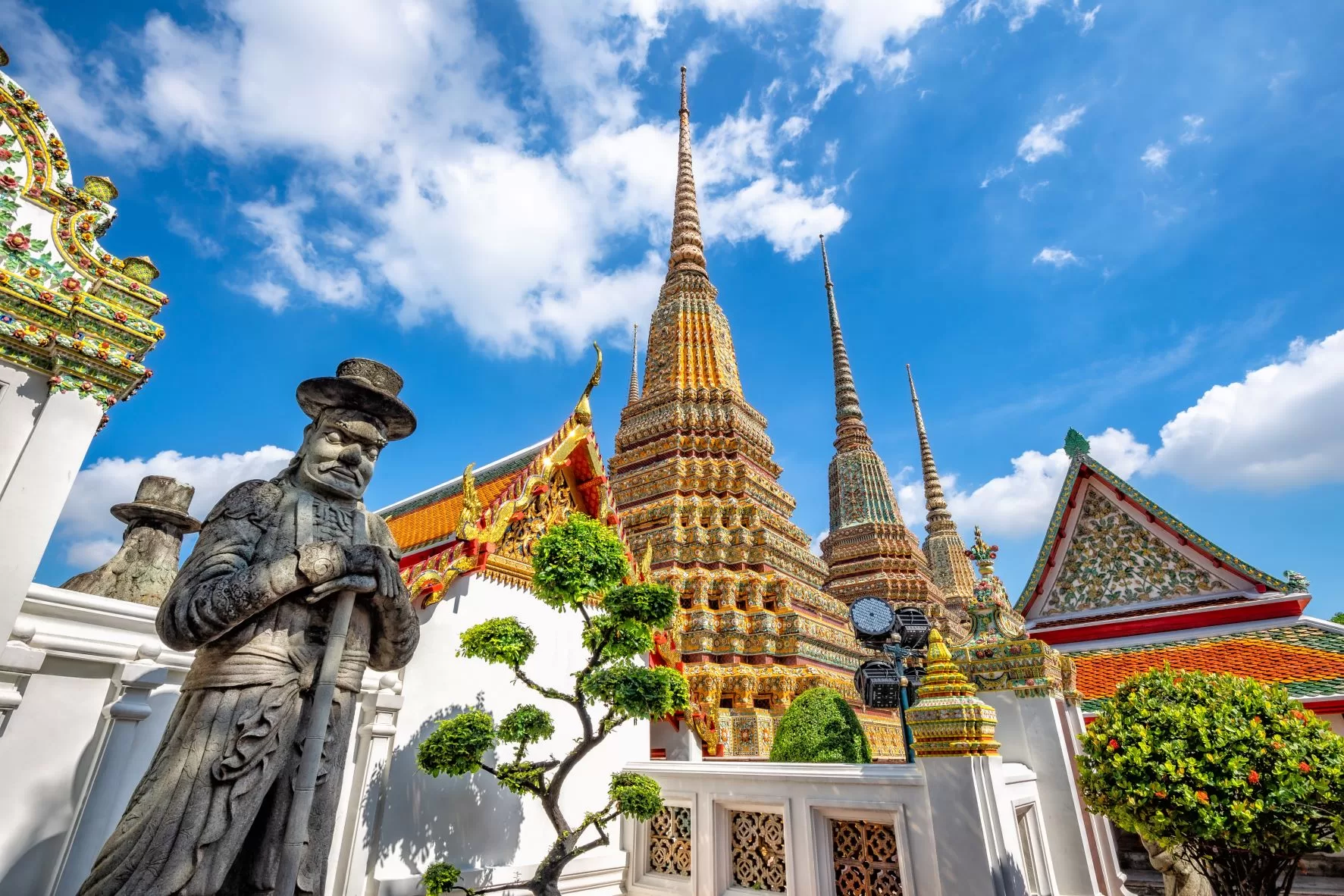
Wat Pho (Wat Phra Chetuphon Wimon Mangkhalaram Rajwaramahawihan) is one of Bangkok’s most important royal monasteries. It is famous for its enormous Reclining Buddha, but its grounds also contain decorated chedis, courtyards, historical inscriptions and a long tradition of Buddhist learning. The temple sits beside the Grand Palace in Phra Nakhon and fits naturally into a Bangkok sightseeing itinerary.
Key Takeaways
Wat Pho tickets, opening hours and location
The temple’s official visitor-planning page currently lists 08:00–19:30 daily and a THB 300 entrance fee for foreign visitors. Children below 120 cm tall enter free; the official home page states that Thai nationals enter free with a valid Thai ID. The official home page also shows an 08:30 opening time, so check current notices if arriving very early. These details were reviewed in October 2026 and may change during special ceremonies.
Most visitors should budget 90 minutes to two hours for the reclining image, architecture and quiet courtyards. The temple’s Thai massage services are separate from the entrance ticket, with the published rate beginning at THB 340 for 30 minutes. Check availability before planning a massage; an admission ticket does not guarantee a treatment slot.
Where is Wat Pho?
Wat Pho is at 2 Sanam Chai Road, Phra Borom Maha Ratchawang, Phra Nakhon, Bangkok 10200, immediately south of the Grand Palace. The area is part of the historic Rattanakosin district. Visitors exploring the old city may also want to see the nearby Bangkok City Pillar Shrine and Saranrom Park. The original article’s address block is preserved at the bottom of this guide.
How to reach Wat Pho
Use Bangkok’s MRT Blue Line and get off at Sanam Chai (BL31), then walk to the temple. The station appears in the MRT operator’s official Blue Line directory. Taxis are another option, though traffic in the old town can be slow. Visitors combining Wat Pho with Wat Arun across the river can check the local river-crossing service; fares and departure arrangements are not guaranteed by this guide. Our Bangkok river boat itinerary provides additional context.
What to see at Wat Pho
The 46-metre Reclining Buddha
Wat Pho’s Reclining Buddha measures approximately 46 metres long and 15 metres high. According to the temple’s official Buddha description, the statue is built from brick and stucco, lacquered and gilded. It is not made from solid gold. Its feet have intricate mother-of-pearl inlays with 108 auspicious motifs. These symbols draw on Buddhist religious traditions, so take time to observe them respectfully rather than treating the hall as a quick photo stop.
The reclining posture represents an important Buddhist image and the hall remains a place of worship. Follow the visitor route and any signs about photography or footwear. For a wider comparison of temple architecture, read our Bangkok temple overview and Wat Arun history guide.
Chedis, ordination hall and stone figures
The complex contains elaborate royal chedis, Buddha galleries, pavilions and an ordination hall. Different spaces reward different kinds of attention: look for ceramic ornamentation, roof detailing, devotional images and historical inscriptions. The temple is not merely a museum; monks and worshippers continue to use it. Travellers interested in more Bangkok religious sites can compare Wat Saket and the Golden Mount or Wat Ratchaburana.
Wat Pho history and the temple’s educational legacy
Wat Pho occupies an older monastery site dating to the Ayutthaya era. King Rama I ordered major restoration beginning in 1788 after Bangkok became the capital. Later, King Rama III expanded the complex and encouraged the preservation and public display of knowledge through inscriptions. The temple’s official history explains these royal restoration campaigns. Wat Pho is sometimes called Thailand’s first university because of its public educational function, although it was not a modern university offering degrees.
UNESCO’s Memory of the World record recognises 1,431 Wat Pho stone inscriptions created between 1831 and 1841. The material covers religious and secular knowledge, including traditional medicine and literature. This is documentary-heritage recognition, not a UNESCO World Heritage Site designation for the temple. To continue exploring Bangkok’s heritage, consider our guides to the city’s museum scene and Samphanthawong local museum.
Temple etiquette and visiting tips
Dress respectfully
Wear clothing covering shoulders and knees; avoid short shorts and revealing outfits. Remove your shoes before entering designated religious buildings. Do not touch Buddha images, climb on sacred structures or enter areas reserved for monks. Photography rules can vary by room. The temple’s official visit plan is the best place to check etiquette, and our Thai palace dress guide helps visitors preparing for both Wat Pho and nearby royal sites.
Plan for weather and crowds
Bangkok can be hot and humid, especially in exposed courtyards. Bring water, sun protection and shoes that are easy to remove. An early or late visit can feel more comfortable, but quieter periods are never guaranteed. If you are visiting the Grand Palace on the same day, check its shorter ticketing window and consider going there first.
Suggested Bangkok half-day itinerary
Begin with the Grand Palace, walk south to Wat Pho and spend at least an hour exploring its reclining Buddha and courtyards. If time and local ferry services permit, cross the river for Wat Arun. For a longer itinerary, add Bangkok Chinatown or the farther-away Ancient City (Muang Boran) on a separate day. Each attraction sets its own admission rules; Wat Pho’s ticket does not cover the others.
Wat Pho FAQ
How much is Wat Pho entry in 2026?
The official foreign visitor price is THB 300. Children under 120 cm are admitted free. Verify the latest price directly before your visit.
Can I visit Wat Pho and Wat Arun together?
Yes. They are on opposite sides of the Chao Phraya River and can fit in one day, subject to each temple’s hours and the ferry service. Consult the Wat Arun visitor guide for its separate admission information.
Does Wat Pho include a Thai massage?
Massage is available as a separate paid service and is not part of the temple entrance fee. Check current operating conditions.
Is Wat Pho suitable for families?
Yes, with supervision. Children must follow the same respectful conduct rules, and free entry is determined by height rather than age.
Official references
Visitor information was checked against the Wat Pho visitor plan, Wat Pho home page, UNESCO documentary heritage record and Bangkok MRT station directory. The guide does not claim firsthand attendance or guarantee holiday schedules.
Address And Location:
Phra Nakhon, Bangkok Phra Borom Maha Ratchawang Phra Nakhon Bangkok 10200