Key Takeaways
Exploration of Malai Maen Road’s Royal Temple
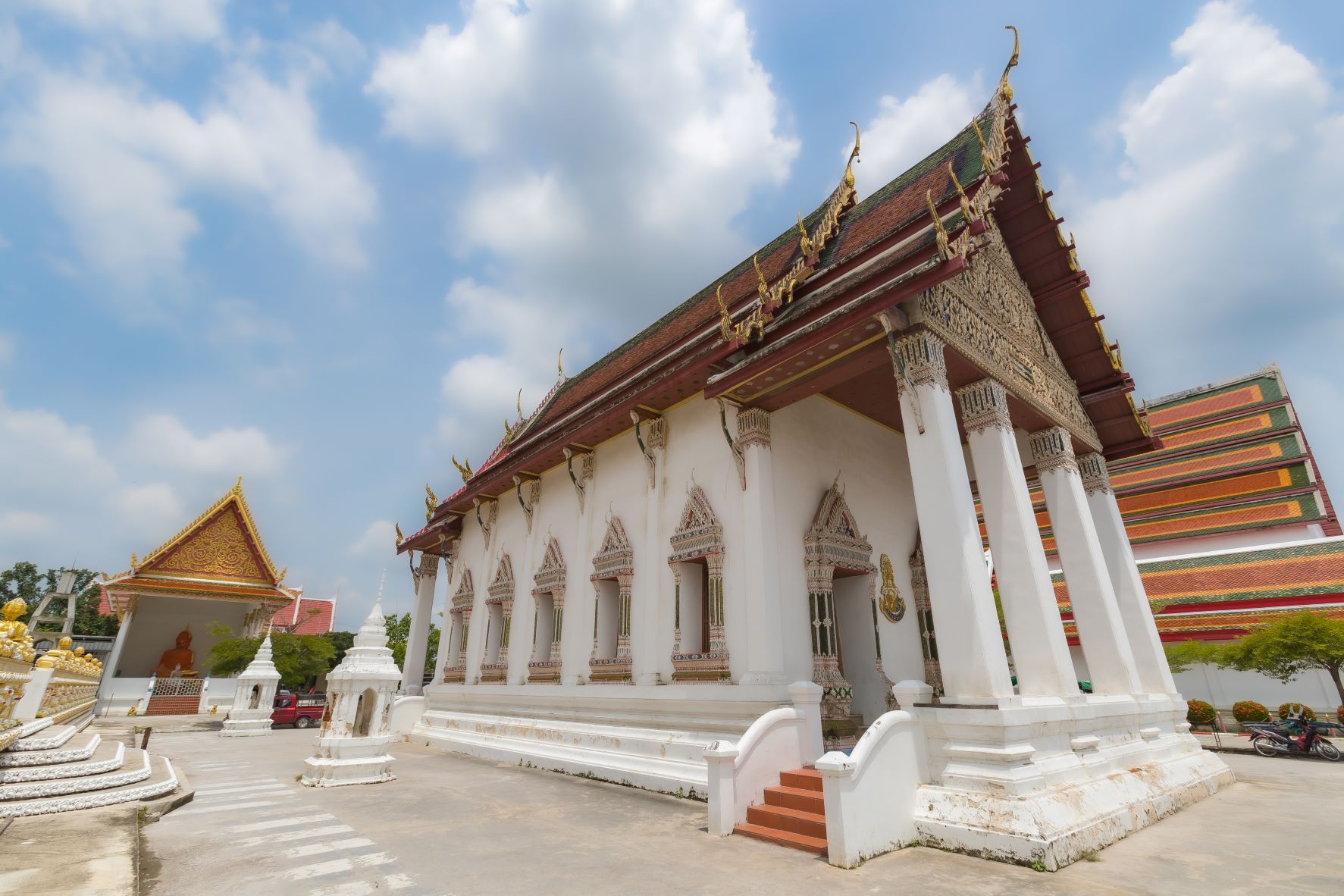
Located on Malai Maen Road in Tambon Rua Yai, this site is on the western bank of the Suphan Buri River, also known as the Tha Chin River. The temple is distinguished as a royal temple, as evidenced by the royal emblem of King Rama IV on the gable of the wihan. During his monkhood, King Rama IV discovered this temple and initiated its restoration after ascending the throne. It is believed that this royal temple was constructed during a prosperous era of the town. According to the Northern Chronicle, King Katae tasked a young Mon with renovating the temple after the year 1181.
The Grandeur of Luangpho To
At the heart of the temple lies a magnificent Buddha image known as ‘Luangpho To’ within the elegant image hall, or Wihan. This statue serves as a focal point of faith for Buddhists, standing at a height of 23.46 meters. The Buddha image is seated in the European style, in a posture known as Palilayaka, where it receives offerings from an elephant and a monkey. This style is reminiscent of the art from the U Thong Suphannaphum period. Experts suggest that the Buddha image was originally in the gesture of delivering the first sermon and was constructed outdoors to be visible from afar, as was common in the pre and early Ayutthaya periods. The massive statue houses 36 relics of the Lord Buddha.
Celebrations and Cultural Events
The temple hosts significant celebrations for the Buddha image twice a year during the 7th to 9th days of the waxing moon in the 5th and 12th lunar months. These events draw crowds of worshippers and tourists alike, celebrating the spiritual and cultural heritage of the temple.
Local Souvenirs and Cultural Artifacts
Opposite to the temple’s image hall, visitors can explore a variety of shops that offer a wide range of local souvenirs, providing tourists with tangible memories of their visit. These shops are an integral part of the temple’s cultural ecosystem, offering insights into the local arts and crafts.
Khum Khun Chang: A Showcase of Traditional Thai Architecture
In the temple’s backyard, there is an exhibition of a traditional Thai house known as ‘Khum Khun Chang’. This structure is a large assembly of traditional Thai houses on stilts, crafted from teak. It was constructed as described in the Thai literature ‘Khun Chang-Khun Phaen’. The house displays pictures illustrating scenes from the literature, alongside old-fashioned equipment, ceramics, and furniture, providing a glimpse into the historical lifestyle and cultural practices of the region.
—
Detailed Analysis of Malai Maen Road’s Royal Temple
Historical Significance and Restoration Efforts
The temple on Malai Maen Road holds significant historical value, marked by its royal designation. The presence of King Rama IV’s emblem signifies its importance within the royal domain. During his time as a monk, King Rama IV came across this temple, which was in a state of disrepair. Recognizing its historical and spiritual value, he initiated restoration efforts after becoming king. This action not only preserved the temple’s structure but also revitalized its role as a spiritual center. The restoration efforts were aimed at maintaining the temple’s historical integrity while making it accessible to future generations.
According to historical records, particularly the Northern Chronicle, the temple underwent renovation after the year 1181, under the directive of King Katae. He appointed a young Mon to oversee the restoration, ensuring that the temple’s architectural and cultural elements were preserved. This period marked a renaissance for the temple, aligning with the town’s era of prosperity and growth. The temple’s restoration was not merely a physical reconstruction but also a revival of its spiritual and cultural significance.
Architectural and Artistic Features of Luangpho To
The temple’s most striking feature is the Buddha image known as ‘Luangpho To’. This colossal statue is housed within the Wihan, an elegant hall that serves as a sanctuary for worshippers. Standing at 23.46 meters, the Buddha image is an embodiment of artistic excellence from the U Thong Suphannaphum period. Its European-style seating posture, known as Palilayaka, depicts the Buddha receiving offerings from an elephant and a monkey. This artistic representation is symbolic, reflecting the blend of cultural influences and the spread of Buddhism across regions.
Experts have studied the statue’s design and concluded that it likely stood outdoors initially, intended to be visible from a distance. This aligns with practices from the pre and early Ayutthaya periods, where large Buddha images were constructed in open spaces to symbolize the omnipresence of the Buddha’s teachings. The statue’s design and craftsmanship are a testament to the skill and devotion of the artisans of that era. Additionally, the statue enshrines 36 relics of the Lord Buddha, further enhancing its spiritual significance and drawing devotees from far and wide.
Cultural Celebrations and Community Engagement
The temple is not just a site of historical and spiritual significance but also a venue for vibrant cultural celebrations. Twice a year, during the 7th to 9th days of the waxing moon in the 5th and 12th lunar months, the temple becomes a hub of activity. These celebrations are deeply rooted in Buddhist traditions, attracting worshippers and tourists alike. The events are marked by rituals, offerings, and communal gatherings, fostering a sense of community and shared spirituality.
These celebrations are crucial in preserving the cultural heritage of the region. They provide an opportunity for the younger generation to connect with their roots and understand the historical context of their cultural practices. The temple serves as a focal point for these activities, reinforcing its role as a custodian of cultural and spiritual values.
Commercial and Cultural Ecosystem
Adjacent to the temple’s image hall, a vibrant commercial ecosystem thrives, offering a wide array of local souvenirs. These shops cater to tourists, providing them with a chance to take home a piece of local culture. The souvenirs range from handcrafted items to locally produced goods, reflecting the artistic traditions of the region. This commercial activity is not merely transactional; it is an integral part of the temple’s cultural landscape, supporting local artisans and promoting cultural exchange.
The presence of these shops also enhances the visitor experience, allowing tourists to engage with the local culture on a personal level. The interactions between tourists and local vendors foster cross-cultural understanding and appreciation, contributing to the region’s cultural tourism.
Khum Khun Chang: A Window into Thai Cultural Heritage
In the temple’s backyard, ‘Khum Khun Chang’ stands as a testament to traditional Thai architecture. This ensemble of teak houses on stilts is a physical representation of literary descriptions found in ‘Khun Chang-Khun Phaen’. The exhibit offers visitors an immersive experience, transporting them to a bygone era. The houses display scenes from the literature, depicted through pictures and artifacts, offering insights into the historical context and cultural narratives.
The exhibition also features old-fashioned equipment, ceramics, and furniture, showcasing the daily life and craftsmanship of the past. This display serves as an educational resource, enlightening visitors about thailand‘s rich cultural heritage and architectural ingenuity. It highlights the importance of preserving traditional practices and serves as a reminder of the cultural wealth that the region possesses.
—
In conclusion, the temple on Malai Maen Road is a significant cultural and historical landmark. Its architectural marvels, such as the statue of Luangpho To, and its vibrant cultural activities underscore its importance as a spiritual and cultural hub. The temple’s commercial ecosystem and the ‘Khum Khun Chang’ exhibition further enrich the visitor experience, making it a must-visit destination for those interested in exploring Thailand’s cultural and historical tapestry.
Address And Location:
Malaiman Road Rua Yai Mueang Suphan Buri Suphan Buri 72000