The 800-year-old shrine that is the heart of Kamakura
Kamakura is a city in Kanagawa Prefecture, japan, known for its rich history and cultural heritage. One of the most iconic landmarks in Kamakura is the Tsurugaoka Hachimangu Shrine, a magnificent shrine dedicated to Hachiman, the guardian deity of samurai. With a history spanning over 800 years, this shrine holds great significance in Japanese history and is considered the heart of Kamakura.
The origins of Tsurugaoka Hachimangu Shrine can be traced back to the 11th century when the head of the Minamoto clan, Minamoto Yoriyoshi, established a small shrine called Tsurugaoka-gu to express gratitude to the deities for their victory in battle. It was his descendant, Yoritomo, who moved the shrine to its current location in 1180 when he made Kamakura his home and the de facto capital of Japan during the Kamakura period.
During this period, Yoritomo shifted the political power from Kyoto to Kamakura, establishing the shogunate, a military rule that would last until 1868. The relocation of the shrine symbolized the beginning of a new era in Japanese history, with Kamakura becoming the center of political and cultural activities.
Today, Tsurugaoka Hachimangu Shrine stands as a testament to Kamakura’s glorious past. As you approach the shrine, you are greeted by a series of massive red torii gates that stretch through the center of the city. These gates create a sense of grandeur and reverence, setting the tone for the spiritual journey that awaits.
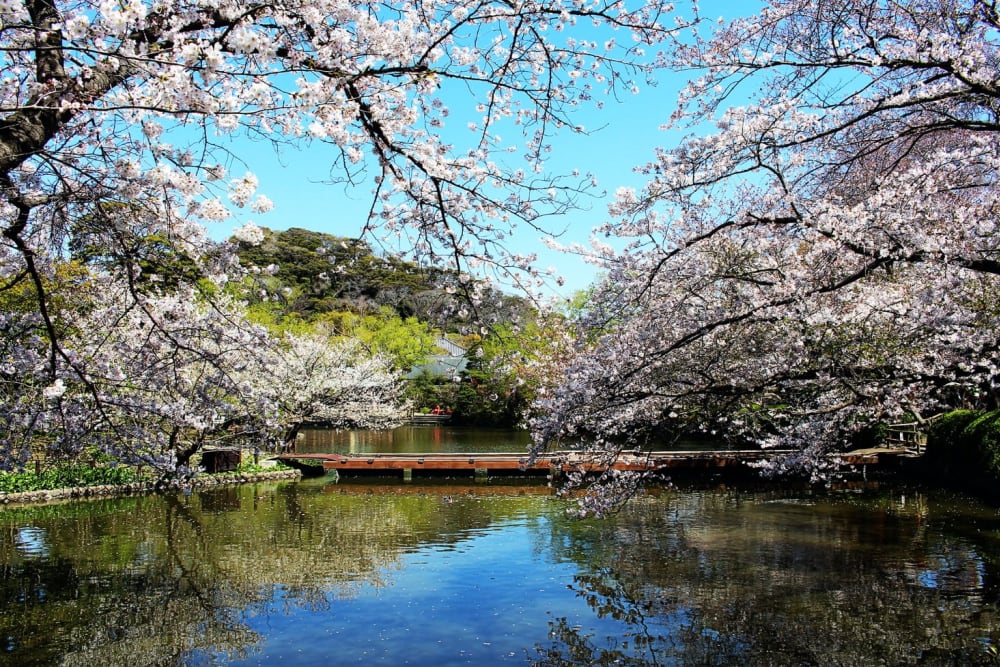
On either side of the wide road leading up to the shrine, you will find two beautiful ponds that hold great significance. These ponds represent the Minamoto clan, who founded the shrine and the Kamakura Shogunate, and the Taira clan, their bitter rivals. The serene atmosphere of the ponds adds to the overall tranquility of the shrine, providing a peaceful respite for visitors.
One of the highlights of a visit to Tsurugaoka Hachimangu Shrine is the Main Shrine, which is accessed via a great stone staircase. The Main Shrine is the focal point of the entire complex and is surrounded by lush greenery and beautiful architecture. Inside the shrine, you will find a museum dedicated to its sacred treasures, offering a glimpse into the rich history and cultural heritage of Kamakura.
Another must-see sight at the shrine is the Maiden, also known as the Lower Worship Hall. This is where Shinto rituals accompanied by sacred dance performances take place, providing a unique cultural experience for visitors. The rhythmic movements and traditional music create a mesmerizing atmosphere, allowing visitors to immerse themselves in the spiritual traditions of Japan.
Throughout the year, Tsurugaoka Hachimangu Shrine hosts various festivals that attract thousands of visitors. One of the most popular festivals is held in April, where the shrine comes alive with vibrant colors and lively performances. The festival is a celebration of Japanese culture and tradition, featuring traditional music, dance, and food.
In addition to the festivals, the shrine is also known for its yabusame horseback archery ritual, which takes place in September. This ancient martial art showcases the skills of samurai archers as they ride on horseback and shoot arrows at targets. The precision and grace of the archers are truly awe-inspiring, making it a spectacle not to be missed.
For nature enthusiasts, Tsurugaoka Hachimangu Shrine offers a beautiful peony garden beside Minamoto Pond. This garden is open during the winter and spring seasons when the peonies are in full bloom. The vibrant colors and delicate fragrance of the flowers create a captivating sight, adding to the overall beauty of the shrine.
To reach Tsurugaoka Hachimangu Shrine, you can easily access it by public transportation. From Tokyo, you can take the JR Yokosuka Line, which will take approximately an hour. Once you arrive at JR Kamakura Station, the shrine is just a 10-minute walk away. The convenient location of the shrine makes it easily accessible for tourists and locals alike.
In conclusion, Tsurugaoka Hachimangu Shrine is not just a religious site but a symbol of Kamakura’s rich history and cultural heritage. Its significance in Japanese history as the center of political power during the Kamakura period cannot be understated. A visit to this 800-year-old shrine offers a glimpse into Japan’s feudal past, allowing visitors to appreciate the traditions and customs that have shaped the country. Whether you are a history enthusiast, a nature lover, or simply seeking a peaceful retreat, Tsurugaoka Hachimangu Shrine is a must-visit destination in Kamakura.
Address And Maps Location:
2-1-31 Yukinoshita, Kamakura-shi, Kanagawa-ken
Find Location And Direction On Google Maps
Subscribe, follow travelbloggerindonesia.com