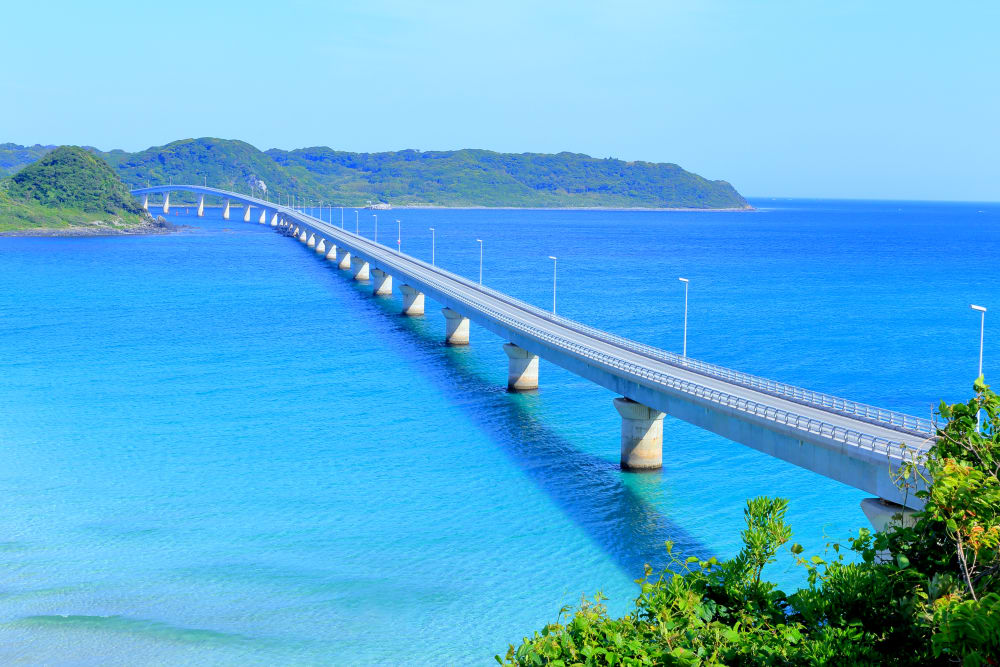
A bridge spanning over an azure sea that leads to a sunny seaside resort
Located off the northwest coast of Yamaguchi Prefecture by the Sea of japan, Tsunoshima Ohashi Bridge and the stunning scenery around it have appeared in numerous TV commercials. One look and you’ll see why. On a typically sunny day, the azure sea and the small islands floating on the horizon present just the kind of romantic, idyllic getaway travelers seek. Cross the bridge by car to explore the island of Tsunoshima, including the resort there, Cobalt Blue Beach, and one of the oldest Western-style lighthouses in Japan. Tsunoshima may be a little out of the way, but it’s well worth the effort to get there.
Don’t Miss
Tsunoshima Lighthouse, built in 1876
The island resort area and Cobalt Blue Beach
The view across the bridge from Amagase Park
How to Get There
You can reach the Shimonoseki area via plane, train, and bus. Fly from Haneda Airport in Tokyo to Yamaguchi’s Ube Airport, then take the airport share taxi to Shimonoseki Station (1 hour 15 minutes). At Shimonoseki Station, transfer to the Sanin Main Line and get off at Kottoi Station (80 minutes). Take the Blue Line bus to the entrance of Hotel Nishinagato Resort Iriguchi bus stop (15 minutes). The beach is a five-minute walk from there. Best accessed by car, the journey takes around one hour from Shimonoseki IC. Alternatively, take a Blue Line Kotsu bus from Kottoi Station or Takibe Station, both accessible by the Sanin Main Line.
Tsunoshima Bridge is stunning on sunny summer days. Sunset is also a great time to see Tsunoshima Bridge.
Before and after you cross the span
Amagase Park, right beside the bridge on the mainland side, is a great place to take a memorable photo. Tsunoshima itself is covered in trees and has few houses, giving it a secluded atmosphere, and the resorts here are just as appealing. You can camp on the island as well at Tsunoshima Ohama Campground. Once you reach Tsunoshima Lighthouse, you’ll find a carpark and several shops selling local souvenirs, along with cafes and public toilets. Locally caught grilled squid is just one of the local specialties offering an authentic taste of coastal life.
A lighthouse popular with couples
The Meiji Government commissioned British architect Richard Henry Brunton to construct the Tsunoshima Lighthouse. The structure is open to the public and is a popular spot for couples. Part of the building’s appeal may be seen in how its white walls stand out against the blue summer skies. You can climb the narrow, winding stairs inside the lighthouse for a small fee. From the top, step out into the open air to gaze out across Tsunoshima and beyond. You can see the large lighthouse lens and displays that describe its construction at the neighboring museum.
Other sites around Tsunoshima
Combine your trip to Tsunoshima with a stop at Motonosumi Inari Shine, 40 minutes to the north, famous for its 123 vermilion torii gates. The site is reminiscent of the more famous Inari Shrine in Kyoto, but the torii gates here include views of the Sea of Japan, the rocky coast, and waves crashing against the rocks. With all these scenic wonders and none of the crowds of Kyoto, this location may prove more appealing than its more famous counterpart.
Tsunoshima Bridge, located off the northwest coast of Yamaguchi Prefecture, is a breathtaking sight that attracts visitors from all over. This bridge, known as Tsunoshima Ohashi Bridge, stretches over an azure sea and leads to a sunny seaside resort. Its picturesque scenery has made it a popular location for TV commercials and a dream destination for travelers seeking a romantic and idyllic getaway.
On a sunny day, the azure sea and the small islands floating on the horizon create a mesmerizing view that captivates the hearts of those who lay their eyes upon it. The bridge itself is a marvel of engineering, connecting the mainland to the island of Tsunoshima. Crossing the bridge by car allows visitors to explore the island and discover its hidden gems.
One of the main attractions on Tsunoshima is the Tsunoshima Lighthouse, which was built in 1876. This historic lighthouse offers a glimpse into Japan’s past and provides a stunning view of the surrounding area. The island resort area and Cobalt Blue Beach are also worth a visit, offering opportunities for relaxation and enjoyment by the sea.
To reach Tsunoshima, there are several transportation options available. Travelers can fly from Haneda Airport in Tokyo to Yamaguchi’s Ube Airport and then take an airport share taxi to Shimonoseki Station. From there, they can transfer to the Sanin Main Line and get off at Kottoi Station. A Blue Line bus can then be taken to the entrance of Hotel Nishinagato Resort Iriguchi, which is just a short walk away from the beach. Alternatively, Tsunoshima can be accessed by car, with the journey taking approximately one hour from Shimonoseki IC. There are also Blue Line Kotsu buses available from Kottoi Station or Takibe Station, both accessible by the Sanin Main Line.
Visiting Tsunoshima is a unique experience that allows travelers to immerse themselves in the beauty of nature and enjoy a peaceful retreat away from the hustle and bustle of city life. The island offers a tranquil atmosphere, with its abundance of trees and few houses, creating a sense of seclusion and serenity. The resorts on the island provide comfortable accommodations, allowing visitors to fully relax and unwind.
Amagase Park, located beside the bridge on the mainland side, is a perfect spot to capture a memorable photo of Tsunoshima Bridge. The park offers a stunning view of the bridge and the surrounding area, making it a popular destination for tourists and locals alike. Tsunoshima itself is a haven of natural beauty, with its lush greenery and pristine beaches. Camping is also available on the island at Tsunoshima Ohama Campground, providing a unique opportunity to reconnect with nature.
Upon reaching Tsunoshima Lighthouse, visitors will find a carpark and several shops selling local souvenirs. The lighthouse is a popular spot for couples, with its romantic setting and breathtaking views. The white walls of the lighthouse stand out against the blue summer skies, creating a picturesque sight that is perfect for capturing memories. Inside the lighthouse, visitors can climb the narrow, winding stairs for a small fee, reaching the top to enjoy a panoramic view of Tsunoshima and its surroundings. The neighboring museum provides further insight into the lighthouse’s construction and features displays showcasing its history.
In addition to Tsunoshima, there are other notable attractions in the area that are worth exploring. Motonosumi Inari Shrine, located 40 minutes to the north, is famous for its 123 vermilion torii gates. This shrine offers a unique blend of natural beauty and cultural heritage, with its torii gates providing stunning views of the Sea of Japan and the rocky coast. The peaceful atmosphere and lack of crowds make Motonosumi Inari Shrine an appealing alternative to the more famous Inari Shrine in Kyoto.
Visiting Tsunoshima and its surrounding attractions is a journey that promises unforgettable experiences and breathtaking scenery. Whether it’s crossing the Tsunoshima Ohashi Bridge, exploring the island’s hidden treasures, or marveling at the beauty of the Tsunoshima Lighthouse, this destination offers a peaceful retreat and a chance to reconnect with nature. With its azure sea, sandy beaches, and picturesque landscapes, Tsunoshima is a true paradise waiting to be discovered.
Address And Maps Location:
Tsunoshima, Shimonoseki-shi, Yamaguchi-ken
Find Location And Direction On Google Maps
Subscribe, follow travelbloggerindonesia.com