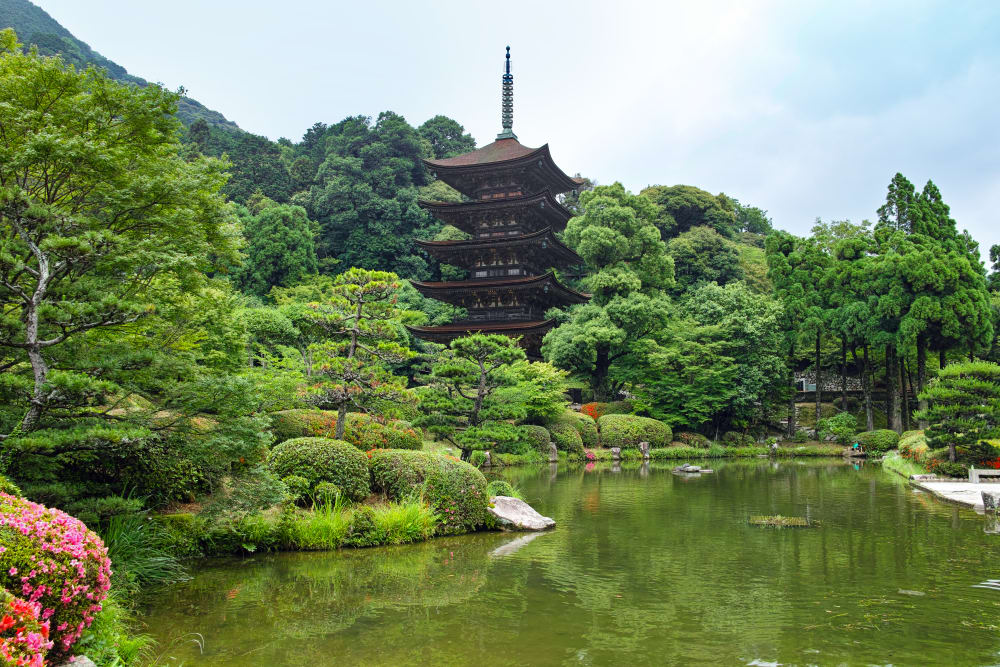
Rurikoji Temple Five-Story Pagoda (National Treasure)
Heading 2: Introduction
Rurikoji Temple, located in Yamaguchi City, Yamaguchi Prefecture, is home to one of japan‘s most iconic and significant cultural treasures – the Rurikoji Temple Five-Story Pagoda. This pagoda is a designated National Treasure of Japan and is renowned for its architectural beauty and historical significance. Visitors from all over the world come to admire the pagoda and learn about its rich history and cultural significance.
Heading 2: History of Rurikoji Temple
Heading 3: Foundation and Early History
Rurikoji Temple was founded in the year 1442 by a local lord named Ouchi Yoshihiro. The temple was built as a memorial for his father, Ouchi Yoshitaka, who was a powerful daimyo in the region. Ouchi Yoshitaka had a great interest in Buddhism and played a significant role in promoting the religion in the Yamaguchi area. In honor of his father’s legacy, Ouchi Yoshihiro commissioned the construction of Rurikoji Temple.
Heading 3: Importance of Rurikoji Temple
Rurikoji Temple holds great historical and cultural significance in Japan. It is considered one of the Three Great Temples of the Ouchi Clan, along with Kozanji Temple and Ankokuji Temple. These three temples were closely associated with the Ouchi Clan, which played a crucial role in the political and cultural development of the region during the Muromachi period.
The temple also played a significant role in the spread of Buddhism in Yamaguchi Prefecture. It served as a center for Buddhist teachings and practices, attracting many followers and scholars of the religion. Rurikoji Temple became an important institution for the local community and played a vital role in shaping the religious and cultural landscape of the region.
Heading 2: Architecture and Design
Heading 3: The Five-Story Pagoda
The highlight of Rurikoji Temple is undoubtedly its Five-Story Pagoda. Standing at a height of 31.5 meters, it is one of the tallest wooden pagodas in Japan. The pagoda is a remarkable example of Muromachi period architecture and is known for its exquisite craftsmanship and attention to detail.
Each floor of the pagoda represents a different Buddhist realm, starting from the realm of desire and ascending to the realm of enlightenment. The intricate carvings and ornate decorations on the pagoda depict various Buddhist deities, mythical creatures, and scenes from Buddhist scriptures. The pagoda’s elegant design and harmonious proportions make it a visual masterpiece and a testament to the skill and artistry of the craftsmen of that time.
Heading 3: Preservation and Restoration
Over the centuries, the Rurikoji Temple and its Five-Story Pagoda have undergone several renovations and restoration projects to ensure their preservation. The pagoda suffered damage during the Meiji Restoration and World War II bombings but was successfully restored to its former glory. The latest restoration project took place in 1958, where the pagoda was reinforced and repaired to ensure its stability and longevity.
The preservation efforts for Rurikoji Temple and its Five-Story Pagoda are a testament to the importance placed on cultural heritage in Japan. The temple and pagoda are not only revered for their historical and architectural significance but also as symbols of national pride and identity.
Heading 2: Cultural Significance and Religious Practices
Heading 3: Buddhist Practices at Rurikoji Temple
Rurikoji Temple continues to be an active Buddhist temple, welcoming visitors and practicing religious ceremonies and rituals. The temple holds regular services and events that provide opportunities for worship, meditation, and learning about Buddhism.
Visitors can participate in traditional Buddhist practices such as sutra recitation, chanting, and meditation sessions. These activities offer a unique insight into the spiritual traditions and teachings of Buddhism.
Heading 3: Festivals and Events
Rurikoji Temple is also known for hosting various festivals and events throughout the year. One of the most popular events is the Rurikoin Temple Autumn Festival, held annually in October. During this festival, the temple grounds are adorned with colorful decorations, and traditional performances, including dance and music, take place.
Another notable event is the Rurikoji Temple Spring Festival, celebrated in April. This festival showcases the beauty of cherry blossoms, as the temple’s grounds are filled with blooming cherry trees. Visitors can enjoy hanami (flower viewing) and participate in cultural activities, such as tea ceremonies and traditional arts and crafts.
Heading 2: Visiting Rurikoji Temple
Heading 3: Location and Access
Rurikoji Temple is conveniently located in Yamaguchi City, Yamaguchi Prefecture. The address is 7-1 Kozan-cho, Yamaguchi-shi, Yamaguchi-ken.
Visitors can easily access the temple by public transportation. The nearest train station is JR Yamaguchi Station, which is a short walk away from the temple. From the station, visitors can take a taxi or enjoy a leisurely stroll to the temple, taking in the sights and sounds of the city.
Heading 3: Opening Hours and Admission
Rurikoji Temple is open to visitors throughout the year, allowing them to explore its magnificent grounds and admire the Five-Story Pagoda. The temple’s opening hours are from 9:00 AM to 5:00 PM.
Admission to the temple is free, but donations are welcome to support the maintenance and preservation of the temple and its cultural treasures. Visitors are encouraged to be respectful and follow the temple’s rules and regulations during their visit.
Heading 3: Nearby Attractions
In addition to Rurikoji Temple, Yamaguchi City offers a range of other attractions that visitors can explore. Some notable attractions include:
1. Amano Iwato-jinja Shrine: Located nearby, this Shinto shrine is known for its connection to Japanese mythology and offers stunning views of the surrounding nature.
2. Yamaguchi Prefectural Museum of Art: Art enthusiasts can visit this museum to admire a wide range of artworks, including traditional Japanese paintings, sculptures, and modern art.
3. Yamaguchi Castle: History buffs can explore the ruins of Yamaguchi Castle, which was once the residence of the powerful Ouchi Clan.
Heading 2: Conclusion
Rurikoji Temple and its Five-Story Pagoda are not only architectural marvels but also important cultural and historical landmarks in Japan. The temple’s rich history, exquisite craftsmanship, and spiritual significance make it a must-visit destination for anyone interested in Japanese culture and Buddhism. A visit to Rurikoji Temple offers a glimpse into Japan’s past and provides a serene and peaceful atmosphere for reflection and contemplation.
Address And Maps Location:
7-1 Kozan-cho, Yamaguchi-shi, Yamaguchi-ken
Find Location And Direction On Google Maps
Subscribe, follow travelbloggerindonesia.com