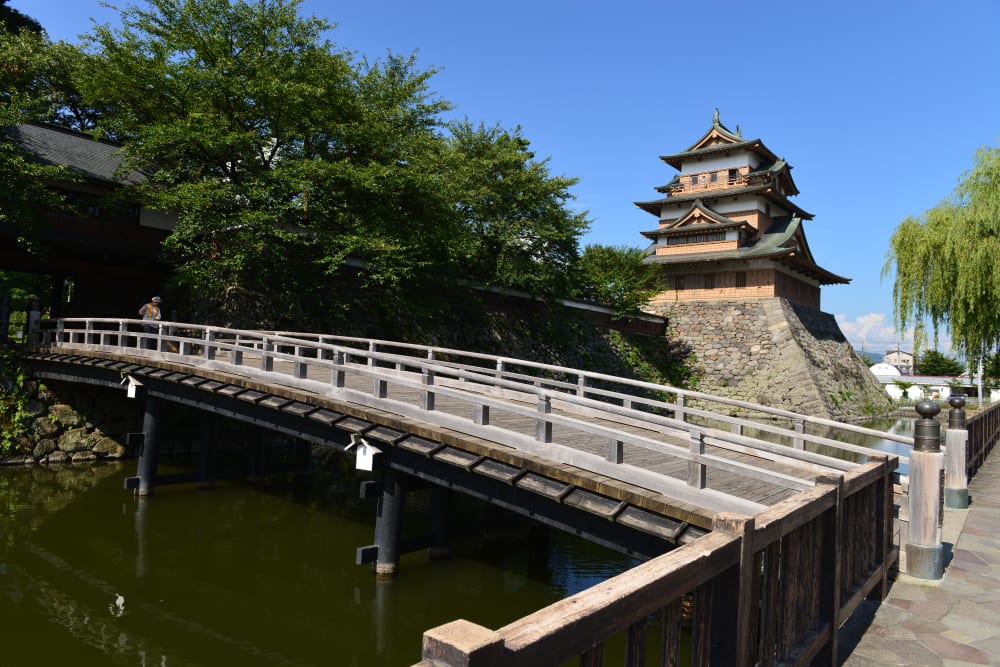
History of Takashima Castle
Takashima Castle, located in Suwa-shi, Nagano-ken, is a historical fortress with a rich history that dates back centuries. The castle, also known as Suwa Castle, played a crucial role in the region’s history and has witnessed numerous battles and power struggles over the years.
Heading 2: Origins and Construction of Takashima Castle
Heading 3: The Origins of Takashima Castle
The origins of Takashima Castle can be traced back to the 16th century when the region was under the control of the Takeda clan, one of the most influential samurai clans during the Sengoku period. The Takeda clan recognized the strategic importance of the Suwa region and decided to construct a castle to establish their presence in the area.
Heading 3: Construction of Takashima Castle
Construction of Takashima Castle began in 1585 under the supervision of Takeda Katsuyori, the son of Takeda Shingen, the renowned daimyo of the Takeda clan. The castle was strategically built on a hill overlooking Lake Suwa, providing a commanding view of the surrounding area and serving as a defensive stronghold.
The castle was designed in the yamashiro-style, characterized by its wooden construction and multiple layers of walls and moats for enhanced protection. The main keep, known as the tenshu, was a three-story structure with thick walls and narrow windows, designed to withstand attacks from enemy forces.
Heading 2: Role of Takashima Castle in History
Heading 3: Takeda Clan and the Battle of Nagashino
The Takeda clan, led by Takeda Katsuyori, faced numerous challenges during their rule in the Suwa region. One of the most significant events in the history of Takashima Castle was the Battle of Nagashino in 1575. The Takeda clan, in alliance with the Hojo clan, launched a massive attack on the combined forces of the Oda and Tokugawa clans.
However, the Takeda-Hojo alliance was defeated in a decisive battle, resulting in a significant blow to the Takeda clan’s power. This defeat weakened their control over the region, and the construction of Takashima Castle was seen as an attempt to regain their influence in the area.
Heading 3: Power Struggles and Successive Owners
After the decline of the Takeda clan, Takashima Castle changed hands several times. The castle became a focal point for power struggles as various warlords sought to gain control over the Suwa region. The castle was captured by the forces of Oda Nobunaga in 1582, marking the end of Takeda influence in the area.
Subsequently, Takashima Castle was handed over to the Sanada clan, a powerful samurai family who played a significant role in the region’s history. The Sanada clan made several modifications to the castle, reinforcing its defenses and expanding its structures.
Heading 3: The Siege of Takashima Castle
One of the most notable events in the castle’s history was the Siege of Takashima Castle in 1600. During the Battle of Sekigahara, which determined the fate of the Tokugawa shogunate, the Sanada clan supported the losing side and found themselves besieged by the forces of Tokugawa Ieyasu.
Despite their valiant efforts, the Sanada clan was unable to withstand the superior forces of Tokugawa Ieyasu, and Takashima Castle fell after a month-long siege. The castle was subsequently dismantled, and its materials were used for the construction of other buildings in the region.
Heading 2: Restoration and Preservation of Takashima Castle
Heading 3: Restoration Efforts in the Meiji Era
After the fall of Takashima Castle, the site remained in ruins for several centuries. It was not until the Meiji era in the late 19th century that efforts were made to restore and preserve the castle. The local government recognized the historical significance of the castle and initiated restoration projects to revive its former glory.
Heading 3: Preservation and Tourism Today
Today, Takashima Castle stands as a symbol of the region’s history and attracts numerous tourists and history enthusiasts. The castle has been meticulously reconstructed to resemble its original design, using traditional construction techniques and materials.
Visitors to Takashima Castle can explore the various structures within the castle grounds, including the main keep, gates, and watchtowers. The castle offers panoramic views of Lake Suwa and the surrounding mountains, providing a glimpse into the strategic importance of the castle in the past.
The castle grounds also feature a museum dedicated to the history of the castle and the region. The museum houses various artifacts, weapons, and historical documents, offering visitors a deeper understanding of the castle’s role in the region’s history.
In conclusion, Takashima Castle is a testament to the rich history of the Suwa region in Nagano. From its origins under the Takeda clan to its role in pivotal battles and power struggles, the castle has witnessed the rise and fall of various samurai clans. Today, the castle stands as a historical landmark, attracting visitors from around the world who seek to delve into the fascinating history of feudal japan.
Address And Maps Location:
1-20-1 Takashima, Suwa-shi, Nagano-ken
Find Location And Direction On Google Maps
Subscribe, follow travelbloggerindonesia.com