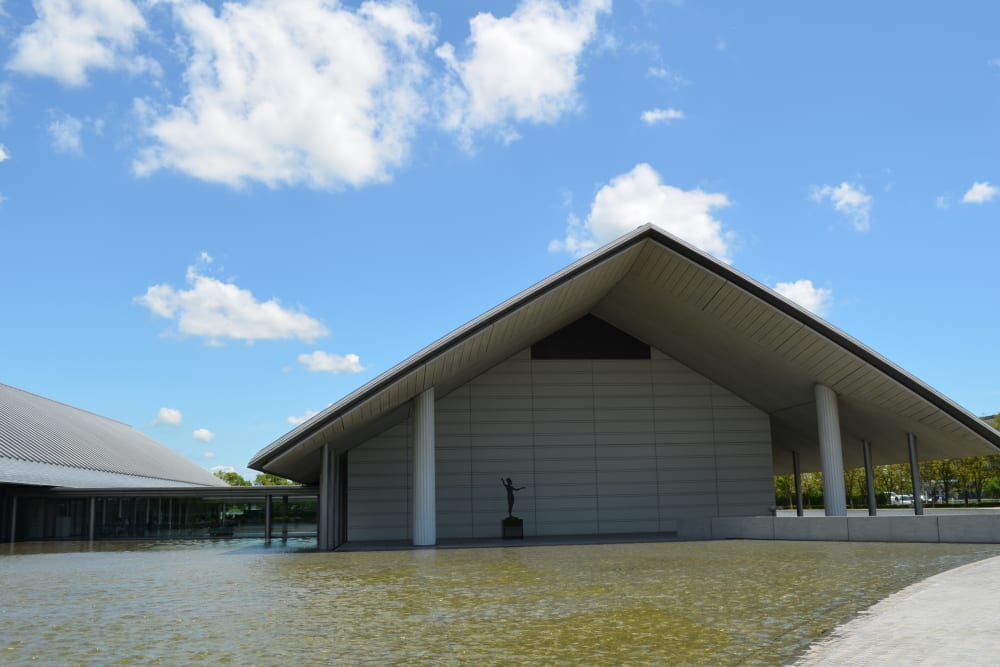
The Sagawa Art Museum, also known as the “floating museum,” is a unique and stunning attraction located in Moriyama, Shiga Prefecture, japan. The museum is renowned for its collection of Nihonga paintings, bronze statues, and ceramics, as well as its beautiful gabled-roof architecture that appears to float on the surrounding artificial pond garden. In this article, we will explore the rich history and artistry of the Sagawa Art Museum, along with the recommended ways to visit this extraordinary cultural gem.
The museum was established in 1998 to commemorate the 40th anniversary of the Sagawa Express shipping company. Its design and aesthetic were carefully crafted to resemble a work of art, with the entire museum appearing as if it is floating on water. This architectural masterpiece is a testament to the creativity and ingenuity of its designers.
One of the highlights of the Sagawa Art Museum is its collection of works by three prominent Japanese artists: painter Ikuo Hirayama, sculptor Sato Churyo, and ceramicist Jikinyu Raku. These artists have made significant contributions to the world of Japanese art and have influenced generations of artists with their unique styles and techniques.
Ikuo Hirayama is known for his breathtaking landscape paintings, which often depict scenes from the Silk Road. His use of vibrant colors and meticulous attention to detail transport viewers to distant lands and evoke a sense of wonder and exploration. Visitors to the museum can marvel at his masterpieces and appreciate the skill and dedication behind each brushstroke.
Sato Churyo’s sculptures are equally captivating. His works showcase the beauty and grace of the human form, capturing emotions and expressions with remarkable precision. From delicate figurines to larger-than-life statues, Churyo’s sculptures are a testament to the versatility and artistry of the medium.
Jikinyu Raku, formerly known as Kichizaemon Raku, represents the 15th generation of a renowned pottery lineage that spans over 450 years. The Raku clan’s pottery is highly regarded in the world of ceramics, particularly in the context of the Japanese tea ceremony. The museum houses a tearoom dedicated to showcasing the works of Kichizaemon Raku, allowing visitors to immerse themselves in the rich traditions and aesthetics of the tea ceremony.
The tea ceremony, or sado, holds a special place in Japanese culture. It is a ritualistic practice that emphasizes mindfulness, simplicity, and harmony. The Raku Kichizaemon Pavilion within the Sagawa Art Museum offers a unique opportunity to experience the art of tea firsthand. The entire tea room was meticulously planned and designed by Kichizaemon Raku himself, creating a serene and authentic environment for tea enthusiasts.
Apart from its impressive art collection, the Sagawa Art Museum is also admired for its modern Japanese design. The museum’s architecture seamlessly blends with the surrounding landscape, creating a harmonious and serene atmosphere. The floating design of the museum, combined with the reflection of the blue sky in the pools on the grounds, adds to its ethereal beauty.
To visit the Sagawa Art Museum, there are several transportation options available. If you are coming from Kyoto, you can take the JR Kosei line to Katata and then a 15-minute bus ride to the museum. Alternatively, you can take the JR Biwako line to Moriyama and then a 30-minute bus ride to the museum. If you are traveling by shinkansen, you can connect to the JR Biwako line at either Kyoto or Maibara.
The museum’s location in Moriyama offers visitors the opportunity to explore the surrounding area. Shiga Prefecture is known for its picturesque landscapes, historic sites, and cultural heritage. Visitors can take a leisurely stroll along the shores of Lake Biwa, the largest freshwater lake in Japan, or visit nearby attractions such as the Hoki Museum and Biwako Valley.
In conclusion, the Sagawa Art Museum is a must-visit destination for art enthusiasts, history buffs, and anyone seeking a tranquil and immersive cultural experience. The museum’s unique floating design, extensive collection of Nihonga paintings, bronze statues, and ceramics, as well as its dedication to preserving and promoting the Japanese tea ceremony, make it a truly remarkable institution. Whether you are captivated by the beauty of traditional Japanese art or simply appreciate the harmonious blend of architecture and nature, a visit to the Sagawa Art Museum is sure to leave a lasting impression.
Address And Maps Location:
2891 Kitakawa, Suibo-cho, Moriyama-shi, Shiga-ken
Find Location And Direction On Google Maps
Subscribe, follow travelbloggerindonesia.com