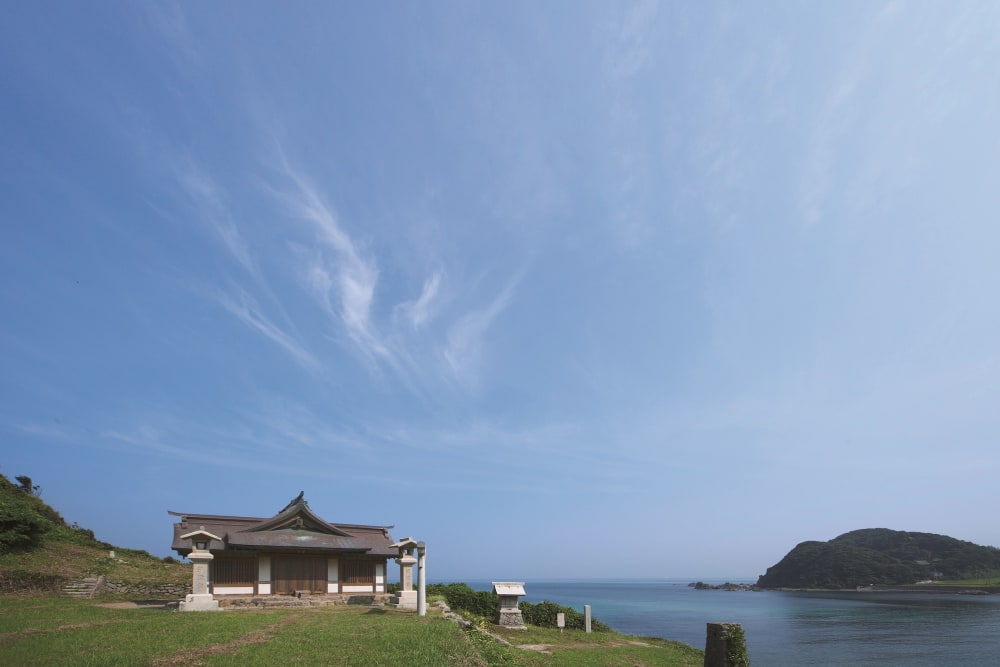
A sacred island shrouded in mystery and ritual
Okinoshima, an island located approximately 60 kilometers off the coast of Fukuoka Prefecture, is a place of great significance in Japanese history and culture. Designated as a UNESCO World Heritage site, Okinoshima is a small island measuring just under one square kilometer in size. Despite its small physical dimensions, the island holds immense cultural and spiritual value.
The island is known for its association with the Munakata Taisha shrines, one of which is located on Okinoshima itself. The Munakata Taisha shrines are considered to be one of the most important Shinto shrines in japan, dedicated to the three Munakata goddesses. These goddesses are believed to protect the sea and ensure safe maritime travel.
Visitors are strictly forbidden on Okinoshima, with access to the island only granted to a select few. Among the small number of people allowed on the island are approximately two dozen Shinto priests who spend 10-day intervals there. These priests are responsible for praying and guarding against intruders, ensuring the sanctity and preservation of the island.
The island’s only inhabitant is a monk employed by Munakata Taisha Shrine to maintain Okitsu-gu Shrine, located in the southwest part of the island. The shrine has a long history, established in the mid-17th century and rebuilt in 1932. It remains in much the same condition as it was during its last reconstruction, serving as a testament to the island’s rich cultural heritage.
Okinoshima gained recognition as a UNESCO World Heritage site on July 9, 2017, along with two other Munakata Shrines associated with Munakata City. This designation highlights the island’s historical and cultural significance, as well as its importance as a sacred site.
One of the most fascinating aspects of Okinoshima is the discovery of numerous artifacts on the island. Around 80,000 artifacts, many dating back to the first millennia, have been found on Okinoshima. These artifacts were brought as gifts from overseas and were likely obtained through trade. Okinoshima was a popular trading stop on the route between South Korea and Fukuoka Prefecture, and the artifacts found on the island reflect this cultural exchange.
Among the artifacts discovered on Okinoshima are gold rings from the Korean Peninsula. These rings, along with other significant artifacts, have been declared national treasures and are now housed at Hetsu-miya Shrine. The presence of these artifacts further emphasizes the island’s historical importance and the cultural connections it has had throughout the centuries.
In order to preserve and protect the island’s cultural heritage, Okinoshima is generally off-limits to the public. This restriction ensures that the island remains untouched and maintains its spiritual significance. It also serves as a reminder of the island’s sacred nature and the rituals that have taken place there for centuries.
Access to Okinoshima is not available through any form of public transport. The isolation of the island adds to its air of mystery and exclusivity. Only those with special permission are granted access, further heightening the reverence and respect associated with Okinoshima.
In conclusion, Okinoshima is a sacred island of great historical and cultural significance. Its association with the Munakata Taisha shrines, the presence of valuable artifacts, and its designation as a UNESCO World Heritage site all contribute to its importance. While access to the island is restricted, its isolation and exclusivity only serve to enhance its allure and preserve its sanctity. Okinoshima stands as a testament to Japan’s rich cultural heritage and the enduring traditions that continue to be practiced on the island.
Address And Maps Location:
Okinoshima, Fukuoka-ken
Find Location And Direction On Google Maps
Subscribe, follow travelbloggerindonesia.com