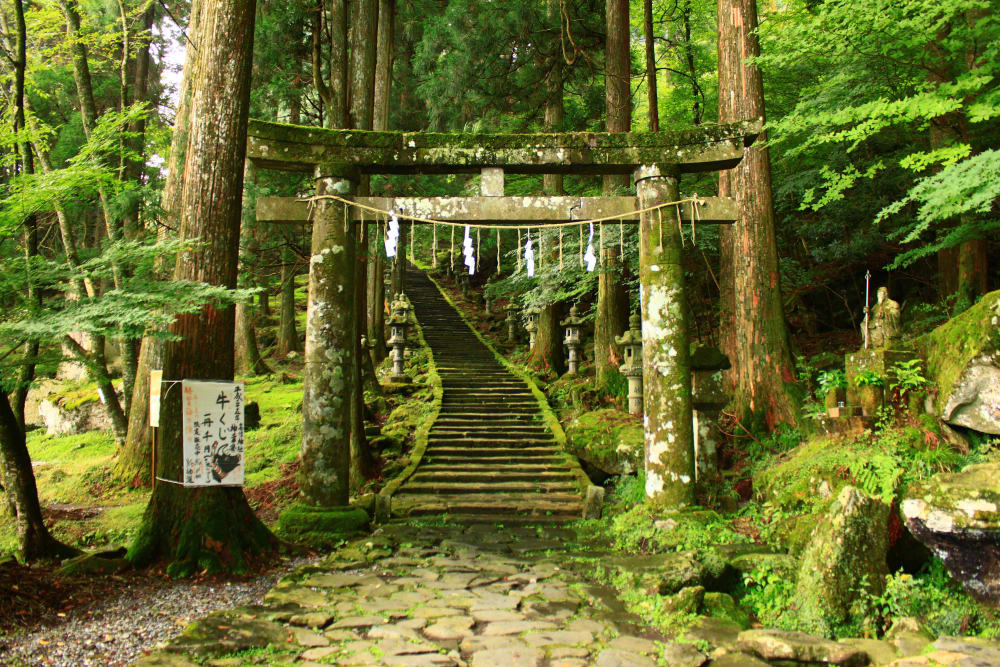
Challenging hike into spirituality where shrines and temples coexist
Mt. Hiko is a mountain located in Tagawa-gun, Fukuoka-ken, japan. It is known as one of Kyushu’s most enjoyable scenic hikes, offering not only breathtaking views but also a deep connection to spirituality. The mountain has a rich history that intertwines with the Shugendo sect of Buddhism, making it a fascinating destination for those interested in exploring the religious and cultural heritage of Japan.
To reach Mt. Hiko, visitors can take a short drive from Fukuoka City, which is the nearest major city. It takes approximately an hour to reach the mountain by car, providing easy access for hikers who are looking for a challenging adventure. Alternatively, public transport is also available, with the Hitahikosan Line connecting Hikosan Station and Kokura Station. However, due to heavy rain, part of the line is currently closed, and passengers are required to take a bus from Soeda Station. The bus ride takes around two hours and involves at least two changes. Once at Hikosan Station, local buses are available to take visitors to Hikosan Bessho, the base of the mountain.
The hiking route around Mt. Hiko starts at Hikosan Bessho, where hikers can ascend an ancient stone staircase to reach Hohei-den, a shrine and an Important Cultural Property built in the year 1616. This shrine holds significant historical and cultural importance, and its architecture is a testament to the craftsmanship of the time. From Hohei-den, hikers have two options to continue their ascent: they can either take the stone staircase directly to the top or follow the path that goes around the mountain and over its three major peaks.
The highest peak of Mt. Hiko is called Minami-dake, standing at an impressive height of 1,199 meters. The views from the top are simply breathtaking, offering panoramic vistas of the surrounding landscape. During autumn, the mountain comes to life with vibrant colors as the leaves change, creating a stunning visual display of red, gold, and purple hues. It is the perfect time to visit for nature enthusiasts and photographers.
Aside from the natural beauty of Mt. Hiko, the mountain is also known for its collection of temples and shrines. It was the center of training for the Shugendo sect of Buddhism, a spiritual practice that combines elements of Buddhism, Shintoism, and Taoism. The temples and shrines on the mountain are a testament to the deep spiritual connection between nature and religion in Japan.
One of the most notable shrines on Mt. Hiko is Hohei-den, which was formerly a lecture hall and is now the largest shrine on the mountain. It is a magnificent structure with a wood-shingle roof that showcases the architectural prowess of the time. Another impressive shrine is Tamaya-jinja, which sits at the base of a cliff, creating a dramatic backdrop for visitors. Daiminami-jinja is built in a cleft beneath an overhanging cliff, adding to the mystical atmosphere of the mountain. Jogu-jinja Shrine, located on Naka-dake, the middle peak of Mt. Hiko, is linked with Hikosan-jinja, the shrine located at the bottom of the mountain. Lastly, Takasumi-jinja is home to a bronze bull that hikers stroke for luck, with its horns and nose being more polished than the rest of the body.
The forests of Mt. Hiko are ancient and have managed to escape the commercial cedar plantations commonly found across Japan. The forest is home to many old and impressive trees, with one standout being Onisugi, a huge cedar estimated to be around 1,200 years old. These ancient trees add to the mystical and enchanting atmosphere of the mountain, making it a truly captivating destination for nature lovers.
On the way to Mt. Hiko, visitors can explore Soeda-machi, a town located at the base of the mountain. Here, they can visit Hikosan-jingu Hohei-den, a shrine with a long history. The current structure dates back to 1616 and is said to have been home to Shugen-do Buddhists since 740. The shrine is also the starting point for the Hikosan Jingu Shrine Gojinkosai Festival, held every April, which attracts visitors from all over Japan.
In conclusion, a visit to Mt. Hiko offers a challenging hike into spirituality, where shrines and temples coexist with the natural beauty of the mountain. It is a journey that not only tests the physical endurance of hikers but also provides an opportunity for deep introspection and connection with nature. The rich history and cultural significance of the mountain make it a must-visit destination for those seeking a unique and meaningful experience in Japan.
Address And Maps Location:
Tagawa-gun, Fukuoka-ken
Find Location And Direction On Google Maps
Subscribe, follow travelbloggerindonesia.com