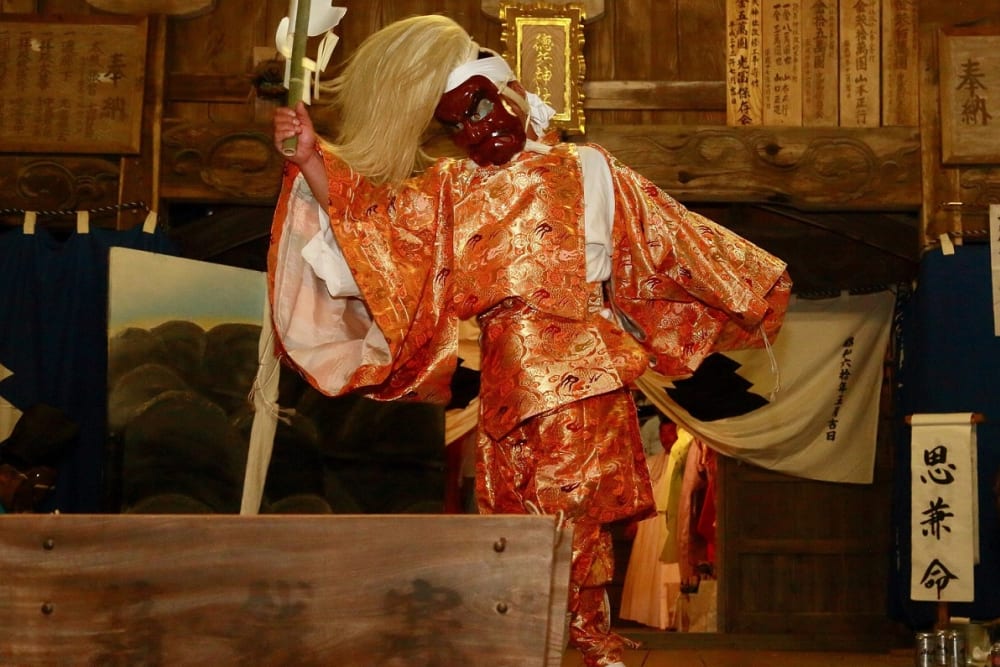
The dance of the gods, handed down from ancient times to the present
Introduction:
The town of Miyako, located in the Keichiku district of Fukuoka Prefecture, japan, is renowned for its preservation of kagura, an ancient form of Shinto music and dance. Kagura has been passed down for centuries by the people of Miyako as a way to express gratitude to the local guardian gods and pray for a good harvest. Every year, the town holds a festival known as “Shinkosai” to celebrate and showcase the unique kagura traditions of the area. This festival is a joyous occasion for both locals and visitors to immerse themselves in the ancient traditions of Miyako.
Don’t Miss: Energetic performances by masked dancers, Heartfelt music played with traditional Japanese instruments, The colorful traditional costumes
Kagura Basics:
Kagura is a dance form deeply rooted in Japanese mythology and is often translated as “entertaining the gods.” Originally known as “kamukura” or “kamikura,” kagura dances were simple and similar to miko (shrine maiden) dances or puppet dances. Over time, kagura evolved into a more grandiose and theatrical performance influenced by noh and kabuki. In Miyako, kagura is characterized by its re-enactment of Japanese mythology, particularly the story of “Amano-Iwato.” The dancers don colorful, archaic costumes and masks, and the performances are accompanied by traditional Japanese flute music and taiko drums. Some programs even feature priests playing the roles of mythical gods.
Preservation and Transferral of Kagura’s Cultural Heritage:
Kagura has long served as a primary form of entertainment and ritual for local communities. In the Keichiku region, including Miyako, kagura is a source of pride and is considered a central part of the community’s heritage. The people of Miyako have worked diligently to preserve and pass on their kagura traditions, making the region one of the best places in Japan to experience and learn about kagura. Five groups in Miyako and over 30 groups in the Keichiku area actively perform kagura, each with its own unique traditions. These groups receive strong support from the community and are committed to passing down their traditions to future generations. In recognition of their efforts, the form of kagura in the Buzen area (the old name for the Keichiku region) was designated as an Important Intangible Folk Cultural Property of Japan in 2016.
Festivals in Miyako and the Keichiku Area Dedicated to Kagura:
The main festivities in Miyako take place from late April to early May each year, during which kagura is performed at shrines and other venues throughout the town. Each kagura troupe in Miyako holds an outdoor ceremony at the local Ubusuna Shrine. Traditional festivals dedicated to kagura are unique to Miyako, but visitors can also witness kagura as part of events like the Kagura Festival in neighboring Buzen or other locations in Fukuoka Prefecture. The dedication of traditional kagura performances begins in the evening and continues until midnight, with some festivals lasting until dawn. Watching kagura is open to anyone, but it is important to respect the sacredness of the tradition and be mindful of the local community.
Conclusion:
The dance of the gods, known as kagura, has been preserved and passed down through generations in the town of Miyako. This ancient form of Shinto music and dance serves as a way for the community to express gratitude to the guardian gods and pray for a bountiful harvest. The annual festival in Miyako, accompanied by kagura performances, is a vibrant celebration of the town’s rich cultural heritage. Through the efforts of the local community, kagura in Miyako has become a source of pride and a significant part of the region’s identity. Visitors to Miyako have the opportunity to witness energetic performances by masked dancers, listen to heartfelt music played with traditional Japanese instruments, and admire the colorful traditional costumes. By participating in the festival and experiencing the ancient traditions of Miyako, visitors can connect with Japan’s rich cultural history and gain a deeper appreciation for the dance of the gods.
Address And Maps Location:
Miyako, Miyako-gun, Fukuoka-ken
Find Location And Direction On Google Maps
Subscribe, follow travelbloggerindonesia.com