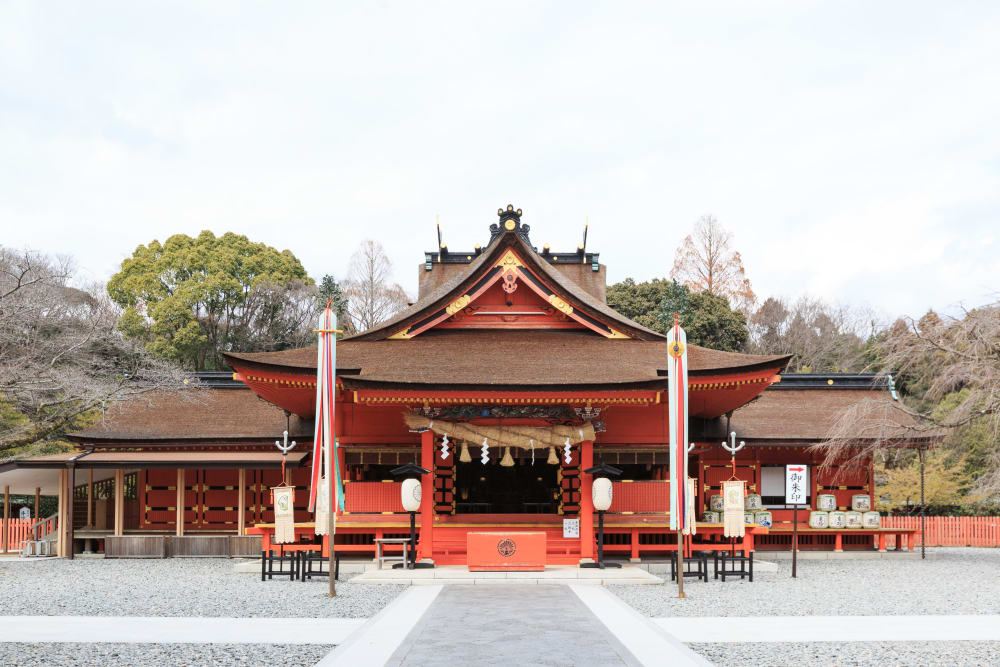
A shrine built to placate an angry mountain god
Fujisan Hongu Sengen Taisha is a grand shrine located close to Mount Omuro. Its origins trace back to the time of japan‘s 11th emperor, Suinin, who enshrined the god Asama-no-okami at the foot of Mount Fuji to seek spiritual protection from volcanic eruptions. People believed that Mount Fuji, considered to be the embodiment of a god, was angry with them.
The shrine has a rich history that spans over centuries and has been a symbol of the region for more than 1,300 Sengen shrines in Japan. Over the years, the shrine has suffered from earthquakes, but the structures that remain today were built in the 1600s by shogun Tokugawa Ieyasu. The Tokugawa clan, known for its patronage of the shrine, continued to support Fujisan Hongu Sengen Taisha for several generations.
One of the highlights of the shrine is its unique construction. The inner shrine is a one-of-a-kind structure that showcases the architectural prowess of the time. Visitors can admire the intricate details and craftsmanship that went into building this sacred place.
The shrine is also known for its beautiful gardens and Kagami Pond, also known as the mirror pond. These serene spaces offer a peaceful retreat for visitors to relax and reflect. The gardens are meticulously maintained and provide a picturesque backdrop for the shrine.
To reach the shrine, there are several transportation options available. Visitors can take a train or bus to Fujinomiya Station and then walk for about 15 minutes to reach the shrine. Miya buses also operate between Fujinomiya Station and the shrine, making it convenient for visitors to access.
Fujisan Hongu Sengen Taisha has been a focal point of worship for centuries. It was once a departure point for those embarking on the pilgrimage up Mount Fuji. The reverence for Mount Fuji remains strong, and the shrine continues to attract pilgrims and visitors from all over the world.
One of the unique aspects of the shrine is the frequent festivals it hosts. With over 159 festivals taking place each year, there is always something happening at Fujisan Hongu. These festivals offer a glimpse into the local culture and traditions. Some of the popular festivals include Setsubun in February, a yabusame mounted horseback archery festival in May, a ceremony to open the climbing season in July, and a three-day celebration in November. These festivals are a celebration of the region’s heritage and offer an opportunity for visitors to immerse themselves in the local traditions.
During these festivals, the shrine comes alive with vibrant colors, music, and dance. Visitors can witness traditional performances and enjoy the festive atmosphere. The festivals are a way for the local community to come together and celebrate their shared history and culture.
In addition to the festivals, visitors can also explore the surrounding area. The region offers stunning natural beauty, with Mount Fuji being the main attraction. There are hiking trails and scenic spots that allow visitors to appreciate the majestic beauty of the mountain. The nearby Shiraito Falls is another popular destination, known for its picturesque waterfall and serene surroundings.
Overall, a visit to Fujisan Hongu Sengen Taisha is a journey into the rich history and culture of the region. The shrine’s significance, both as a place of worship and a symbol of the community, is evident in its architecture, festivals, and patronage. Whether you are a spiritual seeker or a lover of Japanese culture, a visit to this grand shrine is a must. Immerse yourself in the traditions, explore the beautiful gardens, and experience the vibrant festivals that make Fujisan Hongu Sengen Taisha a truly unique and enchanting destination.
Address And Maps Location:
1-1 Miya-cho, Fujinomiya-shi, Shizuoka-ken
Find Location And Direction On Google Maps
Subscribe, follow travelbloggerindonesia.com