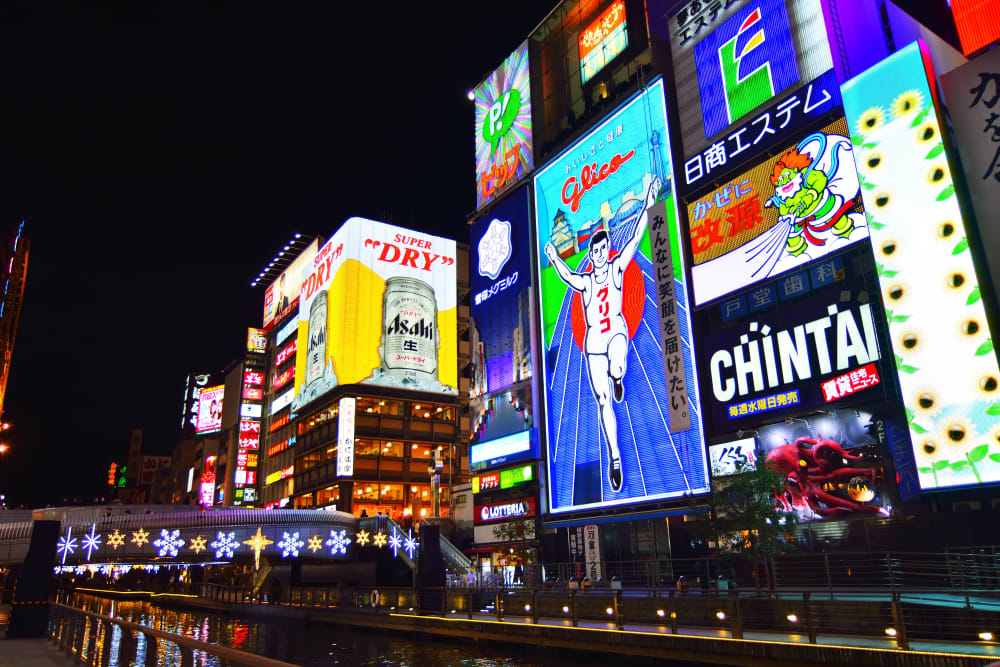
Dotonbori is the neon-lit food and entertainment district in Osaka’s Minami area, beside the Dotonbori River and close to Namba Station. It is one of the easiest places to experience Osaka’s street-level energy: enormous animated signs, busy pedestrian streets, riverside views and restaurants serving local favourites. This guide focuses on what visitors can actually see, how to get there, how to explore responsibly and how to combine Dotonbori with nearby Osaka sights without inventing opening hours or prices.
Key Takeaways
Dotonbori at a Glance
- Location: Dotonbori, Chuo Ward, Osaka, Japan.
- Nearest major transport hub: Namba Station, served by Osaka Metro and several railway operators.
- Highlights: Glico running-man sign, Ebisu Bridge, Tombori Riverwalk, street-food culture and colourful storefronts.
- Best atmosphere: Late afternoon into evening, when illuminated signs are particularly striking; individual businesses have their own hours.
- Cost: Walking public streets is free; food, cruises and attractions have separate charges.
The Japan National Tourism Organization describes Dotonbori as a landmark entertainment and dining area. The official Osaka tourism guide confirms its prominent signs, history and easy access from Namba.
Top Things to See in Dotonbori
Glico Running Man and Ebisu Bridge
The giant running-man advertisement above the river is the area’s most recognisable photo backdrop. Glico’s sign dates back to 1935, although the display has changed over time. Ebisu Bridge is a popular vantage point; stop only where there is room and keep pedestrian traffic moving. Evening illumination is attractive, but visitors who prefer less crowding may find daylight more comfortable.
From the bridge, it is easy to continue north towards Shinsaibashi-suji Shopping Street or west to the independent shops around Amerikamura.
Tombori Riverwalk and the Canal
The pedestrian riverside route gives a different perspective on the district’s bridges, signage and restaurants. Sections of the promenade provide reflections and views across the canal, especially after dark. Take care near steps and waterfront edges, and never enter the water. Sightseeing boats sometimes operate, but routes, boarding locations and fares can change; check the operator’s current notice rather than relying on an old blog price.
Osaka tourism’s Tombori Riverwalk description offers background on the waterfront route. Nearby, Orange Street is an alternative for browsing smaller shops and cafes.
Giant Food Signs and Dotonbori Street
Oversized restaurant signs are part of Dotonbori’s character, from moving crabs to elaborate takoyaki and other food displays. The street is lively at many hours, but restaurant queues can be long at peak times. A practical approach is to walk the area once before choosing where to eat, compare menus and prices, and respect any restrictions on photography or standing in line.
What to Eat in Dotonbori
Takoyaki: Osaka’s Octopus-Filled Snack
Takoyaki are small batter balls traditionally filled with pieces of octopus and served hot with toppings. Because the centres retain heat, allow them to cool before eating. Check ingredients if you have allergies or dietary restrictions, and use designated places to eat rather than blocking the pavement.
Okonomiyaki and Kushikatsu
Okonomiyaki is a savoury griddled dish with cabbage and other ingredients, with many variations. Kushikatsu consists of breaded, fried skewers. Menus differ by restaurant, and vegetarian options are not universal; ask staff about broths, sauces and shared fryers when needed. If you want more market-style browsing, see our Kuromon Market guide for the nearby food-shopping district.
Ramen, Izakaya and Other Dinner Options
Dotonbori also has ramen shops, casual eateries and izakaya. Some venues are compact or use ticket machines, so check ordering instructions at the entrance. Prices, closing times and last orders vary by establishment; avoid treating the district as one attraction with a single schedule. For other dining areas within easy reach, Namba City provides an indoor shopping and restaurant option.
How to Get to Dotonbori
From Osaka or Umeda Station
Use the Osaka Metro Midosuji Line towards Namba, then follow local signs and pedestrian routes towards the Dotonbori River and Ebisu Bridge. Allow extra time for transfers and crowds. The official Osaka Metro route list confirms that Namba is served by the Midosuji, Yotsubashi and Sennichimae lines.
From Namba and Other Railway Stations
Several different stations use the Namba name, including Osaka Metro, Nankai, Kintetsu/Hanshin and JR facilities. Their platforms and exits are not identical, so follow signs for the specific line rather than assuming all Namba exits lead to the same place. JR Namba may require a longer walk than some subway exits. If you are arriving by rail from elsewhere in the city, see our Osaka Station guide and Osaka Station City overview for broader orientation.
On Foot from Shinsaibashi or Nipponbashi
Dotonbori is naturally combined with Shinsaibashi to the north and Nipponbashi to the east. From Denden Town in Nipponbashi, visitors can continue towards Namba for an electronics-and-food itinerary. Use an up-to-date map for the exact exit and walking route, especially when carrying luggage.
History: How Dotonbori Became an Entertainment District
The area developed around a canal project begun in the early seventeenth century. According to Osaka’s tourism authority, Yasui Doton invested in excavation work from 1612, and the neighbourhood grew into a centre for theatres and dining. Its entertainment identity survived major changes in the city, including the decline of traditional theatre venues and the rise of modern illuminated advertising.
For a wider historical perspective, pair an evening in Dotonbori with daytime visits to Osaka Castle and the Osaka Museum of History. These are separate attractions requiring additional travel and, where applicable, admission tickets.
Nearby Attractions Worth Adding
Hozenji Temple and Hozenji Yokocho
A short walk from the busiest neon streets leads to the atmospheric stone-paved lanes around Hozenji. The temple and its moss-covered statue are religious sites, not just photo props; observe local etiquette and give worshippers space. The Osaka tourism authority’s Hozenji Yokocho guide explains the area’s historical character. Our Hozenji Temple article provides an additional nearby stop.
Kuromon Market and Namba Shopping
For an earlier meal or a food-market walk, Kuromon Market is accessible from the Nipponbashi side of Minami. The official Kuromon Market overview describes a traditional market with a wide selection of fresh produce and prepared food. Check vendor hours and eating rules on site. A relaxed route can continue through Namba City before returning to Dotonbori for evening photographs.
Other Osaka Attractions for a Longer Trip
Dotonbori is a useful evening stop after a full-day outing. Depending on your interests and available time, explore Osaka Aquarium Kaiyukan, Universal Studios Japan or the National Museum of Art, Osaka. They are not all within walking distance of Dotonbori, so check travel times and ticket rules separately. Seasonal travellers might also consider the Osaka sumo tournament when its official schedule aligns with their trip.
A Simple Dotonbori Walking Itinerary
Late Afternoon: Arrive at Namba
Exit at a convenient Namba station entrance, check the route on a map and begin with the shopping streets. If you want a quieter contrast before the crowds, stop at Hozenji and its narrow lane. Plan your dinner options before the busiest evening queues form.
Early Evening: Food and Neon
Walk towards Ebisu Bridge and the Glico sign, then explore both sides of the canal. Try one or two Osaka dishes instead of rushing through many stalls. Be mindful of waste, noise and local business entrances.
After Dark: Riverwalk and Return
Finish with views from the riverside promenade. Check your return route and the last train time with your actual rail operator; a district’s nightlife does not mean every public-transport service runs all night.
Practical Visitor Tips
- Expect crowds: Keep bags secure, especially on bridges and in queues.
- Check restaurant rules: Some shops request that customers do not eat while walking or photograph staff.
- Carry payment options: Card acceptance varies; small amounts of cash can be useful.
- Respect neighbours: Avoid blocking building entrances or taking intrusive photos.
- Use official transit information: Check Osaka Metro or your rail operator for the day’s service and last trains.
- Weather: Bring rain protection; outdoor promenades can be slippery when wet.
Frequently Asked Questions
Is Dotonbori free to visit?
Yes. Walking the public streets and viewing the illuminated signs is free. Restaurants, cruises and other paid experiences charge separately.
Which station is best for Dotonbori?
Namba is the main transport hub. The most convenient exit depends on which operator and line you use.
When should you visit Dotonbori?
Evening is popular for neon photography and atmosphere. Daytime is useful for visitors who prefer to avoid the busiest crowds.
How long should you allow?
One to three hours works for a walk and meal, while an entire evening allows time for neighbouring shopping streets and a more relaxed dinner.
Is Dotonbori the same as Namba?
No. Dotonbori is a particular entertainment district within the wider Minami area, while Namba refers to a broader neighbourhood and several transport facilities.
Official References
- Japan National Tourism Organization — Dotonbori
- Osaka Tourism — Dotonbori
- Osaka Metro — Route and station guide
- Discover Osaka — Kuromon Market
Address And Maps Location:
Dotonbori, Chuo-ku, Osaka-shi, Osaka-fu
Find Location And Direction On Google Maps
Subscribe, follow travelbloggerindonesia.com
Originally posted 2024-04-08 08:23:47.