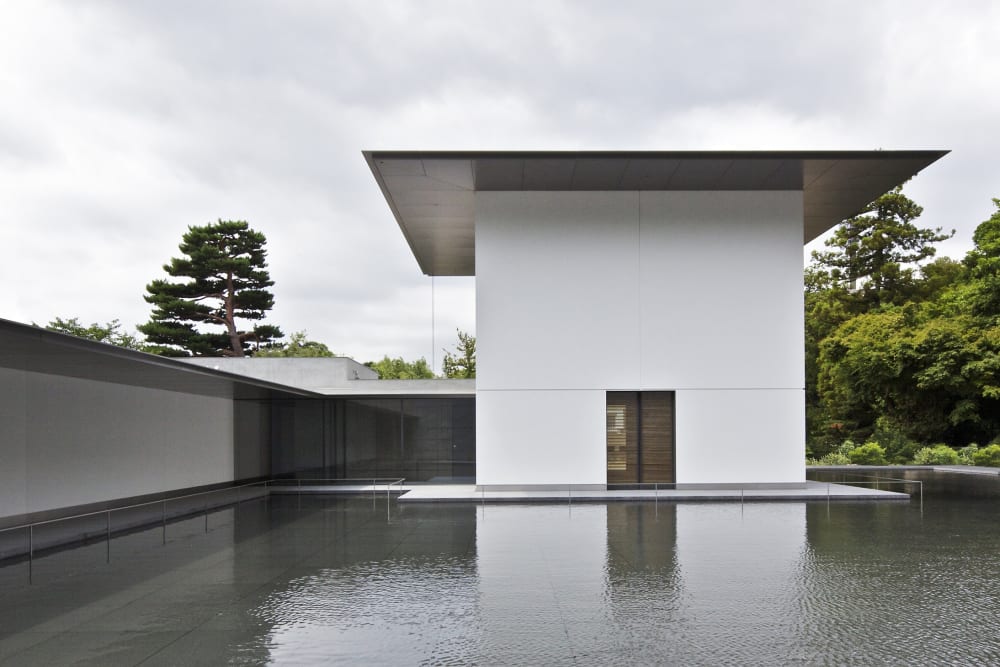
The D.T. Suzuki Museum is not just your ordinary exhibition space. It is a place where the life and work of Daisetz Teitaro Suzuki, a renowned Buddhist philosopher of Zen Buddhism, is showcased. Located near Kanazawa’s Kenrokuen Cultural Zone, this museum was constructed to honor Suzuki, who was born in the city and made significant contributions to the spread of Zen and Shin Buddhism in the Western world.
Daisetz Teitaro Suzuki, born in 1870 and passed away in 1966, was not only a philosopher but also a prolific writer. He wrote over 100 books and translated numerous texts in Chinese, Japanese, and Sanskrit into English, making them accessible to Western audiences. His writings and teachings played a major role in introducing Zen Buddhism to the Western world and shaping its understanding and practice.
One of the highlights of the D.T. Suzuki Museum is its simple and elegant architecture, designed by Yoshio Taniguchi. The museum’s design reflects the wabi-sabi aesthetic, which finds beauty in the imperfect, impermanent, and incomplete. The minimalist design features plain concrete construction and straight lines, making it unobtrusive to the eye. This architectural style creates a serene and contemplative atmosphere, in line with the museum’s purpose.
The museum consists of three wings connected by corridors: the Entrance Wing, the Exhibition Wing, and the Contemplative Wing. Each wing offers a unique experience for visitors to learn about Daisetz Suzuki’s philosophy and engage in their own contemplation. The exhibits are presented with very little information, encouraging visitors to deeply contemplate what they are looking at and draw their own interpretations.
In addition to the three wings, the museum also features three gardens: the Vestiblue Garden, the Water Mirror Garden, and the Roji Garden. These gardens further enhance the tranquil and meditative ambiance of the museum. The Water Mirror Garden, in particular, is a reflective pond surrounded by gray stone and concrete. Visitors can sit in the pagoda within the garden and contemplate the peaceful scenery.
To reach the D.T. Suzuki Museum, visitors can take the Hokutetsu Local Line or Kanazawa Loop from JR Kanazawa Station East Gate Bus Terminal. The museum is located near the 21st Century Museum bus stop or the Hondamachi bus stop, and it is just a five-to-ten-minute walk from either of these stops. The museum’s location, hidden away on a side road and nestled within lush greenery, adds to its charm as a sanctuary within a bustling city.
The D.T. Suzuki Museum is more than just a typical museum. It is a place of contemplation, where visitors can immerse themselves in the teachings and philosophy of Daisetz Suzuki. The museum’s architecture, exhibits, and gardens all contribute to creating a serene and introspective environment. It is a must-visit for anyone interested in Zen Buddhism, Japanese culture, or simply seeking a moment of tranquility in the midst of a busy city.
In conclusion, the D.T. Suzuki Museum in Kanazawa is a remarkable tribute to the life and work of Daisetz Teitaro Suzuki. Its minimalist design, contemplative exhibits, and serene gardens come together to create a unique and immersive experience for visitors. Whether you are a Buddhist scholar, a Zen enthusiast, or simply someone looking for a peaceful escape, this museum offers a space for reflection, introspection, and appreciation of the profound teachings of Daisetz Suzuki. Plan your visit to the D.T. Suzuki Museum and embark on a journey of enlightenment and tranquility.
Address And Maps Location:
3 Chome-4-20 Honda-machi, Kanazawa-shi, Ishikawa-ken
Subscribe, follow travelbloggerindonesia.com